
 Worksheets
structure of cell membrane
Total questions: 19
Worksheet time: 12mins
A phospholipid has two parts. What are they called?
Hydrophilic Head, Hydrophobic Tail
Hydrophobic Head, Hydrophilic Tail
Controls the passage of materials inside and outside of the cell.
Cellmembrane
Cytoplasm
Cell wall
Endoplasmic reticulum
Which term describes the relatively constant internal physical conditions of an organism?
cell specialization
homeostasis
permeability
unicellularity
Which of the following is a true statement?
Cells are small because it allows a faster rate of chemical exchange.
Cells are small because it allows a slower rate of chemical exchange.
Cells are large because it allows a faster rate of chemical exchange.
Cells are large because it allows a slower rate of chemical exchange.
Why is the cell membrane like a window screen?
They both allow everything to pass through.
Neither allow anything to pass through.
They both allow certain things to pass through, while blocking the passage of others.
They are not similar to each other at all.
when some molecules can cross the membrane while others cannot.
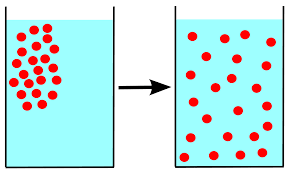
During diffusion, molecules tend to move
up the concentration gradient
from an area of lower concentration to an area of higher concentration
in a direction that doesn’t depend on concentration
down the concentration gradient

Proteins that make up the cell (plasma) membrane
are only found on the outer side of the phospholipid bilayer
are able to provide a passageway for certain substance to pass through the membrane
are only found on the inner side of the phospholipid bilayer
are only found in the middle of the phospholipid bilayer

Structure A in the diagram is
cholesterol
phospholipid
glycoprotein
channel protein
Which of the following is closest to the thickness of a cell (plasma) membrane?
1mm
0.01 μm
10 μm
0.1 nm
Which if the following is not a structural part of the cell (plasma) membrane?
phospholipids
cholesterol
proteins
DNA

