
 Worksheets
The Ultimate Geography Quiz - 2022 Term 1-3
Total questions: 100
Worksheet time: 1hrs 10mins


Which ocean is #5?
Atlantic Ocean
Southern Ocean
Arctic Ocean
Indian Ocean

What is the name of this continent (in red)?
Africa
Antarctica
Oceania
Asia

What is the name of this continent (in red)?
South America
Europe
Asia
North America

What is the name of this continent (in red)?
Asia
Europe
Africa
North America

What is the name of this continent (in red)?
North America
Oceania
South America
Antarctica

What is the name of this continent (in red)?
Africa
Asia
Australia
South America

What is the name of this continent (in red)?
Australia
Europe
Antarctica
Asia

What is the name of this continent (in red)?
Australia
Africa
Antarctica
Asia

What is the weather in the rainforest?
cold
warm
warm and rainy
snowy

Where is the rainforest located?
United States, France, Germany
Asia, Africa, Australia, South America
How many layers are there in a Rainforest?
two
three
four
five
Which of these isn't a layer of the rainforest?
Emergent layer
Underbook layer
Canopy
Undergrowth layer

What is the name of this adaptation of trees
Wing roots
Beet roots
Buttress roots
Flared roots

What horizontal lines show the distance north or south of the equator?
prime meridian
tropics
latitude
longitude

What name is given to the portion of Earth located ABOVE the equator?
Northern hemisphere
Eastern hemisphere
Western hemisphere
Southern hemisphere

What name is given to the portion of Earth located BELOW the equator?
Northern hemisphere
Eastern hemisphere
Western hemisphere
Southern hemisphere

What imaginary line divides the Earth into a northern and southern half?
prime meridian
longitude
equator
Tropic of Cancer

What imaginary line marks the northern boundary of the tropics?
Tropic of Capricorn
Tropic of Cancer
Tropic of Aquarius
Tropic of Sagittarius

What imaginary line marks the southern boundary of the tropics?
Tropic of Capricorn
Tropic of Cancer
Tropic of Aquarius
Tropic of Sagittarius

What name is given to a scale model representation of the Earth?
tellurion
planetarium
globe
observatory

What part of a map explains the symbols that are used?
scale
legend
title
north arrow
Define Deforestation
the growing of crops on the rooftop
the cutting down and removal of all or most of the trees in a forested area.
the setting up of factories in an urban area
the sending of money home after working overseas

Refer to the figure. State the country that is the largest palm oil producer for the year 2016/2017.
Indonesia
Malaysia
Thailand
Columbia

The graph below shows the greenhouse gas emissions by sector for the year 2019. State the percentage of greenhouse gas emissions by agriculture and forestry (logging).
33%
26%
15%
11%

What are the effects of deforestation ?
loss of habitat for animals and indigenous people
enhanced greenhouse effect
depletion of natural resources
all of the above
Why does cutting down trees increase global warming?
trees are green-lungs of the earth. With lesser trees, there will be more carbon dioxide in the atmosphere.
trees provide shade which counteracts global warming
trees absorbs the sun's energy without radiating back into the atmosphere
trees drain greenhouse gases like methane from soil
Deforestation causes an increase in atmospheric carbon dioxide
true
false
Which crops are the biggest causes of deforestation?
Palm oil and soy bean
Palm oil and brazil nuts
Soy bean and brazil nuts
Cotton and palm oil
What are benefits of a healthy amazon rainforest?
Increased biodiversity
Possible sources of new medicines
Lesser carbon dioxide in the atmosphere
All of the above

What is this diagram showing?
The ozone layer being destroyed
How sunlight is reflected into space
The Greenhouse Effect
Weather patterns
Trees of tropical rainforests rainfalls (a) and slow down the speed water reaches the ground. This allow more water to seep into the ground to be stored as ground water.
Tropical rainforests absorbs _________ _________ from the atmosphere and release oxygen through the process of photosynthesis.
(a)
Which of the following is not a strategy to manage deforestation?
Protection of rainforest by implementing laws
Reforestation
Grow more plants at home
Which of the following is not a nature reserve in Singapore?
Central Catchment nature reserve
Bukit Timah nature reserve
Botanical garden
Gardens by the bay
Nature reserve in Singapore aims to:
1. (a) the biodiversity
2.For education and research
3.For recreation
Which of the following is not a strategy implemented by Singapore to manage deforestation?
Implementing the park and tree act
Set a side natural rainforest area as nature reserve
Planting native sapling in deforested areas
Reduce clearing of forest for developments
What do mangroves require?
Clear water
Salt water
Constant temperature
Sheltered location not exposed to strong winds and waves
Fresh water
What sort of roots support mangrove trees in soft sediments?
(a)
What sort of roots take in oxygen for respiration and filter out salt?
(a)
Are mangroves evergreen?
yes
no
Why do mangroves require tropical conditions?
For the warm air temperature
for the sun
because they coexist with bengal tigers
Salinity means the level of _______________in the water.
oxygen
salt
nitrogen
salcite
Tropical areas regularly experience heavy rainfall, which is likely to cause s (a) erosion.
R (a) of rainforest plants bind the soil together, making it harder to erode.
The l (a) , branches and stems of rainforest plants slow down falling raindrops before they reach the ground.
The dense roots systems of m (a) plants help to trap and stabilise loose sediments on the coast. Sediments are less likely to be washed away by waves, currents and tides.
People who are considered the "original" inhabitants of the tropical forests are also known as i (a) people.
The indigenous people depend on the physical environment to meet their basic needs. What are these basic needs?
food
water
shelter
clothing
The K (a) tribe, which lives on the island of New Guinea in Indonesia, is an example of people who inhabit tropical rainforests.
Tropical / mangrove forests are r (a) sites for people who live in towns and cities to get close to nature. Trekking, camping and birdwatching are some common activities that people take part in while visiting the tropical /mangrove forests.
Tropical forests provide a source of f (a) , such as fruits like bananas, mangoes, cucumber, eggplant, cashew nuts, nipah palm seeds, pepper and cinnamon.
Indigenous people also obtain food for survival through h (a) and gathering. They hunt for wild animals, fish, deer, wild birds for food.
Mangroves in some coastal areas have been converted into farms to rear fish, shellfish like prawns and clams, for sale to customers in towns and cities. This is known as a (a) .
Tropical / mangrove forests provide a source of raw materials such as w (a) .
Wood obtained from certain types of (a) trees (eg. teak, mahogany, rosewood) can be used to produce floorings, doors, furnitures and even musical instruments.
M (a) is the process through which metals and minerals are obtained from below ground. Metals and minerals such as iron and diamonds are valuable because they can be used to make pipes via copper and computer microchips via gold.
Visiting the tropical / mangrove forests has a positive effect on people's health. The natural sights, smells and sounds of the forest have a c (a) effect on people, which helps to give them a sense of well-being.
Define deforestation.
When land is being converted to mines.
Vegetation prevented from regenerating.
The permanent removal of tropical forests for their wood and other human activities like mining and agriculture.
When tree species face extinction.
When a tropical forest grows again, it will have the same biodiversity of a tropical forest that has been untouched by humans.
True
False
Deforestation is on the rise in Brazil where 60% of the Amazon rainforest is located. Up 57% of the 15,000 tree species are likely to face extinction.
True
False
Which of the following are greenhouse gases?
Carbon dioxide
Methane
nitrous oxide
All of the above

How does the greenhouse effect keep earth warm enough for life?
When sunlight enters the atmosphere and reaches the earth's surface.
When earth’s surface absorbs the light energy and warms up, releasing heat.
With greenhouse gases in the atmosphere, not all of the heat is able to escape into outer space, trapping heat and keeping earth warm.
When more heat is trapped, increasing earth's temperature.
Increased carbon dioxide may cause global warming by _________________________.
allowing more sunlight into the atmosphere.
reflecting more sunlight from clouds.
reducing the amount of oxygen in the air.
trapping more heat in the atmosphere.
Without the Greenhouse Effect the Earth would be _______.
warm
cold
dead

Which of the following shows enhanced greenhouse effect?
A
B
Why is it difficult for a country's government to set aside all of its remaining tropical forests as protected areas?
The government does not have enough money to do so
The government has more important things to settle
The people in the country do not want to protect the tropical forests
The high economic value of forest activities which will lead to a loss of jobs
Which of the following are benefits of making tropical forests a popular tourist attraction? (Select 2 options)
Income from tourism will motivate governments to conserve the forests
Tourists will trash the tropical forests by littering
It saves the governmnet money
It educates tourists about the value of the tropical forests
What is the aim of forest rehabilitation?
To introduce new plant species in the forest
To introduce animal species that were originally there before deforestation occured
To introduce plant species that were found there before deforestation occurred
To introduce new animal species in the forest
What are the benefits of controlled logging as a sustainable practice? (choose 2 options)
Trees are given time to regrow before being cut down
It saves the government money
The overall damage to trees is reduced
The overall damage to trees increases
The purpose of public education as a sustainable foresty practice is...
To raise public awareness of the importance of deserts
To earn money for the government
To raise public awareness of the importance of tropical forests
To raise public awareness of the importance of oceans
Which of the following strategies are ways tropical forests can be managed sustainably?
Reforestation
Establishing protected areas
Promoting public education
Controlled logging

Rainforest is regarded as the "____ of the Earth".
Head
Heart
Eyes
Lungs
Which of the following sentences does not describes tropical forest as carbon stores?
Rainforest and mangrove plants absorb oxygen from the atmosphere during photosynthesis.
Leaves, branches, stems and roots store absorbed carbon in solid form.
Dead leaves and branches that fall to the ground add carbon to the soil.
Mangroves are more effective at storing carbon as compared to rainforests as the soil is waterlogged and poor in oxygen, with few bacteria available to break down the carbon stored there.
How do mangroves mitigate against (lessen the damage from) climate change?
They store carbon; up to 50 times more carbon than a rainforest.
The salt that they absorb makes the air around them cooler, which slows down global warming.
They provide a safe habitat for animals whose ecosystems have been destroyed by climate change.
This statement is false.
Which of the following help to prevent soil erosion? Tick all that apply.
Leaves, branches and stems slow down falling raindrops.
Roots of plants/trees bind soil together.
Roots absorb all the rainwater, preventing soil erosion
What recreational activities can be carried out in tropical forests for people who live in towns and cities? Tick all that apply.
Trekking
Camping
Birdwatching
Cutting down trees for wood
Which of the following is not a source of food commonly from plants in the tropical forests?
Mangoes
Pepper
Cinnamon
Strawberries

Identify an ingredient shown in the photograph that can be found in the mangrove forest.
Red beans
Coconuts
Nipah palm seeds
Sugar
Which of the following are valuable hardwoods found in tropical rainforests?
Teak
Plywood sheets
Rosewood
Mahogany
Which of the following is not a use of the tropical forests for people?
Habitats
Recreation
Provide oxygen
Source of raw materials
Which resource takes up 97% of the Earth?
Oceans and Seas
ice glaciers
lakes
atmosphere

Approximately what percent of the Earth is covered by water?
50%
30%
70%
90%
A large body of salt water; covers most of Earth’s surface
glacier
river
topography
ocean
A large, slow-moving, long-lasting accumulation of snow and ice that develops on land
glacier
saltwater
ocean
river
A body of freshwater that flows continuously towards the ocean
ocean
river
glacier
topography

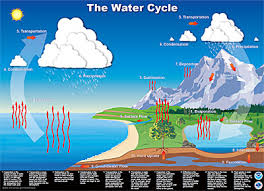
What process is happening step A?
transpiration
evaporation
condensation
accumulation

The process in which water vapor is released into the atmosphere through plants.
evaporation
transpiration
condensation
precipitation

The process by which molecules of water vapor become liquid water.
transpiration
evaporation
condensation
accumulation
What process is happening step B?
transpiration
precipitation
condensation
Where is MOST of Earth's available freshwater stored?
the atmosphere
underground
lakes and rivers
ice caps and glaciers

