
 Worksheets
IB ESS 5.1 Introduction to soil systems
Total questions: 45
Worksheet time: 39mins

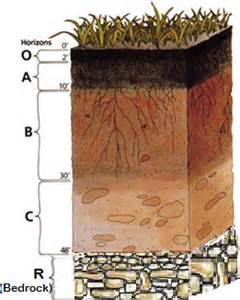
This image is called.....
A soil horizon
A soil profile
A soil pit
A soil sample
The finest soil particles are known as -
(HINT: They trap & hold nutrients ... sometimes out of plants' roots' reach)
silt
clay
loam
sand
The most productive soil type is
sandy soil
clay soil
loam soil
silty clay loam
soil flows include (choose all that apply)
weathering
decomposition
leaching
organic matter
biological mixing
soil storages include (select all that apply)
leaching
water
nutrients
air
organisms
The A soil horizon (topsoil) is made up of
leaf litter
bedrock
clay and minerals
decomposed organic matter and minerals
Weathering is a process where
organic matter is broken down into smaller parts, usually by living organisms
rock is broken down into soil and small grains
soluble nutrients and minerals are drained from soil through water action
soil/rock is moved from one surface to another by wind/water/glaciers
Leaching is a process where
organic matter is broken down into smaller parts, usually by living organisms
rock is broken down into soil and small grains
soluble nutrients and minerals are drained from soil through water action
soil/rock is moved from one surface to another by wind/water/glaciers
Decomposition is a process where
organic matter is broken down into smaller parts, usually by living organisms
rock is broken down into soil and small grains
soluble nutrients and minerals are drained from soil through water action
soil/rock is moved from one surface to another by wind/water/glaciers
Erosion is a process where
organic matter is broken down into smaller parts, usually by living organisms
rock is broken down into soil and small grains
soluble nutrients and minerals are drained from soil through water action
soil/rock is moved from one surface to another by wind/water/glaciers

Which factors are primarily responsible for decomposition of organic materials in soil?
Animal action and plant action
Animal action alone
Fungus action, animals, and microorganisms
Fungus action alone
Microorganisms alone


Which soil has the greatest permeability or quickest flow?
sand
silt
clay
humus

Which dimensions correctly describe SILT particles
< 0.002mm
0.002 - 0.05 mm
0.05 - 2 mm
> 2 mm
Which dimensions correctly describe CLAY particles
< 0.002mm
0.002 - 0.05 mm
0.05 - 2 mm
> 2 mm
Which dimensions correctly describe SAND particles
< 0.002mm
0.002 - 0.05 mm
0.05 - 2 mm
> 2 mm
Which characteristics are common to a SANDY soil?
gritty and falls apart easily
feel slippery like wet talcum powder and hold together quite well
feel sticky and can be rolled into a ball easily
Holds together well, can be worked easily &retains nutrients and water
Which characteristics are common to a SILTY soil?
gritty and falls apart easily
feel slippery like wet talcum powder and hold together quite well
feel sticky and can be rolled into a ball easily
Holds together well, can be worked easily &retains nutrients and water
Which characteristics are common to a LOAM soil?
gritty and falls apart easily
feels slippery like wet talcum powder and hold together quite well
feels sticky and can be rolled into a ball easily
Holds together well, can be worked easily &retains nutrients and water
Which characteristics are common to a LOAM soil?
gritty and falls apart easily
feels slippery like wet talcum powder and hold together quite well
feels sticky and can be rolled into a ball easily
Holds together well, can be worked easily &retains nutrients and water
Which characteristics are common to a CLAY soil?
gritty and falls apart easily
feels slippery like wet talcum powder and hold together quite well
feels sticky and can be rolled into a ball easily
Holds together well, can be worked easily &retains nutrients and water

What type of soil has % clay 15 silt 20 sand 75?
(a)
What type of soil has % clay 10 silt 70 sand 20?
(a)
What type of soil has % clay 40 silt 20 sand 40?
(a)
What type of soil has % clay 50 silt 50 sand 0?
(a)
What type of soil has % clay 50 silt 20 sand 30?
(a)
Which of these transfers creates the organisation of horizons in the soil profile?
Weathering
Photosynthesis
Biological mixing
Decomposition
Which of these are transformations in the soil system?
uptake by plants
decomposition
leaching
organic matter
weathering
Which of these are inputs into the soil system?
evaporation
biological mixing
leaf litter
precipitation
minerals from bedrock
Which characteristics are common to a SANDY soil?
High mineral content
High potential to hold organic matter
Good drainage
Good water holding capacity
Large air spaces
Which characteristics are common to a CLAY soil?
High mineral content
High potential to hold organic matter
Good drainage
Good water holding capacity
Large air spaces
Weathering is a
Transfer
Transformation
Erosion is a
Transfer
Transformation
Leaching is a
Transfer
Transformation
Denitrification is a
Transfer
Transformation
Photosynthesis is a
Transfer
Transformation

