
Font size
 Worksheets
2024 Plate Tectonics Test
Total questions: 50
Worksheet time: 1hrs 4mins

Look at the image. The South American and Nazca plate are moving together. Which type of boundary is this?
divergent
convergent
transform fault
strike slip

In the image, which type of boundary is shown? Hint: its located in the state of California.
divergent
convergent
transform
international
Back in the early 1900's how did geologists feel about Wegener's theory?
They ridiculed him and did not accept his theory.
They were thrilled with him for finding the answers.
They accepted only a part of his theory.
They did not agree, but welcomed his work.
What did Wegener name the large supercontinent where all the continents were joined together?
Wegenerland
Gondwanaland
Laurasia
Pangaea
What technology was used during WWII to detect enemy submarines and produce the first map of the seafloor?
Sonar
Radar
GPS
Telegraphs

What moves the plates?
Convection currents from the asthenosphere
Magnetism caused by the poles
Earth's rotation on its axis
Convection currents from the Sun

Which best explains the rate of movement of tectonic plates?
They move several miles each year because of convection within Earth.
They move several centimeters each year because of convection within Earth.
They move several feet each year because of convection within Earth.
They move several kilometers each year because of convection within Earth.

Is there a pattern to the locations of earthquakes and volcanoes around the globe?
No, earthquakes and volcanoes are random.
Yes, earthquakes and volcanoes usually occur near the boundaries of tectonic plates.
yes, earthquakes and volcanoes usually occur in the middle of tectonic plates.
No, earthquakes and volcanoes usually occur under water.

We live in an area without many earthquakes because _____
We live near a major fault line
We live near the boundary of 2 tectonic plates
We live near the middle of the North American Plate
We live near the Pacific Plate

Oceanic crust is.....
Younger and less dense than continental crust
Thinner, younger, and denser than continental crust
Older, thicker, and less dense than continental crust
Bigger and younger than continental crust

Convergent boundaries are plates
colliding or smashing into each other.
sliding past each other.
separating or pulling apart from each other.
plates sliding under another and melting
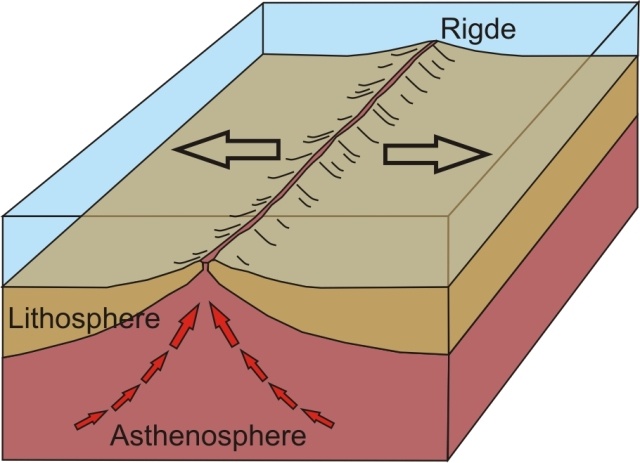

What is the name of the boundary where two tectonic plates move away from each other?
Convergent boundary
Divergent boundary
Transform boundary
Subduction boundary
What is the process that causes the movement of tectonic plates?
Photosynthesis
Convection currents in the mantle
Gravitational pull of the moon
Rotation of the Earth

What geologic feature/event you be most likely to find at a transform boundary?
fault lines/Earthquakes
Volcanoes
Mountains
Rift Valleys

What kind of plate boundary is shown here? What crustal geologic feature will form if this is a collision of continental crust?
divergent, mid ocean ridges
convergent, trenches, volcanic mountains
transform, fault lines/earthquakes
convergent, folded mountains

Where is lava located?
above ground
below ground
in the core
in the mantle

Fossils are often found in this rock.
Sedimentary
Igneous
Metamorphic


Which is true about continental crust?
It is thinner and more dense than oceanic crust.
It is thinner and less dense than oceanic crust.
It is thicker and more dense than oceanic crust.
It is thicker and less dense than oceanic crust.
The Himalayas in Asia was formed after the Indian Plate and the Tibetian Plate collided. Himalayas is an example of _______________.
fold mountain
volcanic mountain
dome mountain
erosion formed mountain



Which of these persons was given little credit for work in the 1960's analyzing sonar data, mapping the ocean floor, and helping to expose the existence of a huge mid-Atlantic ridge
Marie Curie
Harry Hess
Alfred Wegener
Marie Tharpe

Use the diagram to answer the question. What results as the two oceanic plates converge?
formation of a deep sea trench and island volcanoes
earthquake activity and appearance of a transform fault
volcanic eruption along both oceanic plate edges
formation of a continental mountain range
Torpedoes
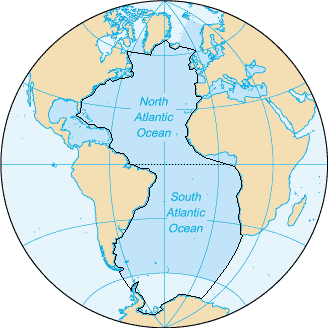

Label the parts of this plate boundary.


Which process best describes the formation of a delta.
Weathering
Erosion
Deposition

What agent of change causes a sand dune?
Water
Wind
Ice

What agent of change causes a U-shaped Valley?
Water
Wind
Ice

What agent of change caused the SEA arch?
Water
Mud
Glacier

What agent of change causes a canyon?
Water
Wind
Ice

A large area of flat land with high elevation is a....
Plateau
Continent
Basin
Plain

