wayground logo

Free Printable Worksheets

Font size

S
M
L
XL
Worksheets

Unit 8 Weathering, Erosion and Deposition Vocab & Ques.

Total questions: 20

Worksheet time: 18mins
Name
Class
Date
1.
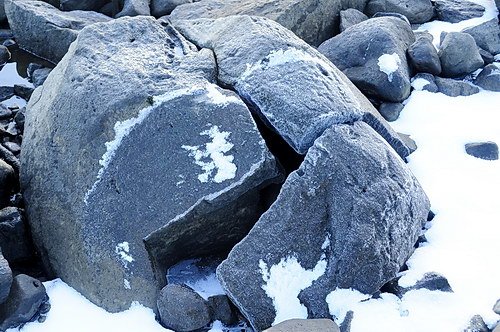
How does freezing water cause the weathering of rocks?  The freezing water—
a)
keeps the rocks in place.
b)
makes the rocks last longer.
c)
expands cracks and breaks rocks.
d)
causes rocks to fall in landslides.
2.
The process that breaks down rocks and other materials on Earth's surface is called
a)
Weathering
b)
Erosion
c)
Deposition
d)
Decomposition
3.
What is the process that picks up and moves weathered rocks?
a)
Deposition
b)
Landslide
c)
Weathering
d)
Erosion
4.
Deposition changes the Earth’s surface because bits of broken rock and soil _____.
a)
stop rivers from flowing.
b)
make rich farmlands.
c)
are dropped in new places.
d)
move very slowly.
5.
What causes the greatest erosion effect on our beaches?
a)
Waves
b)
Gravity
c)
Glaciers
d)
Wind
6.
Wind blows sand onto rocks and slowly breaks down the rock
a)
Mechanical Weathering
b)
Chemical Weathering
c)
Erosion
d)
Deposition
7.
A river carries dirt and mud out of the land it runs through
a)
Mechanical Weathering
b)
Chemical Weathering
c)
Erosion
d)
Deposition
8.
Salt water eats away at rock
a)
Mechanical Weathering
b)
Chemical Weathering
c)
Erosion
d)
Deposition
9.
The small peices of rock that break off of a larger rock during weathering are called...
a)
Sediment
b)
Salt
c)
Erosion
d)
Deposition
10.

The breaking down of rocks and other materials on the Earth's surface.

a)

Weathering

b)

Erosion

c)

Deposition

d)

Exfoliation

11.

The process by which rock and soil are moved from one place to another is called-

a)

Chemical weatherin

b)

Erosion

c)

Mechanical weathering

d)

Deosition

12.

Which type of area is more likely to weather and erode? An area with a lot of vegetation (plants) or an area with very little? Why?

a)

The area with very little vegetation, because the roots won't be able to burrow through the rocks to weather it down.

b)

The area with a lot of vegetation, because the roots will burrow through the rocks causing a landslide.

c)

The area with very little vegetation, because it has not roots to absorb extra water or hold the soil together. The extra water and loose soil is likely to become a landslide/mudslide.

d)

The area with a lot of vegetation, because the roots will absorb any extra rain water, and will also hold the soil together preventing a landslide.

13.

Which of the following agents is the usually responsible for the formation of canyons?

a)

Gravity pulling

b)

Wind blowing

c)

Flowing water

d)

Glaciers moving

14.

Which of the following pair of terms explains why pebbles in a river are smoother and more rounded than rocks found on land?

a)

Exfoliation and deposition

b)

Weathering and deposition

c)

Weathering and erosion

d)

Deposition and Burrowing

15.
How does freezing water cause the weathering of rocks?  The freezing water—
a)
keeps the rocks in place
b)
makes the rocks last longer
c)
expands cracks and breaks rocks
d)
causes rocks to fall in landslides
16.
Over long periods of time, deposition may change the Earth’s surface by _____.
a)
forming new land features.
b)
breaking down large rocks into smaller ones.
c)
washing away beaches.
d)
moving topsoil.
17.
Layers of sediment forming at the bottom of the ocean floor is an example of
a)
Weathering
b)
Erosion
c)
Deposition
d)
Awesome Science
18.
How do plants weather rocks?
a)
During photosynthesis
b)
When roots grow into cracks of rocks and expand the rock breaks.
c)
When the plant moves water from the roots to the leaves, the rock breaks.
d)
Plants don't weather rocks.
19.
Dropping off and Building new from pieces of rocks is 
a)
weathering
b)
erosion
c)
deposition
20.
A mudslide dumps a large pile of mud onto a road
a)
Mechanical Weathering
b)
Chemical Weathering
c)
Erosion
d)
Deposition