
 Worksheets
Heat (Form 5)
Total questions: 30
Worksheet time: 13mins
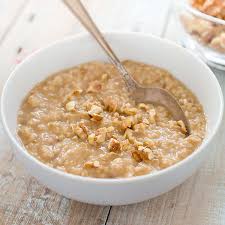
You leave your cold spoon in a hot bowl of oatmeal. What happens after an hour?
The temperature of both the oatmeal and the spoon stay the same
The spoon and the oatmeal become the same temperature
Only the temperature of the oatmeal will change
Only the temperature of the spoon will change


What is the BEST reason cooking pots are made out of the materials aluminum, copper, and sometimes glass?
They are able to stop the flow of heat.
They are good conductors of heat.
They keep the same amount of heat.
They are good insulators of heat.
Temperature is a measure of the...
total energy in a substance
total kinetic energy in a substance
average potential energy in a substance
degree of hotness of an object

Heating will continue until what is reached?
Energizers
Equilibrium
Equality
Energy


The specific heat capacity of aluminium is 900 J kg-1 oC-1 .
Which statement explains the specific heat capacity of aluminium correctly?
1 kg of aluminium absorbs 900 J of heat energy during heating.
The temperature of 1 kg of aluminium will rise by 1 oC when it absorbs 900 J of heat energy
The temperature of 1 kg of aluminium will drop by 1 oC when it absorbs 900 J of heat energy.
Aluminium requires 900 J of heat energy to increase its temperature by 1 oC

Diagram above shows the heating curve of a sample of naphthalene
Naphthalene starts to melt at the time
A
B
C
D
E

Diagram above shows the pressure-temperature graph for a fixed mass of gas at constant volume.
Which statement is correct about the condition of the gas?
The gas pressure is zero at 0 oC
The gas molecules are stationary at -273 oC
The kinetic energy of the molecules is maximum at -273 oC
The gas pressure is inversely proportional to the temperature

Diagram on left shows a dented ping-pong ball. Diagram on the right shows the condition of the ball after being placed in a hot water.
Which of the following is correct about the mass of the air and the kinetic energy oh the air molecules inside the ping-pong ball when the ball is placed hot water?
Mass of the air increases
Mass of the air unchanged
What is the meaning of specific heat capacity?
(a)
The latent heat of fusion for water is heat absorbed by
1 kg of ice during melting without changes in temperature
1 m3 of ice during melting without changes in temperature
1 kg of water to increase the temperature by 1 oC
1 m3 of water to increase the temperature by 1 oC
17600 J of heat is used to increase the temperature of 800 g metal block from 30 oC to 55 oC.
What is the specific heat capacity of the metal block?
259 J kg-1 oC-1
400 J kg-1 oC-1
733 J kg-1 oC-1
880 J kg-1 oC-1
Jimmy is a astronaut, when he was in space he drifted close to the sun. He said that he felt the hottest he had ever felt. What kind of heat transfer caused this?
COMBUSTION
Radiation
Convection
Conduction
Without the sun's heat, what would happen to earth?
aliens would invade
the earth would explode
it would be too cold to survive

A student inflates a balloon with helium then places it in the freezer. The student should expect
the balloon's volume to increase
the balloon's volume to decrease
the balloon's moles to increase
the balloon's moles to decrease
Three gases are mixed together in a container with a total pressure of 4.8 atm. If two of the gases have pressures of 1.2 atm and 1.5 atm, what is the pressure of the third gas?
2.5 atm
1.8 atm
2.1 atm
1.3 atm
If a hairspray can is heated, what can be expected of the pressure of the gas inside the can?
The pressure will increase
The pressure will decrease
The pressure will remain constant
The pressure will equalize
Gases generally have
low density
high density
closely packed particles
no increase in volume when temperature is increased
no decrease in volume when pressure is increased
Boyle's law states that:
Equal amounts of gases occupy the same volume at constant temperature and pressure.
The volume of a fixed amount of gas is inversely proportional to its pressure at constant temperature.
The volume of a fixed amount of gas is directly proportional to its temperature in Kelvin at constant pressure.
The total pressure of a mixture of gases is the simple sum of the partial pressure of all of the gaseous compounds.
The rates of effusion of gases are inversely proportional to the square roots of their molar masses.

