
NEW
Font size
 Worksheets
Unit 1_Honors Chemistry I
Total questions: 80
Worksheet time: 48mins
Subatomic particles with a negative charge
Electrons
Neutrons
Protons
Quarks
Subatomic particles found on the outermost shell & responsible for the atom's reactivity
neutrons
valence electrons
isotopes
ions
The only element with typically has no neutrons in its nucleus.
Oxygen
Helium
Hydrogen
Lithium

What is the number of protons that the element in this image contains?
14
7
15
18
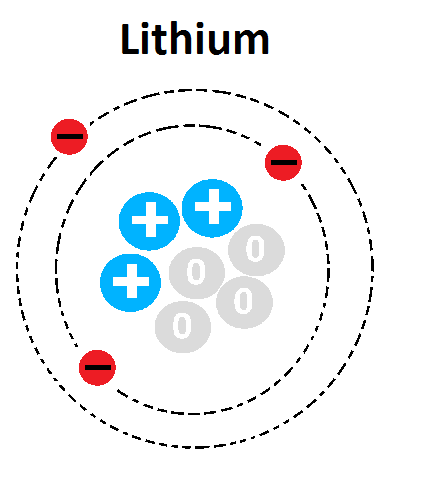
What is the atomic number of this atom?
1
3
4
7
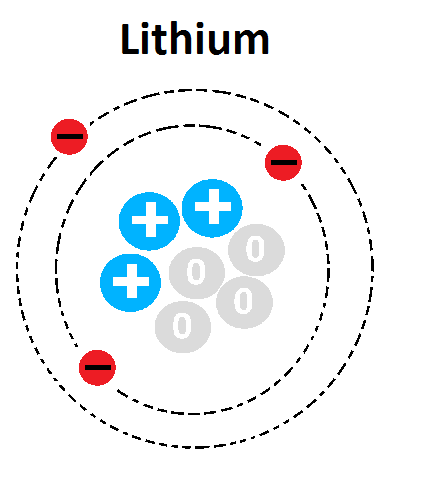
What is the mass number of this atom?
1
3
4
7
An atom has 10 protons, 15 neutrons and 10 electrons what is its mass number.
20
10
35
25
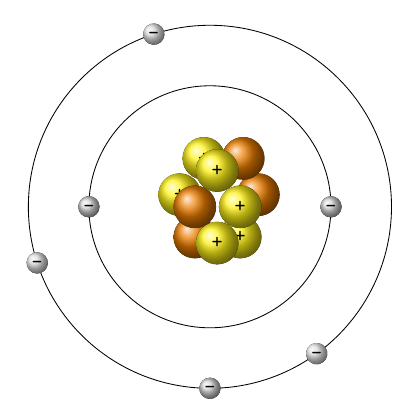
Which element is represented by the image?
Boron
Carbon
Nitrogen
Oxygen
An element with an atomic number of 5 and a mass number of 11 has many neutrons?
11
5
6
16
Of the following sublevels, which is the highest in energy?
4s
3d
4d
5s
Which electron transition releases a photon with the greatest energy?
orbital 6 to orbital 3
orbital 5 to orbital 3
orbital 4 to orbital 3
orbital 7 to orbital 3
Which of these has the shortest wavelength?
infrared
yellow light
microwaves
blue light

Emission spectra (bright line spectra) are created when electrons move from ___.
higher to lower energy levels.
lower to higher energy levels.
s orbitals to p orbitals.
one atom to a different atom.
All forms of EM radiation travel at the same speed and have the same energy.
False, they travel at the same speed but have different energies
True
False, they travel at different speeds but have the same energy

The analysis of the way matter emits and absorbs radiation is called ___.
astronomy
chemistry
spectroscopy
atomic theory

Each element on the periodic table can be identified by its
classification as a solid, liquid or gas.
metallic properties.
ability to react to form compounds.
unique spectral "fingerprint."


The unknown emissions spectra belongs to the element
Hydrogen
Mercury
Neon
Helium
Of the following orbitals, which has the lowest energy and would therefore fill first?
4s
3d
4p
48
What charge does an ion have when it GAINS electrons?
Positive
Negative
Neutral

How many neutrons does this bromine atom have?
35
45
80
115
What two particles determine the mass number?
Protons and electrons
Electrons and neutrons
Protons and neutrons
What differs between an atom and an ion of the same element?
The number of electrons
The number of protons
The number of neutrons
What is the representation of an isotope?
N3-
Al3+
Si
P-33

How many neutrons does this Neon atom have?
21
11
10
12

What is the mass number of this element?
12
24
23
11

What is the charge on a lithium atom that loses 1 electron?
+1
0
-1
-2

What is the number of protons, neutrons, and electrons?
16,34,16
16,18,16
16,16,18
16.18.18

What charge would an ion of calcium have?
+1
+2
-1
-2
Which of the following has an ion with a -3 charge?
Boron
Fluorine
Nitrogen
Neon

1s22s22p63s23p64s23d10
1s22s22p63s2
The 4 orbitals are
s, p, d, f
a, b, c, d
2, 4, 6, 8
How many p orbitals are there in the 2nd energy level? (Remember that each orbital holds 2 electrons.)
2
1
4
3
What is the shorthand electron configuration for Sulfur atom?
[Ar] 3p4
[He] 3s23p4
[Ne] 3s23p4
[Na] 3s23p3


Electrons fill energy levels and sublevels _____ in energy first.
lower
higher
Of the following sublevels, which is the highest in energy?
4s
3d
4p
5s
Name the element- 1s2 2s2 2p6 3s2 3p6 4s2 3d5
Manganese
Magnesium
Aluminum
Boron

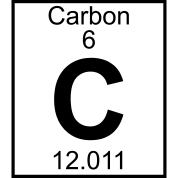
Based on its position on the periodic table, Carbon has __ orbitals and __ valence electrons.
4,2
2.4
2,6
6,2
what is the name of group number 1
halogens
noble gases
alkali metals
alkaline earth metals
Which element is not a metal?
Na
K
Al
Si

What causes an element to have higher electronegativity ?
more orbitals with more protons
more orbitals with fewer protons
fewer orbitals with more protons
fewer orbitals with fewer protons
Which statement correctly and completely identifies a trend?
Atomic radius decreases across a period and increases down a group.
Electronegativity decreases across a period and decreases down a group.
Ionization energy increases across a period and increases down a group.

