
 Worksheets
Factors that affect population
Total questions: 30
Worksheet time: 19mins
Negative factors of a place can lead to a ..... population
sparse
dense
densely
sparsely

Which of the following words describe better the picture?
snowy
steep slopes
icy
no soil

Which of the following words can be used to describe the photo?
dry and poor soil
many people
wet soil and good farming
sparse population
From the following options choose the positive factors that describe a dense population (you can choose more than one)
Pleasant climate
Poor soils
Very hot
Open grassland
From the following words choose the negative factors for a sparse population (you can choose more than one)
Gentle slopes
Dense forest
Lowland
Few raw materials
Choose one of the following reasons why people live in mountain areas
Because they can have space to grow crops
Because of the hard and rocky soil
Because there is a lot of people living there
Because there is poor water supply

According to the physical features is this a .... place?
Densely populated
Sparsely populated

According with the physical features this will be a ... place
Densely populated
Sparsely populated
Population may be affected by physical factors like... (you can choose more than one)
Relief and water supply
Climate and vegetation
Employment opportunities
Industry

The distribution of population around the world is
(a)
The areas with the fewest people are the dense forest and __________
Gentle slopes
Open grassland
Polar regions
The ten fastest-growing cities are.. (look at diagram B from pg 55, you can choose more than one)
Mainly between the tropics
In South America and Asia
Mainly in poor countries
Mainly in rich countries
In one continent
In which country is located Delhi, the 4th of the fastest growing cites?
Kolkata
Bangladesh
India
Japan
In which country is located Dhaka, the 6th of the fastest growing cites?
Seoul
India
Brasil
Bangladesh
In which country is located Karachi, the 3rd of the fastest growing cites?
Japan
Pakistan
South Korea
North Korea
What resources do people compete for in a country (check all that apply)?
food
housing
jobs
land
water
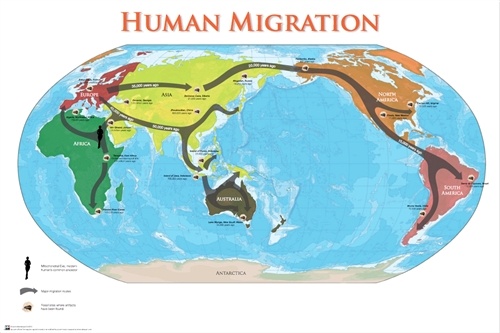
How are people spread out on the earth's surface?
evenly
unevenly
The average number of people per square mile is...
Birth rate
Land area
Population density
too many

Which country will have the most rapid population growth?
Sweeden
United States
Mexico
None

Why would an area be sparsely populated?
lack of natural resources
land is covered with ice
land cannot be developed
all of the above
What are Physical Factors that influence Population Distribution. Pick all that apply
Soils
Climate
Natural Vegetation
Relief
Natural Resources
Is Government Policies a Human factor influencing Population Distribution?
Yes
No
An area that has few people living in it is said to be Densely Populated
True
False
Areas with low populations are the Rainforest and Deserts?
True
False
Which Country has a high population Density
India
Trinidad
Greenland
Which of the following is an example of an abiotic limiting factor on population size?
water availability
Availability of food
disease
predation

This image shows a(n):
urban area.
rural area.
coastal area.
interior area.

This image shows a(n):
rural area.
urban area.
coastal area.
developed area.

