
 Worksheets
AP Psych Unit #6: Developmental Psychology
Total questions: 70
Worksheet time: 41mins
Children who in infancy formed secure attachments to their parents are more likely than other children to:
Prefer the company of adults to that of other children
Become permissive parents
Have healthy adult relationships
Be less achievement oriented
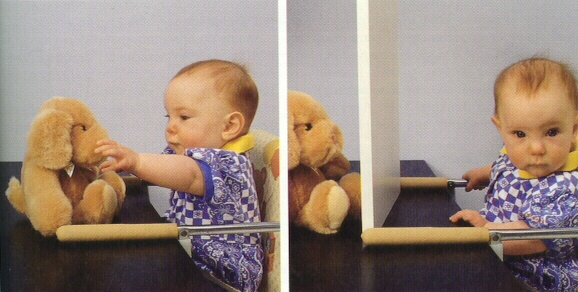
Jenny's parents always do whatever she wants. They give into all of her demands and desires. Jenny's parents are
Permissive
Authoritative
Authoritarian
Submissive
This theorist believed that parents provide temporary scaffolds enabling children to step to higher levels of cognitive learning.
Ainsworth
Piaget
Kohlberg
Vygotsky
The term critical period refers to:
Prenatal development
The initial two hours after a child’s birth
The preoperational stage
A vital time for development and/or learning
Three stages of Kohlberg's moral development include (in order):
Pre-conventional, conventional, post-conventional.
Conventional, pre-conventional, post-conventional.
Post-conventional, conventional, sub-conventional.
Pre-conventional, post-conventional, conventional.
Which of the following is not a stage of Erik Erikson’s Psychosocial Development?
generativity vs. stagnation
security vs. despair
trust vs. mistrust
initiative vs. guilt
What term is used to describe a child’s inability to see the world through anyone else’s eyes except his or her own?
egocentrism
narcissism
disparity
assimilation
Which of the following is a secondary sex characteristic:
testicles
ovaries
clitoris
pubic hair
__ are mental representations or concepts.
schema
scenes
theory
adaptation
What was Harry Harlow’s experiment?
Testing children’s ability to understand conservationism
Testing children’s reactions to caregivers and reasons for attachment
Testing monkeys’ ability to understand conservationism
Testing monkeys’ reactions to caregivers and reasons for attachment
Children of Authoritative Parents often grow up to be…?
Insecurely attached
Disorganized
Well-adjusted
Dependent on others
Children with secure attachments usually are _____________ in romantic relationships
Distant
Clingy
Trusting
Skeptical and Non-Trusting
_____________________ is the end of a women's menstruation/period.
Menopause
Depression
Alzheimer's
Teratogen
Lily is 85 years old and she has recently begun writing her life story. As she thinks back over all that she has done, she comes to the conclusion that her life has had no real meaning or purpose. Based on Erikson's theory, Lily may
develop a sense of isolation
experience feelings of despair and bitterness
become self-indulgent and self-absorbed
develop feelings of inferiority and doubt
The expectations of behavior associated with a particular gender are called:
gender roles
gender types
gender assocations
gender values
Authoritative parents can best be defined as
parents who befriend their children and do not use discipline.
parents who are less controlling and behave with a more accepting attitude.
parents who try to control the behavior of their children in accordance with a set standard of conduct.
supportive parents who discuss their rules and policies with their children.
Which of the following is an example of a primary sex characteristic?
Nonreproductive traits such as breasts and hips in girls
Facial hair in boys
Deepened voice in boys
Pubic and underarm hair in both sexes
Reproductive organs in both sexes
Which of these is an example of a longitudinal study?
The depth perception of infants is measured once a month for 6 months in a row, starting at six months.
In the same month, researchers compare the reaction time of 20 sixth graders and 20 first graders.
The memory of one group of 50-year-old adults is measured and then 20 years later compared to a different group of 70-year-olds.
A psychologist develops a case study of a woman who is 102 by interviewing her twice a week for 12 weeks.
Researchers compare curiosity ratings of a group of toddlers with that same group’s SAT scores 15 years later.
Which is true of social relations during the teen years?
Parental influence peaks during mid to late adolescence.
As teens distance themselves from parents, peer relationships become more important.
High school girls who have the poorest relationships with their mothers have the most intense friendships with peers.
Most adolescents have serious disagreements with parents, leading to great social stress.
Teens are generally more concerned with family relationships than peer relationships.
According to Mary Ainsworth's research on attachment what would a child need most to become "securely attached"?
sensitive, responsive caregivers
the right temperament
a terry cloth-wrapped "surrogate" mother
an imprinting experience shortly after birth
enriched motor development experiences
Hans Selye referred to the body's stages in response to stress as
the Fight-or-Flight response.
the General Adaptation Syndrome.
Learned Helplessness
Drive-Reduction.
Which theory would be most helpful for explaining why people are motivated to watch horror movies?
James-Lange Theory
Drive-Reduction Theory
Maslow's Hierarchy of Needs
Arousal Theory
The motivational theory that focuses on internal states of tension, such as hunger, that motivate us to pursue actions that lessen tension is
Drive Reduction Theory
Instinct Theory
Arousal Theory
Incentive Theory
Which of the following activities is inconsistent with Drive-Reduction Theory?
eating food that tastes bad
going swimming on a hot day
eating when you are not hungry
taking a nap when you are drowsy
. The part of the brain that seems to influence emotion is the ________________.
thalamus
pons
amygdala
thyroid gland
Which sequence of events in emotional responses is characteristic of the James-Lange theory of emotion?
stimulus --> emotion --> physiological changes
stimulus --> physiological changes --> emotion
physiological changes --> stimulus --> emotion
stimulus --> emotion AND physiological changes (simultaneous)
As Erica watched the televised drawing of lottery numbers, she realized she had the winning combination. If her heart starts to race at the same instant that she feels euphoria over winning the lottery, Erica's response pattern would lend support to
the Cannon-Bard Theory of Emotion
the James-Lange Theory of Emotion
Schachter's two-factor Theory of Emotion
the Common-Sense Theory of Emotion
The perception that one can strongly influence the outcome and destiny of one's own life exemplifies
the self-reference phenomenon
the spotlight effect
an internal locus of control
reciprocal determinism
According to Maslow, we need
love before we need food.
adequate clothing before we need to focus on our self-esteem.
religious fulfillment before we need adequate housing.
self-actualization before we need friendship.
Carl Rogers referred to an attitude of total acceptance toward another person as
the spotlight effect
unconditional positive regard
self-actualization
free association
Dr. Hewlett believes that early childhood experiences have a strong influence on adult personality and that our personality is largely shaped by unconscious forces. Dr. Hewlett's views MOST closely mirror those of the
Behavioral Perspective
Humanistic Perspective
Psychoanalytic Perspective
Biological Perspective
The ego's protective methods of reducing anxiety by unconsciously distorting reality are known as
Reciprocal Determinism
Defense Mechanisms
Self-efficacy
Overconfidence Bias
The interacting influences between personality and environmental factors and their impact on behavior is known as
Self-serving Bias
Self-actualization
Reciprocal Determinism
Self-efficacy
transform into an earlier development period in the face of stress (during exam week you start to suck your thumb)
Projection
Regression
Reaction formation
Rationalization
The “Big Five” personality characteristics are:
Emotionality, extroversion, openness, neuroticism, and agreeableness
Anxiety, extroversion, agreeableness, neuroticism, and sociability
Outgoing, conscientiousness, extroversion, agreeableness, and
neuroticism
Openness, conscientiousness, extroversion, agreeableness, and
neuroticism
Extroversion, neuroticism, anxiety, agreeableness, and openness
The Trait Theory of Personality focuses mostly on
genetics.
similarities and differences in personality characteristics.
common personality characteristics.
reactions to major events.
group behaviors.
________________ proposed a theory that described emotion as beginning with undifferentiated arousal. The specific emotional label we use to describe the arousal depends on our interpretation of the context.
James-Lange Theory
Cannon-Bard Theory
Schacter and Singer Theory
Tim Adams' Harvard Study
This part of the brain tells a person they are full after eating.
Amygdala
Hypothalamus
Cerebellum
Hippocampus
Selye came up with General Adaptation Syndrome and its 3 phases are:
Alarm, resistance, exhaustation
Alarm, relapse, emergency
Alarm, relapse, emergent
Alarm, restraint, effect
A person giving up before they even start a task, as a result of feeling they have no control, is known as
Learned Helplessness
Aggression
Catharsis
General Adaptation Syndrome
Which psychologist is properly matched with their topic of focus?
Freud: Stages of Psychosocial Development
Erikson: Stages of Psychosexual Development
Piaget: Stages of Emotional Development
Kohlberg: Stages of Moral Development

