wayground logo

Free Printable Worksheets

Font size

S
M
L
XL
Worksheets

Yr 10 - Universe - Telescopes

Total questions: 25

Worksheet time: 17mins
Name
Class
Date
1.

Reflecting telescopes use _______ to focus light.

a)

Lenses

b)

Flat mirrors

c)

Curved Mirrors

d)

A lens and lasers

2.

A refracting telescope uses _______ to focus light.

a)

Lenses

b)

Mirrors

c)

Lasers

d)

Water

3.

Modern telescopes are reflecting because: (Choose all that apply)

a)

Lenses are difficult to manufacture

b)

Lenses are heavy and fragile

c)

lenses absorb light that passes through them

d)

Lenses require only 1 perfect surface

4.

One of the issues created by the air surrounding us is:

a)

Interferometry

b)

Reflection

c)

Interference

d)

Atmospheric blurring

5.

What type of telescope can work 24 hours a day and even be used in the rain?

a)

Refracting Telescope

b)

Radio Telescope

c)

Newtonian Telescope

d)

Solar Telescope

6.

Which of these light types cannot be captured by a telescope?

a)

Radio waves

b)

Microwaves

c)

Ultraviolet

d)

All of them can be captured

7.
Which of the following does the radiation from a star tell us
a)
temperature
b)
velocity
c)
composition
d)
all of these
8.
Why is the Hubble telescope located in space?
a)
So it can be closer to the stars it magnifies
b)
They have very large optical lenses
c)
So its images arent distorted by Earth's atmosphere 
d)
So it can be operated by astronauts 
9.
Why are many large optical telescopes located on mountains?
a)
to be closer to the stars
b)
to be above part of the atmosphere
c)
because it is easier to build telescopes on mountains
d)
to be closer to city lights
10.
Radio telescopes biggest advantage is that they:
a)
Can be used during the day
b)
Can be used in any type of weather
c)
Almost all radio waves make it to the surface
d)
All of these
11.
Why must Ultra-Violet observing be done in space?
a)
The ozone blocks most of the UV rays in the surface.
b)
It’s hard to know exactly where the ozone hole will be to find UV images
c)
It’s hard to use UV telescopes and radio telescopes together on the surface.
d)
It’s hard to use UV X-Ray telescopes and radio telescopes together on the surface
12.
What is the MAJOR problem with trying to see stars in or near a city?
a)
Not as many people with telescopes
b)
Light pollution
c)
Clouds
d)
The stars are too far away.
13.

Which light waves have the longest wavelength?

a)

red light

b)

radio waves

c)

ultraviolet light

d)

gamma rays

14.

Which bands of electromagnetic radiation are blocked from reaching Earth's surface by our atmosphere?

a)

visible light

b)

radio waves

c)

x-ray

d)

gamma rays

15.
A spectrograph breaks the light from an object into a(n) ____________, or range of different colors, and produces an image of it.
a)
spectrum
b)
spectragraph
c)
visible light
d)
prism
16.

The space through which light passes in a telescope or camera

a)

Magnifying Glass

b)

Primary Opening

c)

Aperture

d)

Convex Mirror

17.

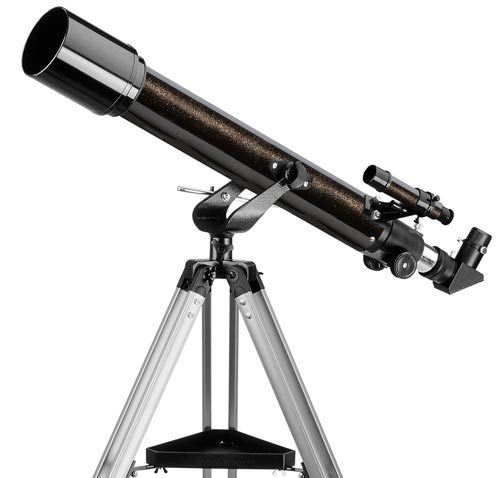
This is a picture of what type of telescope

a)

Refractor

b)

Reflector

18.

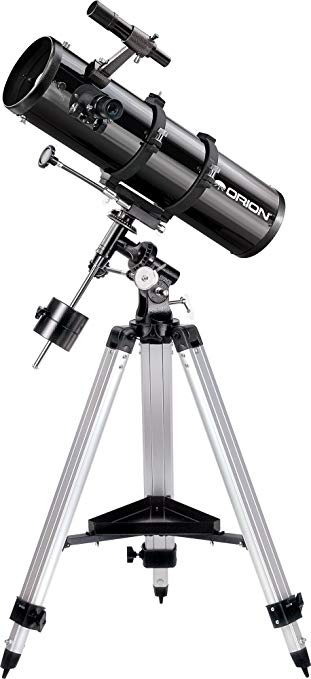
This is a picture of what type of telescope

a)

Refractor

b)

Reflector

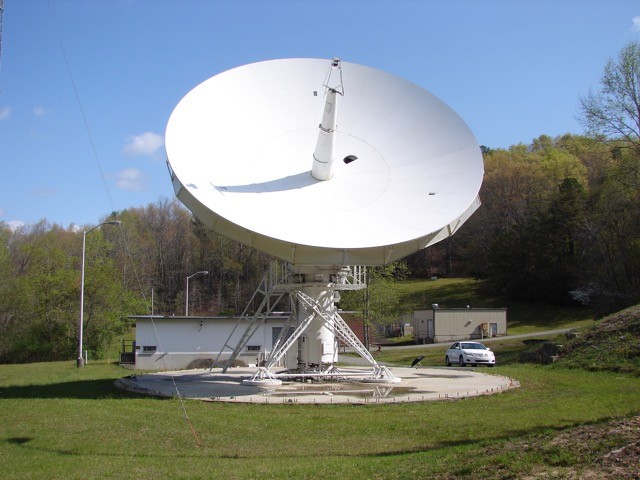
19.
a)
reflection telescope
b)
refraction telescope
c)
radio telescope
20.
a)
reflection telescope
b)
refraction telescope
c)
radio telescope
21.
Which telescope bends light the most making distorted images? 
a)
Reflector
b)
Refractor
c)
Compound
22.
Which telescope bounces light making clear images? 
a)
Reflector
b)
Refractor
c)
Compound
23.
The electromagnetic spectrum consists of
a)
all of the colors of light you can see with your eyes.
b)
all of the different types of electromagnetic waves.
c)
a band of colors formed when white light passes through a prism.
d)
the distance between the crest of one wave and the crest of the next wave.
24.

The speed of light is

a)

30,000 km/s

b)

300,000 km/s

c)

30,000 mi/ s

d)

300,000 m/s

25.
Electromagnetic radiation is simply known as 
a)
light
b)
refraction
c)
reflection
d)
time