wayground logo

Free Printable Worksheets

Font size

S
M
L
XL
Worksheets

WWI Test

Total questions: 30

Worksheet time: 3hrs 54mins

Name
Class
Date
1.
What was the main causes of WW1?
a)
Militarism, Allegiances, Imperialism, Nationalism,  Assassination.
b)
Migration, Alliances, Nationalism, Imperialism, Assassination
c)
Militarism, Alliances, Nationalism, Imperialism, Assassination
d)
Militarism, Alliances, Nationalities, Imperialism, Assassination
2.
What did Germany send to Mexico that offered to help them win land back from the United States if Mexico would start a war with the US?
a)
The Zimmerman Telegram
b)
The Outlandish Letter
c)
The Surprising Phone Call
d)
The Ziggler Telegram
3.
This word means seeking to gain colonies to gain land for resources; it was a cause of World War I.
a)
Militarism
b)
Imperialism
c)
Alliances
d)
Nationalism
4.
This word means support/agreements between two countries to protect one another and support each other during war time.
a)
Nationalism
b)
Imperialism
c)
Alliances
d)
Militarism
5.
Who won WWI?
a)
Allied Powers
b)
Central Powers
c)
Alliance Powers
d)
League of Nations
6.
This started World War I (As in the Europe Spark)
a)
an assassination
b)
the Zimmerman Telegram
c)
the invasion of a neutral country
d)
a formal treaty
7.
How did many Americans react to the Zimmermann Telegram?
a)
They became concerned about Russian expansion
b)
They wanted to avoid membership in the League of Nations.
c)
They wanted to fire Zimmermann
d)
They were outraged over a possible German-Mexican alliance.
8.
Which word means: Strong love for and pride in one's country
a)
Propaganda
b)
Nationalism
c)
Belief system
d)
Pride
9.
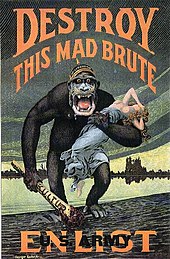
Which word is defined as: Biased, persuasive media (all types) used to promote a specific idea or point of view
a)
Dictatorship
b)
Fascism
c)
Patriotism
d)
Propaganda
10.
Which word is defined as: A loan made from the citizens to the government that the government pays back with interest.
a)
Bail Bond
b)
Victory Bond
c)
James Bond 
d)
Atom Bond 
11.
Which word is defined as: Using less food and supplies on the home-front so soldiers on the front line can have more resources
a)
Ratios
b)
Portions
c)
Rationing
d)
Reduction 
12.
When the war broke out in Europe in 1914, the United States at first tried to stay _______________. 
a)
economic
b)
in the war
c)
neutral
d)
profitable
13.
France, Russia, and Britain were known as ________ powers.
a)
Central
b)
Southern
c)
Allied
d)
Northern
14.
In WWI the new strategy of trench warfare was an effective way to 
a)
exchange messages
b)
transport troops
c)
isolate the soldiers who were sick
d)
defend a position by fighting from deep within ditches
15.
Why did Americans grow their win victory gardens at home after the US joined WWI?
a)
Food was too expensive
b)
farmers were being drafted
c)
allowed more crops to go to soldiers in the war
d)
It was a way of showing their support for the troops
16.
What were Wilson's 14 Points?
a)
A plan for beating Germany in the war
b)
Ways to punish Germany
c)
A blueprint for peace
d)
14 reasons why WWI happened
17.
The Treaty of ___________ was signed ending WWI.
a)
Guam
b)
Roosevelt
c)
Versailles
d)
France
18.
The Treaty of Versailles blamed _____________ for WWI and treated them harshly.
a)
Japan
b)
Germany
c)
Austria-Hungary
d)
America
19.
The U.S. joined forces with the __________  Powers during WWI.
a)
Allied
b)
Central
c)
Axis
d)
Combined
20.

Which of the following took place from 1914 to 1918?

a)

The Great Depression

b)

World War II

c)

World War I

d)

The Spanish-American War

21.

Austria-Hungary, Germany, and the Ottoman Empire became known as

a)

the Allied Powers

b)

the League of Nations

c)

the Central Powers

d)

the Eastern Powers.

22.

What caused the United States to join the Allies in fighting World War I? (choose all that apply)

a)

the sinking of the Lusitania

b)

the German boycott of American goods

c)

the United States’ fear of the Austro-Hungarian powers

d)

the Germans’ use of unrestricted submarine warfare

23.

Which of the following nations would have entered the United States if Zimmerman’s plot would have succeeded?

a)

Serbia

b)

Spain

c)

Switzerland

d)

Mexico

24.

Most of the fighting in World War I occurred

a)

in the Mediterranean Sea

b)

in trenches

c)

in Great Britain

d)

because of airplanes

25.

Russia left World War I because

a)

they no longer supported Serbia’s attempt to take over Bosnia.

b)

they were suffering too many casualties and feared they would lose the war.

c)

a revolution began in their country

d)

the Czar became ill and withdrew from the war

26.

Which of the following statements is supported by the graph?

a)

France lost more troops than Britain and the U.S. combined.

b)

About equal amount of Central Powers and Allied forces died.

c)

About equal number of forces in Russia and Austria-Hungary died

d)

More U.S. forces than forces from the British Empire died.

27.

Who was Vladimir Lenin?

a)

Leader of the Bolshevik Revolution

b)

Named Russia the USSR

c)

Supported by the Red Army

d)

All of the above

28.

Germany was especially unhappy about the Treaty of Versailles because it

a)

forced Germany to reduce the size of its army and navy.

b)

forced Germany to put Hitler in power

c)

declared that Germany and Austria were responsible for starting the war.

d)

Both A and C

29.

Who was the person who assassinated the Archduke of Austria-Hungary?

a)

Vladimir Lenin

b)

Gavrilo Proncip

c)

Woodrow WIlson

d)

Winston Churchill

30.

Tell me one thing that will stick with you about WWI.

4 lines