wayground logo

Free Printable Worksheets

Font size

S
M
L
XL
Worksheets

Physical Science Final Review

Total questions: 50

Worksheet time: 13hrs 30mins

Name
Class
Date
1.
Atoms of which two elements will form an ionic bond?
a)
Mg and Cl
b)
N and O
c)
Fe and Co
d)
Rb and Al
2.
Which compound will most likely be formed when lithium (Li) and nitrogen (N) are chemically combined?
a)
LiN
b)
Li3N
c)
LiN3
d)
Li3N3
3.
Which compound results from covalent bonding?
a)
NH4Cl
b)
K2SO4
c)
NaCl
d)
C6H12O6
4.
Why are beta particles able to penetrate objects better than alpha particles are?
a)
because beta particles are larger than alpha particles
b)
because beta particles are smaller than alpha particles
c)
because beta particles are negatively charged, while alpha particles are neutral
d)
because beta particles travel in a straight line, while alpha particles travel in waves
5.
This diagram represents a closed series circuit. What would happen if the voltage were doubled?
a)
The current would quadruple.
b)
The current would double.
c)
The current would remain constant.
d)
The current would be reduced by half.
6.
How would decreasing the diameter of the wires in a circuit influence the resistance and flow of electrons in the circuit?
a)
It would decrease the resistance, causing fewer electrons to flow through the circuit.
b)
It would increase the resistance, causing fewer electrons to flow through the circuit.
c)
It would decrease the resistance allowing more electrons to flow through the circuit.
d)
It would increase the resistance by allowing more electrons to flow through the circuit.
7.
How could the strength of an electromagnet be increased?
a)
by reducing the length of the core of the electromagnet
b)
by using rubber material as the core for the electromagnet
c)
by decreasing the amount of current in the electromagnet
d)
by increasing the number of coils in the wires of the electromagnet
8.
Student X pushes a 10-N box with a force of 2 N. At the same time, Student Y pushes the same box with a force of 6 N, but in the opposite direction. Which would most likely occur?
a)
The resultant force on the box would be 8 N.
b)
The resultant force on the box would be 18 N. 
c)
The box will move toward Student X.
d)
The box will move toward Student Y. 
9.
This diagram represents a neutral atom of fluorine-19. Which best describes the structure of fluorine-19?
a)
2 electrons in the first energy level; 7 electrons in the second energy level
b)
2 electrons in the first energy level; 8 electrons in the second energy level
c)
9 protons and 9 neutrons in the nucleus
d)
10 protons and 9 neutrons in the nucleus
10.
Which equation represents a decomposition chemical reaction?
a)
2S + 3O2 → 2SO3
b)
2NaCl → 2Na + Cl2
c)
2K + 2H2O   → 2KOH + H2
d)
Zn + 2HCl →      ZnCl2 + H2
11.
When is work done on an object?
a)
when a force is applied to an object and the object remains stationary
b)
when a force is applied to an object and the object moves in the same direction as the force
c)
when the frictional force on an object is greater than a force applied to the object
d)
when two forces of equal magnitude are applied to the object in opposite directions
12.
This diagram represents a closed circuit with three identical lightbulbs. If bulb Y stops working in the circuit, what will happen to bulbs X and Z?
a)
Bulb X and bulb Z will not glow.
b)
Bulb X will glow, but bulb Z will not glow.
c)
Bulb X and bulb Z will glow.
d)
Bulb X will not glow, but bulb Z will glow.
13.
Two objects are traveling on the same track. For 10 s, Object X has an average acceleration of 3.0 m/s/s. If Object Y has an initial velocity of 0 m/s and a final velocity of 25 m/s after 10 s, how does its acceleration compare to Object X's?
a)
The average acceleration of Object Y is greater than Object X by 247 m/s/s.
b)
The average acceleration of Object Y is greater than Object X by 32 m/s/s. 
c)
The average acceleration of Object X is greater than Object Y by 2.6 m/s/s.
d)
The average acceleration of Object X is greater than Object Y by 0.5 m/s/s.
14.
A desk exerts an upward force of 1.5 N to a book lying on it. What force does the book exert on the desk?
a)
a downward force of 0.0 N
b)
a downward force of 1.5 N
c)
a downward force of 6.5 N
d)
a downward force of 15 N
15.
This unbalanced equation represents a chemical reaction:
HgO → Hg + O2
Which is the correctly balanced chemical equation for this reaction?
a)
HgO → Hg + 2O2
b)
2HgO → Hg + O2
c)
2HgO → Hg + 2O2
d)
2HgO → 2Hg + O2
16.
This term describes what is produced in a chemical reaction.
a)
compounds
b)
chemicals
c)
reactants
d)
products
17.
Which family/group of elements has a full set of valence electrons and is completely nonreactive? 
a)
Alkali Metals
b)
Noble Gases
c)
Transition metals
d)
Halogens
18.
Which term describes matter's ability to transfer heat or electricity?
a)
Malleability
b)
Luster
c)
Conductivity
d)
Color
19.
A sample of carbon contains carbon-12, carbon-13, and carbon-14.  Why do these have different mass numbers, but the same atomic number? 
a)
They are all isotopes and have different number of protons
b)
They are all isotopes and have different number of neutrons
c)
They are all isotopes and have different number of electrons
d)
They are all isotopes and have different number of protons They are all isotopes and have different number of protons and electrons
20.
Which wavelengths are the shortest on the electromagnetic spectrum?
a)
Radio
b)
Gamma
c)
Infrared
d)
Ultraviolet
21.
Cellular telephones use what type of wave?
a)
X-rays
b)
Gamma
c)
Microwaves
d)
Radio
22.
What is the process in which an unstable atomic nucleus emits charged particles or energy or both?
a)
radioactivity
b)
oxidation
c)
decomposition
d)
reflection
23.
What is the process in which an unstable atomic nucleus emits charged particles or energy or both?
a)
radioactivity
b)
oxidation
c)
decomposition
d)
none of the above
24.
Which of the following particles is smaller than the rest?
a)
electron
b)
neutron
c)
proton
d)
nucleus
25.
You have a 100-gram sample of a radioisotope which a half-life of 10 years.  How much of the sample do you have left after 30 years?
a)
100 grams
b)
50 grams
c)
25 grams
d)
12.5 grams
26.
Which of the following is an example of an object with elastic potential energy?
a)
a wind up toy that has been wound up 
b)
a compressed basketball
c)
a stretched rubber band
d)
all of the above
27.
The unit for force is which of the following?
a)
joule
b)
kilogram
c)
meter
d)
newton
28.
When a pair of balanced forces acts on an object, what is true of the net force that results?
a)
it is greater in size than both forces
b)
is it greater in size than one of the forces
c)
it is equal in size to one of the forces
d)
it is equal to zero
29.

What does volume measure?

a)

it's not defined for a solid

b)

it's measured in kilograms

c)

the amount of matter

d)

the amount of space matter takes up

30.

What does mass measure?

a)

the milliliters in a beaker

b)

the centimeters on a meter stick

c)

how much matter there is

d)

how much space matter takes up

31.

choose the pH values for a substance considered an acid

a)

7

b)

2

c)

8

d)

4

32.

choose the pH values for a substance that's a base

a)

10

b)

7

c)

8

d)

3

33.

a loaf of bread has a mass of 500 g and a volume of 2500 cm3 - what is the density of the bread?

a)

0.2g

b)

5 ml

c)

5 g/cm3

d)

0.2 g/cm3

34.

solids have ....

a)

a definite shape but not volume

b)

a definite shape and volume

c)

a definite volume but not shape

d)

no defined shape or volume

35.

gases have.....

a)

no definite shape or volume

b)

definite shape and volume

c)

definite shape but not volume

d)

definite volume but not shape

36.

in a solid if temperature increases what happens to particles?

a)

there is no change

b)

Particles slow down

c)

particles speed up

d)

particles start to move

37.

temperature measures what?

a)

how hot or cold a substance is

b)

the average kinetic energy of particle motion

c)

the time in which it takes particles to start moving

d)

the total energy of all the particles moving

38.

the smallest units of matter are called

a)

photons

b)

cells

c)

atoms

d)

positrons

39.

a nucleus

a)

contains electrons and protons

b)

has a positive charge

c)

has only protons

d)

has only neutrons

40.

The periodic table is organized by

a)

atomic mass

b)

atomic number

c)

the number of neutrons

d)

energy levels

41.

the main groups in the periodic table or metalloids, metals and

a)

halogens

b)

gases

c)

alkali metals

d)

non-metals

42.

atomic mass is determined by

a)

adding protons and electrons together

b)

subtracting neutrons from protons

c)

adding protons and neutrons together

d)

the number of neutrons

43.
The law of  ________________states that mass is neither created or destroyed in a chemical reaction.
a)
Evolution
b)
Conservation of mass
c)
Destruction
d)
The land
44.
You can balance a chemical equation by using ______________, the numbers that appear before the formulas. 
a)
Subscripts
b)
Superscripts
c)
Covalent bonds
d)
Coefficients
45.
A __________________reaction is a reaction in which one element takes the place of another element in a compound.
a)
Single replacement
b)
Double replacement
c)
Combustion
d)
Synthesis
46.
Which of the following is a negatively charged subatomic particle?
a)
Electron
b)
Proton
c)
Neutron
d)
Quark
47.
The burning of wood is a physical change
a)
true
b)
false
48.

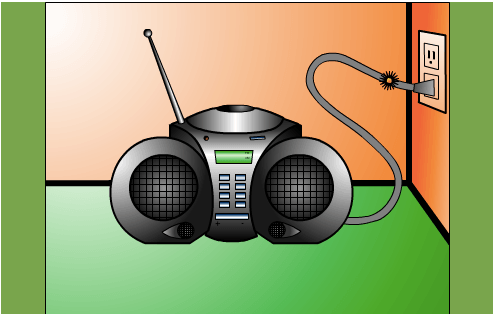
What is the energy conversion when you plug in a stereo and listen to music?

a)

electrical to mechanical

b)

chemical to heat

c)

electrical to sound

d)

potential to sound

49.

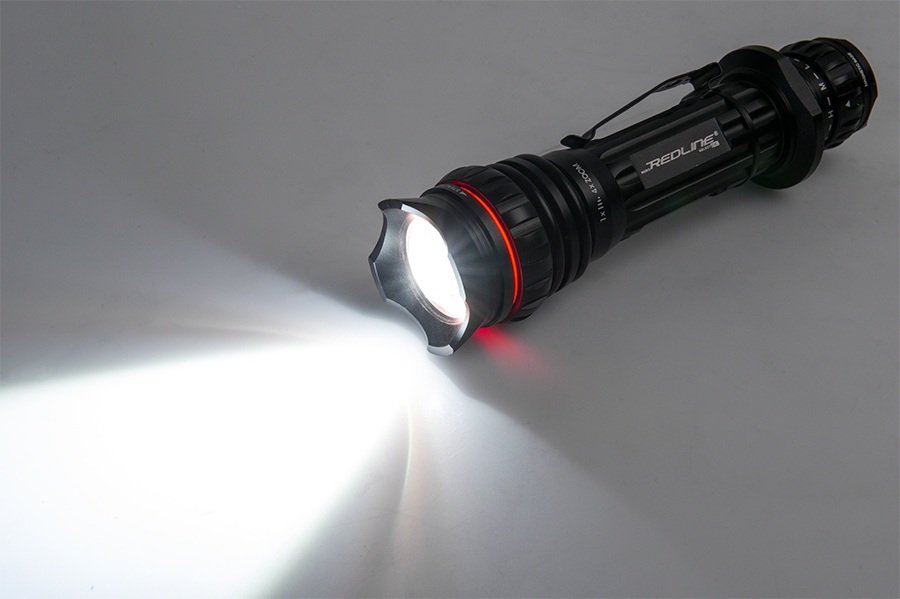
What is the energy conversion when you put batteries in a flashlight to make it turn on?

a)

chemical to light

b)

light to kinetic

c)

chemical to thermal

d)

nuclear to light

50.
If Steve throws the football 50 meters in 3 seconds, what is the average speed (velocity) of the football?
a)
0.06 m/s
b)
16.7 m/s
c)
150 m/s
d)
53 m/s