
 Worksheets
Porifera and Cnidarians
Total questions: 22
Worksheet time: 11mins

Name of D (opening at top)
Osculum
Ostia
Choanocytes
Incurrent Pore
Flagella inside a sponge keep water moving through its body. Why is this necessary?
It prevents the sponge from floating away
It allows the sponge to feed
It allows the sponge to absorb carbon dioxide
It maintains the water pressure inside the sponge

Sponges are primarily sessile organisms. What does this mean?
They live permanently in one palce
They move around their whole life
Which of the following type of cell digests and distributes food for the sponge?
Choanocytes
Amoebocytes
Endodermal cells
Epidermal cells
_________________ are specialized buds made to survive harsh weather.
Spicules
Plankton
Flagella
Gemmules

Cnidarians have what type of symmetry?
Asymmetry
Radial
Bilateral
No symmetry
What are cnidocytes?
digestive cells
another name for eyes
reproductive cells
stinging cells
What type of digestive system do most cnidarians have?
complete
incomplete
what are the two body forms of a cnidarian?
polyp and medusa
medusa and sessile
polyp and sessile
medusa and radual

What type of symmetry does a sponge have?
bilateral symmetry
radial symmetry
asymmetry
medial symmetry
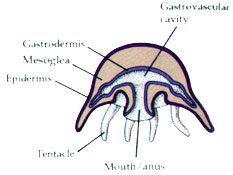

Sea Anemones and Corals belong to the Class ______________
Anthozoa
Cubozoa
Hydrozoa
Scyphozoa
What are the stinging cells inside the cnidocyte that inject paralyzing toxins into their prey?
pinacocytes
lysomatocyts
choanocytes
nematocysts

Which Class does this organism belong in?
Class Scyphozoa
Class Anthozoa
Class Hydrozoa
Class Cubozoa
Box Jellyfish belong to the Class ______________
Anthozoa
Cubozoa
Hydrozoa
Scyphozoa


