
 Worksheets
Proteins, Nucleic Acids and Nutrition
Total questions: 26
Worksheet time: 6hrs 16mins
What is the best definition of the function of nucleic acids?
They contain defense mechanisms against bacteria
They contain the genetic information that makes you an other living things unique
They are used as the structural components of the body (muscles and organs)
They create the cell membrane
What is the function of proteins?
Energy for the body
They insulate the body, are used for short term energy and are found in glycogen
They are used as the structural components of the body (muscles and organs)
They create the cell membrane
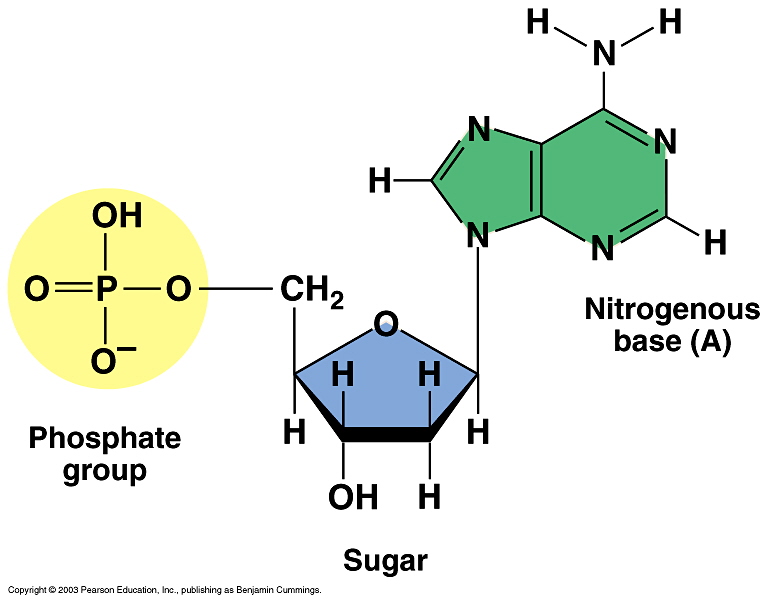

Which biomolecule is this a picture of?
amino acid
nucleotide
monosaccharide
fatty acid

Which biomolecule helps form muscles?
Nucleic Acid
Carbohydrate
Protein
Lipids

Which biomolecule is responsible for insulation and energy storage?
Protein
Nucleic Acid
Lipid
Carbohydrate
This bio-molecule is used LAST by the body in starvation...
Nucleic Acids
Carbohydrates
Lipids
Proteins

How many monomers make up this biomolecule?
1
2
3
4
there are no monomers making up this molecule
Which elements are found in proteins?
C, H, O
C, H, O, N, P, S
C, H, O, N, P
C, H, O, N, S

Meats, Beans, and Nuts
Carbohydrates
Lipids
Proteins
Nucleic Acids
Bread, Pasta, Fruit, and Vegetables
Carbohydrates
Lipids
Proteins
Nucleic Acids

What type of chemical bond is illustrated below?
a sugar-sugar bond
a glycerol-fatty acid bond
a peptide bond
a phosphate-phosphate bond
a hydrogen bond

Look at this picture of the levels of protein structure. Which level shows the order of the individual amino acids?
Primary structure
Secondary structure
Quaternary structure
The amount of calories in 1 g of protein is
9 calories per gram
16 calories per gram
4 calories per gram
2x the calories as lipids
In a 2000 calorie diet, we are supposed to get up to ___ calories from protein. (Hint you need the percent).
1000 calories
600 calories
100 calories
nearly all our calories should be from proteins
Deficiency in nucleic acids is difficult since all plant and animal foods we consume contain the nucleic acids.
True
False
If we consume a diet deficient in a particular amino acid, we will show signs of protein deficiency such as
brittle hair
flaky nails
weaker immune response
all the above
International diets that consist of ___ and ___ will form whole proteins at a meal.
rice, beans
nuts, seeds
corn, beans
all the above
Nucleic acids determine the structure of proteins.
True
False
Amino acids are called that from
the -NH2 (sometimes NH3+)group and -COOH group
COOH group only
the R group
A polymer of amino acids is most correctly called a(n)
polysaccharide
fatty acid
polypeptide
nucleic acid

