wayground logo

Free Printable Worksheets

Font size

S
M
L
XL
Worksheets

Living Things-3rd grade

Total questions: 44

Worksheet time: 24mins

Name
Class
Date
1.
What can living things do?
a)
They are born, they jump and all of them sing songs.
b)
They are born, they grow, they reproduce and they die.
c)
They do nothing.
2.

___ structures are found on the outside of living things.

a)

Internal

b)

External

3.

___ are behaviors or physical characteristics that help an organism to survive and reproduce in its environment.

a)

Biomes

b)

Roots

c)

Nocturnal

d)

Adaptations

4.

Fish have ___ for taking in oxygen and fins for movement.

a)

spines

b)

blubber

c)

gills

d)

fur

5.

Blending in with the environment is called ___.

a)

migrating

b)

camouflage

c)

nocturnal

d)

biome

6.
A _______ is the basic unit of living things.
a)
vacuole
b)
nutrient
c)
cell
d)
brain
7.
This is a thin layer surrounding all cells that allows water and dissolved materials to pass into and out of the cell.
a)
nucleus 
b)
vacuole 
c)
cell membrane
d)
chloroplast 
8.
This is a jellylike substance that fills much of the cell.
a)
cell membrane 
b)
cytoplasm 
c)
chloroplast
d)
vaculoe 
9.
This is the control center of a cell.
a)
nucleus
b)
vacuole 
c)
cytoplasm
d)
cell wall
10.
What is one thing a plant cell has, but an animal cell does not?
a)
nucleus 
b)
cell membrane
c)
cell wall
d)
vacuole 
11.
What is another thing a plant cell has, but an animal cell does not?
a)
vacuole 
b)
chloroplasts 
c)
cell membrane
d)
nucleus 
12.
This means making more of the same thing.
a)
developing
b)
reproducing 
c)
energy
d)
releasing energy
13.

In which part of the plant can we find the seeds?

a)

In the fruit.

b)

In the roots.

c)

In the stem.

d)

In the leaves.

14.

What is a cell membrane?

a)

a thin wall surrounding a cell

b)

the liquid substance of a cell

c)

part of a cell that converts food into energy

15.

Which part of the cell STORES water and minerals?

a)

mitochondria

b)

nucleus

c)

cell membrane

d)

vacuole

16.

Where does PHOTOSYNTHESIS happen in plants?

a)

in the nucleus

b)

everywhere in the cell

c)

in the cytoplasm

d)

in the chloroplasts

17.
What type of animal spends its entire life under water, has fins, and breathes using gills
a)
amphibian
b)
fish
c)
bird
d)
reptile
18.
What type of animal has dry scaly skin and lays its eggs on land?
a)
fish
b)
amphibian
c)
reptile
d)
mammal
19.
What is the only type of animal that has feathers?
a)
bird
b)
mammal
c)
amphibian
d)
reptiles
20.
What type of animal has fur and feeds its young with milk?
a)
birds
b)
reptiles
c)
amphibians
d)
mammals
21.
What type of animal spends part of its life in water and part on land and lays its eggs in water?
a)
amphibians
b)
reptiles
c)
birds
d)
fish
22.
Which type of animal goes through a metamorphosis (body change)? 
a)
bird
b)
mammal
c)
reptile
d)
amphibian
23.
What classification of animals do humans belong to?
a)
fish
b)
mammals
c)
reptiles
d)
amphibians
24.
What classification of animals are  vertebrae (have a backbone)?
a)
birds only
b)
reptiles only
c)
reptiles and birds but not mammals and fish
d)
mammals, fish, reptiles, amphibians, and birds
25.
Which animal is warm blooded?
a)
reptiles
b)
fish
c)
mammals 
d)
amphibians
26.
Cold blooded animals
a)
Make their own heat
b)
Are the temperature of their surroundings
c)
Have blue blood
d)
Are a type of plant
27.
Scientists classify animals by their...
a)
Color
b)
Size
c)
Characteristics
d)
Sound
28.
Animals that have backbones are...
a)
Vertebrates
b)
Invertebrates
c)
Mollusk
d)
Lobster
29.
How are vertebrates and invertebrates alike?
a)
They fly
b)
They have backbones
c)
They don't have backbones
d)
They reproduce
30.
The ________ of the fish allow it to take in oxygen.
a)
fins
b)
gills
c)
scales
d)
lungs
31.

We classify plants according to how they reproduce.

a)

Ferns & mosses

b)

Flowering & non-flowering

c)

Fruit & Seed

d)

None of the three.

32.

Angiosperms are

a)

Flowering plants that produce fruit with seeds.

b)

Flowering plants that produce fruit only.

c)

Flowering plants that produce seeds.

d)

None of the given options.

33.

Gymnosperms produce

a)

Seeds inside a cone

b)

Fruit

c)

Flower

d)

Fruit & seeds

34.
The Seed is the first stage of a Plant's Life Cycle...
a)
True
b)
False
35.

What does a life cycle show?

a)

Shows an animal or plants life from birth to adult

b)

Shows what one can eat to get stronger

c)

Shows plant and animal needs

d)

Shows and describes food chains

36.

How are frogs and butterflies alike?

a)

They both like flowers

b)

They both eat fish

c)

They both start out as an egg

d)

They both like to swim

37.

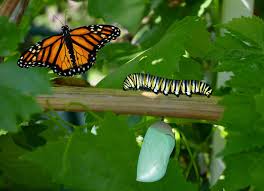
What stage of a butterfly's life comes after the chrysalis stage?

a)

caterpillar

b)

butterfly

c)

egg

38.

A caterpillar needs what in order to change into a butterfly?

a)

eat a lot of food to prepare for the chrysalis stage

b)

molt its skin

c)

change its gills into lungs

d)

germinate from its seed

39.

select the order of the frog life cycle

a)

egg, froglet, tadpole, adult

b)

froglet, tadpole, egg, adult

c)

tadpole, egg, adult, froglet

d)

egg, tadpole, froglet, adult

40.

What does metamorphosis mean?

a)

to change or transform

b)

a fully grown organism that can reproduce

c)

to shed an outer skeleton or skin

d)

the stages in an organism's life from birth to death.

41.
What is the second stage of the life cycle of a butterfly?
a)
caterpillar
b)
egg
c)
adult
d)
chrysalis
42.

A tadpole uses ___________ the breathe.

a)

lungs

b)

legs

c)

molting

d)

gills

43.

List four specific characteristics of a vertebrate animal class of your choice. Be sure to label your list.

4 lines
44.

Invertebrates are classified by characteristics, list three of the classes. (Not specific animal types, for example NOT--'snail', but the snail's class (group name).

4 lines