
Font size
 Worksheets
Light: Reflection and Refraction
Total questions: 50
Worksheet time: 25mins
When light hits an area and bounces back it is called:
echo
refraction
reflection
absorbing
When light goes from one material(medium) to another it becomes bent, what term means bent?
reflected
refracted
absorbed
turned
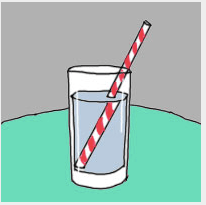
Why does the straw appear to be bent?
light is reflected
light is absorbed
light is turned
light is refracted
When light passes from air to water, what happens to the speed of the light?
speeds up
slows down
stays the same

What is the best explanation for Mickey seeing himself in the mirror?
refraction
absorbed
reflection
flipped
What happens when light hits a mirror?
It goes through the mirror and bends.
It goes around the mirror.
It bounces off the mirror.
It goes straight through the mirror.
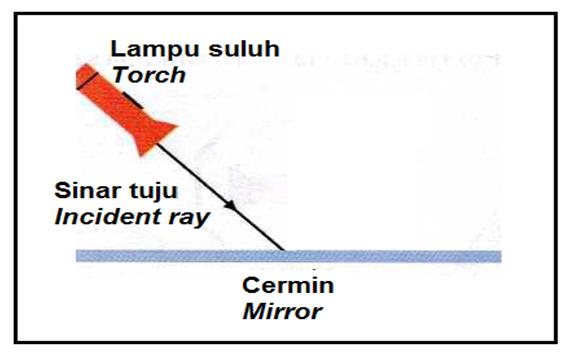
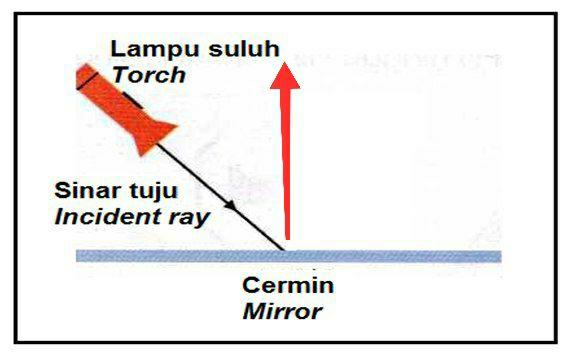
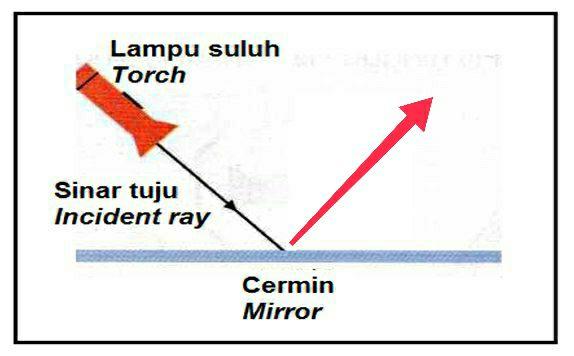
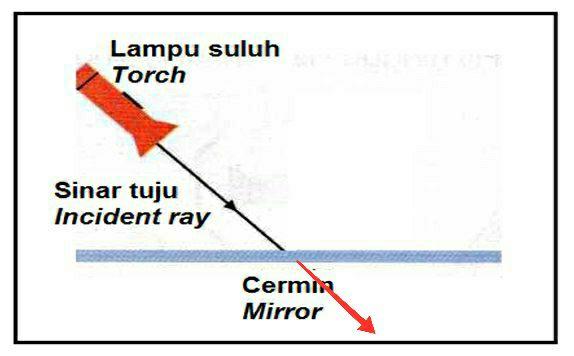
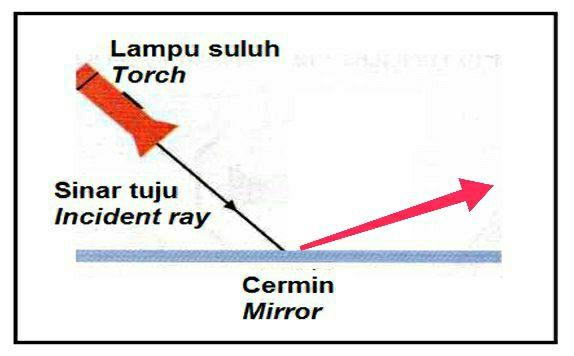
The following diagram shows the ray diagram when a torch light is torched towards a mirror. Which of the following is the correct reflected ray?
Tick the correct of TWO devices which use the principle of light reflection in our daily lives.


What causes the formation of a rainbow?
Light travels in a straight line
Reflection of light
Refraction of light
Light in bounced in two different mediums


What is the visible spectrum?
a. The part of light waves we can see
b. The part of light waves we cannot see
c. the whole electromagnetic spectrum
d. the energy spectrum
What color has the longest wavelength?
Black
Green
Purple
Red
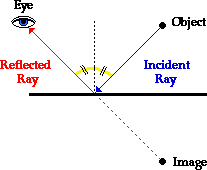
What is the angle of reflection equal to?
The angle of refraction
The angle of incidence
The angle of absorption
The angle of light
what is the order of the visible light spectrum from long wavelength to short wavelength
ROYGBIV
ROYBRVI
VOYGBRI
GBRIOY
what happens to light when it order a more dense medium
it speeds up and bends towards the normal
it speeds up and bends away from the normal
it slows down and bends towards the normal
it slows down and bends away from the normal
Law of reflection is...
incident angle = reflected angle
incident angle > reflected angle
incident angle < reflected angle
mirror are cool
When a ray of light entering from air is incident on the surface of a glass slab at an angle of 90°, the measure of angle of refraction=
(a)
The focal length of a plane mirror is (a)
A mirror having focal length –15 cm is _________________
Plane mirror
Concave mirror
Convex mirror
None of these
Assertion: For observing the traffic at the hairpin bend in the mountains a plane mirror is preferred over convex or concave mirror.
Reason: A convex mirror has a much larger field view than a plane mirror or a concave mirror.
Both Assertion and Reason are true and Reason is the correct explanation of Assertion.
Both Assertion and Reason are true but Reason is not the correct explanation of Assertion.
Assertion is true but Reason is false.
Assertion is false but Reason is true.
Which of the following characteristics are correct for the image formed in a plane mirror?
I. Upright
II. Inverted
III. Real
IV. Same size as the object
V. Virtual
I, II, III
I, III, IV
I, IV, V
III, IV, V

Images in a plane mirror are
real
larger
same size
smaller
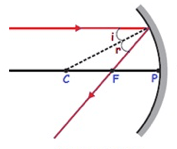
This ray diagram is for which mirror?
concave
convex
plane
window
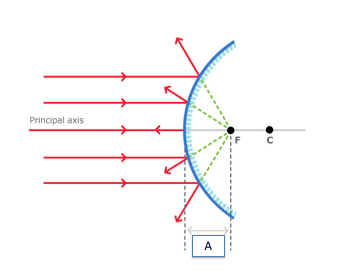
In the image, all the rays meet at F, What is F
focal length
focal point
center of curvature
reflection
A shopkeeper wants to keep an eye on his store in order to prevent shoplifting. What could the shopkeeper hang on the wall in order to see a wider image of his store and his customers?
a convex mirror
a concave mirror
a convex lens
a concave lens
A dentist uses a small dental mirror to help magnify teeth in your mouth. What type of mirror is this?
a convex mirror
a concave mirror
a convex lens
a concave lens
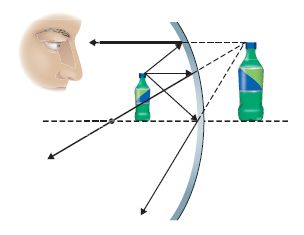
Real images are :
Always inverted
can be larger or smaller than the object
can be obtained on screen
all the above
If the object is between C and f of a concave mirror, the image is ...
image is real, smaller, and inverted
image is real, smaller, and upright
image is virtual, smaller, and inverted
image is real, bigger, and inverted

Which lens represents the path light takes through a diverging lens?


Which figure represents the path light takes through a converging lens?
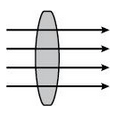
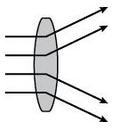
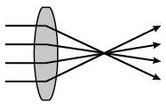
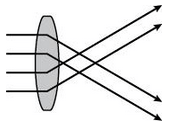

Which of the following ray diagram is NOT correctly drawn?


What type of lens is used in the shown instrument?
concave lens
convex lens
reflection lens
reduction lens
A ray of light incident on one of the parallel faces of a rectangular glass slab, emerges out of the opposite parallel face
inclined to the incident ray
parallel to the incident ray but laterally displaced
along the same straight line as the incident ray
none
Refractive index is the property of :
one medium
pair of media
vacuum
none
lateral displacement is the
perpendicular distance between the incident ray and the emergent ray
angle between refracted ray and normal
angle between emergent ray and normal
none

