
NEW
Font size
 Worksheets
Respiratory System Quiz
Total questions: 26
Worksheet time: 19mins
After air moves through the pharynx it continues downward. The _________, or windpipe, directs the air into two separate branches or tubes.
mucus
trachea
larynx
epiglottis
What is the chamber behind the nose and mouth that leads to the trachea?
pharynx
trachea
epiglottis
larynx
What cleans, moistens, and warms the air that we breath?
trachea
larynx
nasal passage
windpipe
What is the flap of tissue that closes when we eat, so food does not go down the trachea?
larynx
pharynx
trachea
epiglottis
What is the dome shaped sheet of muscle below the lungs that separates the thoracic cavity from the abdomen and is used to help us breath?
diaphragm
epiglottis
alveoli
bronchial tubes

What are the air sacs in the lungs called, where gas exchange takes place with the capillaries?
bronchi
lungs
oxygen
alveoli

When you breathe, your lungs take in ______ and remove _______.
air; oxygen
oxygen; carbon dioxide
carbon dioxide; waste
waste; air
When air pressure inside the lungs is less than air pressure in the atmosphere _______________.
air moves into the lungs
air moves out of the lungs
it gets harder and harder to breath
The period of breathing when air enters the lungs is referred to as ________.
expiration
inspiration
ventilation
all of the above
Relaxation of the diaphragm and the intercostal muscles causes ____________.
inspiration
expiration
respiration
perspiration
These move microbes and debris up and out of the airways __________.
pharynx
larynx
Cilia
trachea
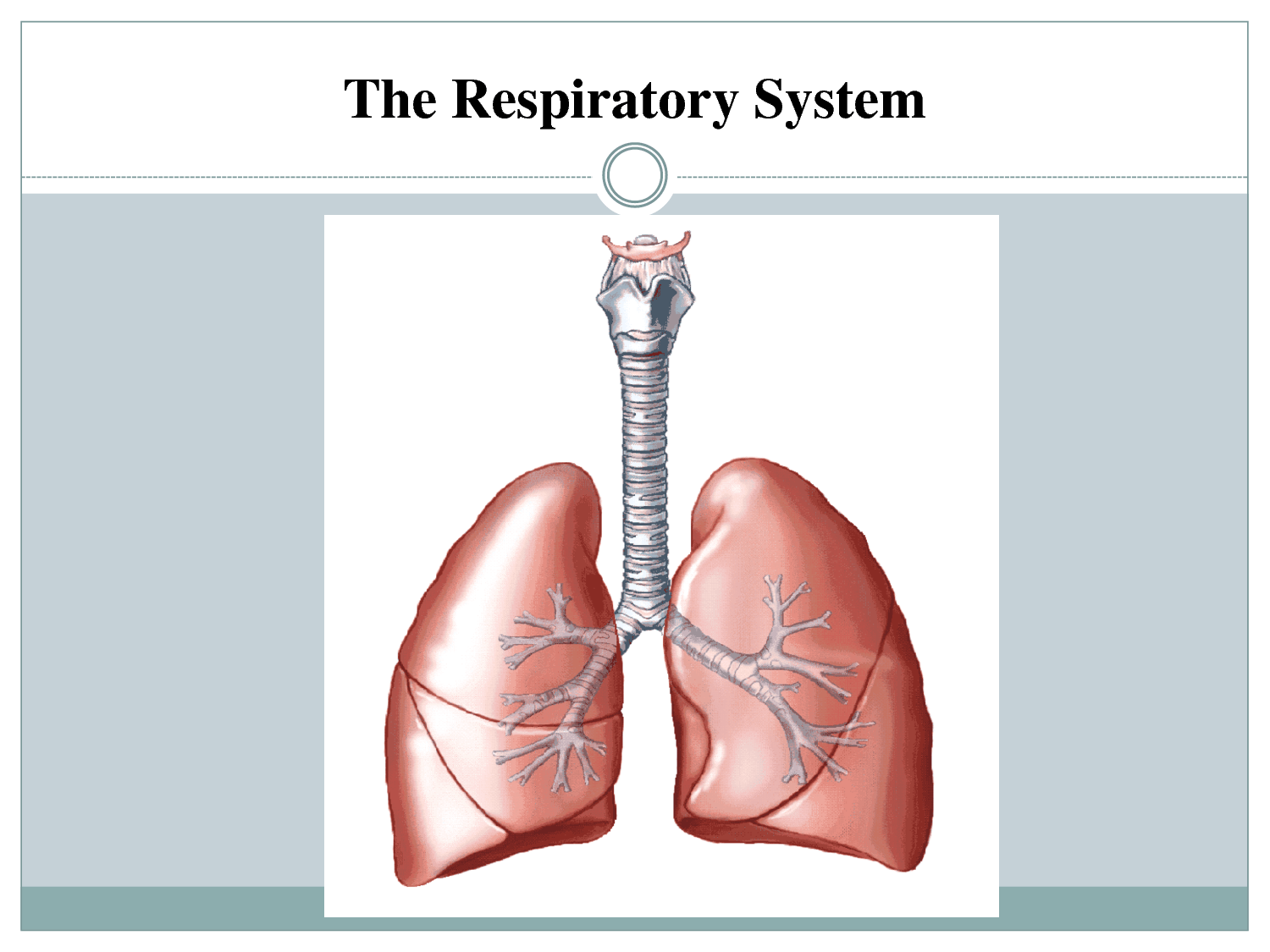

Choose the correct air pathway when you breathe in.
Nose / Mouth --> Trachea --> Pharynx --> Larynx --> Alveoli --> Bronchi --> Bronchioles
Nose / Mouth --> Alveoli ---> Trachea --> Bronchi --> Bronchioles --> Larynx --> Pharynx
Nose / Mouth ---> Pharynx --> Larynx --> Trachea ---> Bronchi --> Bronchioles --> Alveoli
Nose / Mouth --> Larynx --> Pharynx --> Trachea --> Alveoli --> Bronchi --> Bronchioles
Which bones protect the lungs?
ribs
radius and ulna
cranium
femur
How many lobes make up the lungs?
2
3
4
5

What is structure #3
larynx
pharynx
alveolar sac
diaphragm
What is structure #8
primary bronchus
trachea
nasal cavity
diaphragm
What is structure #6
primary bronchus
trachea
nasal cavity
diaphragm
Oxygen and carbon dioxide are exchanged across the respiratory membrane by the process of __________.
osmosis
filtration
diffusion
active transport
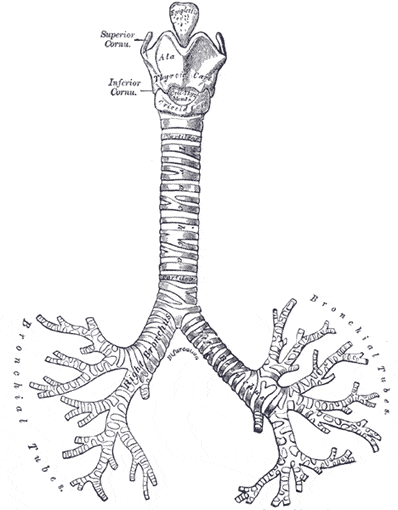
Tiny tubes that branch off of bronchi are called _________.
capillaries
alveoli
bronchioles
pleura
Respiration that takes place in the tissue cells is known as __________.
aerobic respiration
inspiration
cutaneous respiration
internal respiration
One molecule of hemoglobin carries how many molecules of oxygen when it is saturated?
four
three
two
one
Oxygen that has diffused into the alveoli's capillaries then binds to _______ inside a red blood cell?
Squamous epithelium
Hemoglobin
Hilum
Mediastinum

