wayground logo

Free Printable Worksheets

NEW

Font size

S
M
L
XL
Worksheets

Test Review Ch 8 (8.3-8.5)

Total questions: 50

Worksheet time: 49mins

Name
Class
Date
1.

How many hydrogens are missing from this extended structural formula?

a)

6

b)

7

c)

8

d)

9

2.
What two types of atoms make a covalent bond?
a)
2 Nonmetals
b)
1 Nonmetal and 1 Metal
c)
2 Metals
d)
2 Noble Gases
3.

The desire for an element to have 8 electrons around it is called

a)

Octet Rule

b)

Resonance

c)

Ionization energy

d)

Electronegativity

4.

What is the correct formula for the molecule shown?

a)

C2H6O

b)

CHO

c)

CH6O2

d)

C6HO6

5.

Oxygen in the air that we breathe is a molecule of two oxygen atoms held together by a double bond (O2).

How many electrons are being shared between the two atoms?

a)

4

b)

8

c)

12

d)

16

6.
What is the measure of a tetrahedral bond angle?
a)
90 Degrees
b)
109.5 Degrees
c)
120 Degrees
d)
180 Degrees
7.
According to VSEPR, molecules adjust their shapes to keep which of the following as far away as possible?
a)
Pairs of valence electrons
b)
Inner shell electrons
c)
Mobile Electrons
d)
Electrons closest to the nucleus
8.
The bond angle for a trigonal planar molecule is 
a)
90 Degrees
b)
109.5 Degrees
c)
120 Degrees
d)
180 Degrees
9.

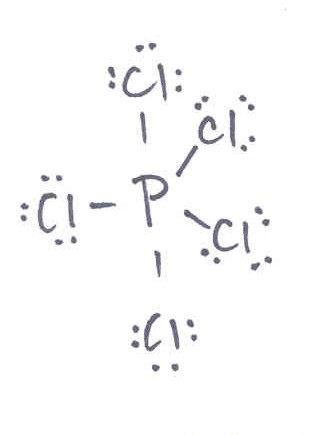
Which of these molecules will have this molecular geometry?

a)

SO4

b)

CCl4

c)

NH2

d)

PCl4

10.
For carbonate ions, how many resonance structures can be drawn ?
a)
2
b)
3
c)
4
d)
5
11.
How many resonance structures for NO3- ion?
a)
1
b)
2
c)
3
d)
4
12.
 A lone pair is defined as
a)
A pair of bonding electrons
b)
One non-bonding electron
c)
A pair of non-bonding electrons
d)
A pair of electrons on the central atom
13.
VSEPR stands for ________ theory.
a)
Valence Structure of Electron Pyramids and Regression
b)
Varied Structures of Electrons Paired and Replaced
c)
Varied Shell Energy of Protons and Radiation
d)
Valence Shell Electron Pair Repulsion
14.

What shape would a molecule have if it has 2 bonded pairs and 1 lone pair around its central atom? (It may help if you sketch this out)

a)

Linear

b)

Trigonal planar

c)

Tetrahedral

d)

Bent

15.

What is the name of this molecule's shape?

a)

Bent

b)

Linear

c)

Tetrahedral

d)

Trigonal pyramidal

16.

What 3-D shape would this molecule have: H2S ?

a)

bent

b)

tetrahedral

c)

linear

d)

trigonal pyramidal

17.

What is the name of this molecular shape?

a)

trigonal pyramid

b)

tetrahedral

c)

bent

d)

trigonal planar

18.

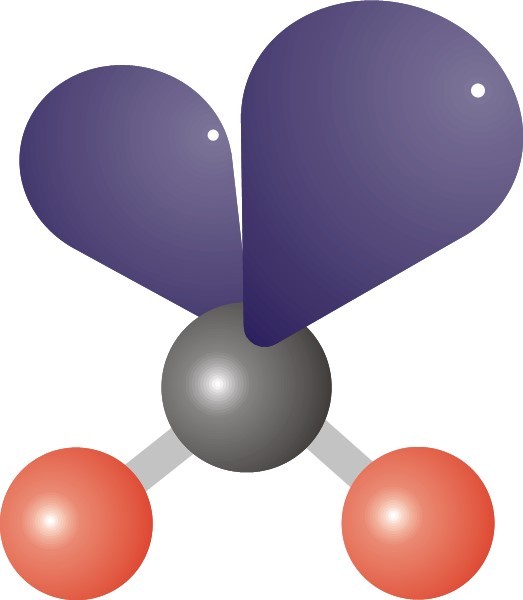
What 3-D shape would this molecule have?

a)

tetrahedral

b)

trigonal planar

c)

trigonal pyramid

d)

bent

19.

Which Lewis Dot Model drawing correctly shows an O2 molecule?

a)
b)
c)
d)
20.

What shape would a molecule have if it has 4 bonded pairs around its central atom? (It may help if you sketch this out)

a)

Linear

b)

Trigonal planar

c)

Tetrahedral

d)

Bent

21.
What is the shape of this molecule?
a)
Linear
b)
Bent
c)
tetrahedral
d)
Trigonal Pyramidal
22.
Who could this be? 
a)
CO2
b)
NH3
c)
H2S
d)
CH4
23.
How many sigma and pi bonds does this have?
a)
1 sigma and 1 pi
b)
2 sigma and 1 pi
c)
1 sigma and 2 pi
d)
2 sigma and 2 pi
24.
How many sigma and pi bonds does this have? 
a)
3 sigma and 2 pi
b)
5 sigma and 5 pi
c)
5 sigma and 0 pi
d)
0 sigma and 5 pi
25.
How many pi bonds are there in a single bond? 
a)
0
b)
1
c)
2
d)
3
26.

Large differences in electronegativity result in __________ bonding between atoms.

a)

covalent bond

b)

ionic bond

c)

no polar bond

d)

polar bond

27.

Which of the following is consider as an intermolecular force?

a)

Van der Waals

b)

Ionic Bond

c)

Covalent Bond

d)

Polar Covalent Bond

28.

Which of the following compound is a non polar covalent molecule?

a)

NO2

b)

HCl

c)

Na2CO3

d)

O2

29.

Use your knowledge and electronegativity sheet to predict what the following compound is classified as.

a)

non-polar covalent

b)

polar covalent

c)

ionic

d)

metallic

30.

In a polar covalent bond, electrons are shared:

a)

equally

b)

unequally

c)

between two metals

d)

between a metal and a non-metal

31.
The most electronegative atom in the periodic table is:
a)
Fluorine
b)
Helium
c)
Neon
d)
Francium
32.
In this Lewis structure, the symbol above F means...
a)
electrons are being transferred to Fluorine
b)
electrons are less attracted to F than H
c)
electrons are more attracted to F than H
d)
Fluorine has formed a cation
33.

Which of the following formulas represents a polar molecule?

a)

H2

b)

H2O

c)

CO2

d)

CCl4

34.

The electrons in a nonpolar covalent molecule are shared...

a)

Evenly

b)

Unevenly

c)

Electrons are not shared

d)

None of the Above

35.

In a polar covalent bond, the electrons gather around...

a)

The atom with the Greatest Electronegativity

b)

The atom with the Lowest Electronegativity

c)

Each atom Equally

d)

None of the Above

36.
What explains the very high melting and boiling point of water
a)
Strong dipole-dipole bonds between water molecules
b)
Strong hydrogen bonds between water molecules
c)
Dispersion forces which are present in all molecules
d)
Asymmetrical shape of the polar bonds.
37.

True or False


Attractions between polar molecules are Weaker than attractions between nonpolar molecules.

a)

True

b)

False

38.
Type of intermolecular force present in HF.
a)
dipole dipole
b)
dispersion
c)
H-bond
d)
ionic
39.
Intermolecular forces are the forces
a)
within molecules
b)
between molecules
40.
Does HF have hydrogen bonding?
a)
yes
b)
no
41.
Does CH4 have hydrogen bonding?
a)
yes
b)
no
42.
Which is the second strongest intermolecular force, after hydrogen bonding?
a)
dipole-dipole attraction
b)
London forces
43.
All molecules have London forces between them, but dipole-dipole and hydrogen bonding are so much stronger that when they are present we can ignore London forces.  Which of these has ONLY London forces?
a)
I2
b)
NH3
c)
OCl2
d)
SH2
44.

Which substance has the weakest intermolecular forces?

a)

Substance A, boiling point of 75 °C

b)

Substance B, boiling point of 105 °C

c)

Substance C, boiling point of 25 °C

d)

Substance d, boiling point of 45 °C

45.

Arrange these elements in order of increasing electronegativities: francium, gallium, germanium, phosphorus, zinc

a)

phosphorus, zinc, francium, gallium, germanium

b)

francium, gallium, germanium, phosphorus, zinc

c)

phosphorus, francium, gallium, germanium zinc

d)

francium, zinc, gallium, germanium, phosphorus

46.

Which type of bond is created between C-N?

a)

Polar Covalent

b)

Non-polar Covalent

c)

Ionic

d)

Metallic

47.
What information do we look for on the periodic table if we  want to examine intermolecular forces?
a)
atomic mass
b)
atomic number
c)
electronegativity
d)
ionization 
48.
What does the electronegativity of an element range from?
a)
0 - 4
b)
0 - 10
c)
 0 - 25
d)
0 - 100
49.
What part of an atom is involved in chemical bonding?
a)
protons
b)
neutrons
c)
electrons
d)
nucleus
50.

Which of the following forces are found between two NONPOLAR molecules?

a)

London force

b)

Dipole-dipole

c)

Hydrogen bond