Wayground logo

Free Printable Worksheets

Font size

S
M
L
XL
Worksheets

FIRST SEMESTER REVIEW

Total questions: 45

Worksheet time: 1hrs 10mins

Name
Class
Date
1.
Every living organism is made up of one or more cells
a)
True
b)
False
2.
A cell is...
a)
the basic unit of structure and function in living organism
b)
an organism
c)
a basic part of everything that we see
d)
found only in animals, not plants
3.
Which of the following are NOT found in animal cells
a)
chloroplasts and cytoplasm
b)
chloroplasts and cell wall
c)
cell wall and cell membrane
d)
mitochondria and nucleus
4.
The nucleus is like the ____________ of the cell.
a)
foot
b)
hand
c)
stomach
d)
brain
5.

Which of the following converts food into energy for the cell?

a)

vacuole

b)

mitochondria

c)

cytoplasm

d)

cell membrane

6.

The fluid that surrounds the organelles is... (hint... "Try to pull a fast one and..."

a)

chloroplast

b)

cytoplasm

c)

vacuole

d)

cell wall

7.
What do vacuoles do? 
a)
They actually do not have an important role
b)
They protect the cell
c)
They are the brain of the cell
d)
storage area for cells; water storage in plants 
8.

Which organelle takes in "sun showers" and helps plants with the process or photosynthesis?

a)

Vacuole

b)

Mitochondria

c)

Cytoplasm

d)

Chloroplast

9.
If you were some bad guy trying to sneak into an animal cell, who would be there to stop you?
a)
nucleus
b)
mitochondria
c)
cell membrane
d)
cell wall
10.
Which of the following, found ONLY in plant cells, provides structure?
a)
cell wall
b)
chloroplast
c)
mitochondria
d)
vacuole
11.
What is a tropism? 
a)
A stimulus that affects plants. 
b)
The way a plant responds to a stimulus. 
c)
The way a plant grows.
d)
The way a plant dies. 
12.
If a plant experiences a phototropism, then it will do what?
a)
Grow toward or away from light. 
b)
Grow away from light. 
c)
Grow toward light.
d)
Grow in response to gravity. 
13.
If a plant experiences a gravitropism, then it will do what?
a)
Grow toward or away from light. 
b)
Grow away from light. 
c)
Grow toward light.
d)
Grow in response to gravity. 
14.

What is the function of the digestive system?

a)

It transports blood and oxygen to your cells

b)

It breaks down food so the nutrients can be absorbed by your body

c)

It helps you breathe by taking in oxygen and transporting carbon dioxide out of your body

d)

It helps you move

15.

What is the function of the muscular system?

a)

The function is movement of the body through muscles

b)

The function is to get rid of waste

c)

The function is to process food for nutrients and energy

d)

The function is to protect you against disease

16.

What is the function of the cardiovascular / circulatory system?

a)

To provide nutrients to the whole body

b)

To maintain homeostasis for the body

c)

To fight off infection or disease

d)

To transport nutrients, oxygen, and blood throughout the body

17.

What is the function of the nervous system?

a)

Controls all parts of the body; sends signals between the brain, spinal cord, and nerve endings

b)

What happens when you get nervous to do something

c)

To fight off diseases

d)

To carry oxygen, nutrients, and blood throughout the body

18.

What is the function of the respiratory system?

a)

To digest your food

b)

To remove waste from the body

c)

To take in oxygen and remove carbon dioxide

d)

To fight disease

19.

What is the function of the excretory/urinary system?

a)

Removes liquid waste from your body

b)

digests food

c)

helps you breathe

d)

circulates your blood

20.

The steel beams that hold up a tall building are most analogous (similar) to which body system?

a)

skeletal

b)

muscular

c)

digestive

d)

immune

21.

What is the function of the skeletal system?

a)

Movement of the body

b)

transports oxygen, blood, nutrients throughout the body

c)

removes waste

d)

supports the body by holding it up; muscles are attached to help with movement

22.

How do the body systems work together when you accidentally touch a hot pan?

a)

The cardiovascular/circulatory system sends signals to your hand to move it, and your nervous system moves your hand

b)

The nervous system (brain, spinal cord, and nerves) send a signal to your hand to move it, and your muscular system causes your hand to move

c)

The digestive system moves your hand, and the cardiovascular/circulatory system sends signals to your hand

d)

The nervous system causes your hand to move, and the muscular system breaks down nutrients for your muscles to move

23.
Which of the following systems is the largest human organ that protects the body, regulates body temperature, and plays a role in sensory perception.
a)
Nervous system
b)
Endocrine system
c)
Integumentary system
d)
Skeletal system
24.
Where does digestion start?
a)
mouth
b)
throat
c)
stomach
d)
intestines
25.
Which organelle performs PHOTOSYNTHESIS?
a)
Chloroplast
b)
Mitochondria
26.
Which of the following is the correct equation for PHOTOSYNTHESIS?
a)
CO2 + light + H2O --> O2 + Sugar
b)
CO2 + sugar + H2O --> O2 + light
c)
O2 + light + H2O --> CO2 + Sugar
d)
CO2 + O2 + H2O --> Light+ Sugar
27.
What is the ultimate ORIGINAL source of energy for living things
a)
Sugar
b)
Sun
c)
Moon
d)
Carbon Dioxide
28.

The passing of genetic material from parents to offspring.

a)

heredity

b)

gene

c)

allele

d)

genotype

e)

phenotype

29.

Segments of DNA (Deoxyribonucleic acid) found in chromosomes that give instructions for producing a certain characteristic.

a)

heredity

b)

gene

c)

allele

d)

genotype

e)

phenotype

30.

Why is heredity important?

a)

It keeps organisms in their species.

b)

It makes the DNA inside cells similar.

c)

It passes traits from parents to offspring.

d)

It create cell walls.

31.
___________________________ is the study of how traits are passed on, or inherited.
a)
dominant traits
b)
ratio
c)
phenotype
d)
genetics
32.
One trait that is ALWAYS present and causes the other traits to disappear is a ________________________
a)
recessive trait
b)
aggressive trait
c)
absent trait
d)
dominant trait
33.
Emily has brown hair. Which is most likely a true statement about Emily?
a)
Emily’s favorite color is brown.
b)
Emily has a parent with brown hair.
c)
Emily’s older brother has brown hair. 
34.

Why is Earth's magnetic field important to the survival of life?

a)

it shields the Earth from harmful particles from the Sun

b)

it is a bubble from the Earth

c)

it holds in all oxygen, nitrogen, argon, & CO2

d)

It is only imaginary so it doesn't do anything for Earth

35.

Which of these is essential for the survival of astronauts taking short space walks (30 minutes or less)?

a)

tool belt

b)

oxygen supply

c)

freeze-dried food

d)

magnetic boots

36.

Astronauts need to exercise while in space because, without gravity, the environment in space -

a)

lacks breathable air, including oxygen humans need

b)

makes astronauts consume more calories during missions

c)

provides less resistance and weakens muscles and bones

d)

does not allow the human body to retain heat like on Earth
37.
Eyes, nose, mouth would each be an example of a(n)
a)
organ system
b)
cell
c)
organ
d)
tissue
38.
 A group of cells that have similar functions? Examples are nervous, epithelial, muscle and connective
a)
cells
b)
tissues
c)
organs
d)
atoms
39.
When many organ systems work together it can form...
a)
organ
b)
cells
c)
organ system
d)
organism 
40.
What is the correct order of organization
a)
tissues-cells-organs-organ systems-organism
b)
cell-tissue-organs-organ systems-organism
c)
organism-cells-tissues-organ systems-organism
d)
tissues-cells-organs-organ sytems-organism
41.
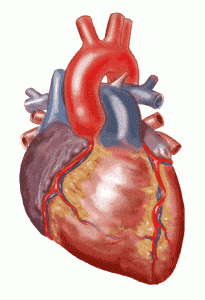
This is a example of ........
a)
cell
b)
tissue
c)
organ 
d)
organ system
42.
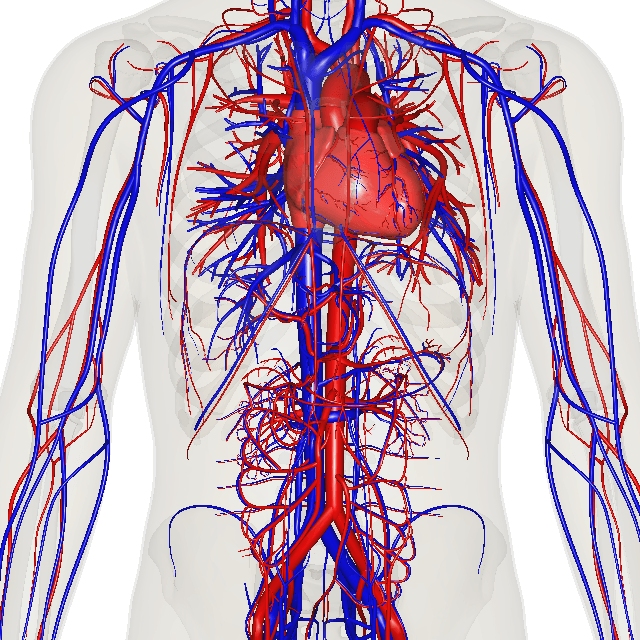
This is a example of ........
a)
cell
b)
organ system
c)
organ
d)
tissue
43.
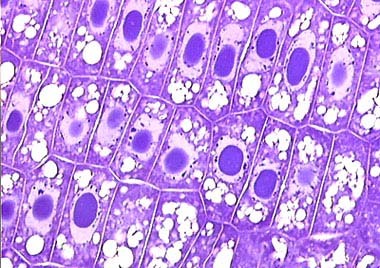
This is a example of ........
a)
organ
b)
organ system
c)
tissue
d)
cell
44.
Which level of organization is the least specialized yet the most numerous in an organism?
a)
tissue
b)
cell
c)
organ
d)
organ system
45.
What is function?
a)
Function refers to the parts of an organism like cells, tissues, organs.
b)
Function refers to the location of the cells, tissues, and organs in the body.
c)
Function refers to the jobs of the structures in an organism.
d)
Function refers to the levels of organization in an organism.