wayground logo

Free Printable Worksheets

NEW

Font size

S
M
L
XL
Worksheets

Year 7 States of Matter Revision

Total questions: 47

Worksheet time: 34mins

Name
Class
Date
1.
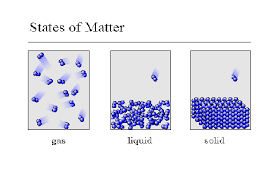
The picture shows the molecules of which of the states of matter?
a)
Liquid
b)
Gas
c)
Solid
d)
None
2.
Which of the following are examples of gases?
a)
Air, Space and Wind
b)
Oxygen, Carbon Dioxide and Methane
c)
Petrol, Oil and Water
d)
None of the above
3.
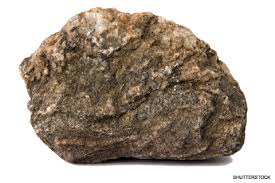
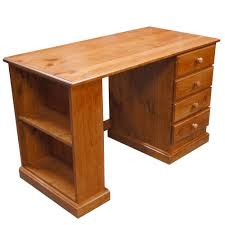
Which of the following are examples of solid materials?
a)
Plastic, Wood and Metal
b)
Glue, Printer and Cup
c)
Sponge, Sea and Nitrogen 
d)
None of the above
4.
The picture shows the molecules of which of the states of matter?
a)
Gas
b)
Liquid
c)
Solid
d)
None of the above
5.
The picture shows the molecules of which of the states of matter?
a)
Solid
b)
Liquid
c)
Gas
d)
None of the above
6.
What is the process called when a Liquid turns into a gas?
a)
Melting
b)
Freezing
c)
Evaporation
d)
Condensation 
7.
What is the process called when Liquid turns into a solid?
a)
Melting
b)
Condensation
c)
Evaporation
d)
Freezing
8.
What is the process called when a solid turns into a liquid?
a)
Melting
b)
Freezing
c)
Condensation
d)
The Water Cycle
9.
What is the process called when a gas turns into a liquid?
a)
Condensation
b)
Magic
c)
Evaporation
d)
Reverse melting
10.
Which of the three states of matter keeps its own shape in any container?
a)
Liquid
b)
Gas
c)
Solid
d)
None of the above
11.
Which form of matter does not take the shape of its container?
a)
liquid
b)
gas
c)
solid
d)
air
12.
Sublimation is
a)
when solid turns into gas
b)
when gas turns into plasma
c)
when liquid turns into gas
d)
when gas turns into solid
13.
A gas
a)
has a definite shape but no definite volume
b)
has a definite volume but no definite shape
c)
has fast-moving particles
14.
Freezing
a)
Solid to gas
b)
Liquid to solid
c)
Gas to solid
d)
Liquid to gas
15.
Boiling
a)
liquid to gas
b)
gas to solid
c)
gas to liquid
d)
solid to liquid
16.
Which state of matter has tightly packed molecules?
a)
solid
b)
liquid
c)
gas
17.
Which state of matter has a definite shape?
a)
solid
b)
liquid
c)
gas
18.
What is happening when my ice cream changes from a solid to a liquid?
a)
freezing
b)
melting
c)
burning
d)
evaporation
19.
Define a liquid.
a)
Indefinite shape, indefinite volume
b)
Definite shape, definite volume
c)
Found in stars
d)
Definite volume, indefinite shape
20.
The state of matter that has no definite size or shape is
a)
Solid
b)
Liquid
c)
Gas
21.
Particles (molecules) in a ______________________ have more energy than the other states of matter.
a)
gas
b)
solid
c)
liquid
22.
Particles of a liquid
a)
are tightly packed together and stay in a fixed position.
b)
have no viscosity.
c)
decrease in volume with increasing temperature.
d)
are free to move around one another but still touch.
23.
Which has a greater distance between particles?
a)
Solid
b)
Liquid
24.
The slower the particles in a substance move,
a)
the colder it is.
b)
the warmer it is.
c)
the more energy it has.
d)
the less energy it has.
25.
What happens when my glass of water is sitting in the sun and disappears into a gas?
a)
evaporation
b)
burning
c)
melting
d)
freezing
26.
Define a liquid
a)
no shape, no volume
b)
Definite shape, definite volume
c)
Found in stars
d)
Definite volume, no shape
27.
On a hot summer day chocolate candy can melt in your pocket.  How can you get the chocolate to return to a solid?
a)
add heat
b)
leave it in your pocket
c)
cool it in the refrigerator
d)
leave it outside
28.
Bonus Question: Change of state from a solid directly to a gas is called
a)
deposition
b)
melting
c)
evaporation
d)
sublimation
29.
What are the states of matter?
a)
solid, liquid, and juice
b)
solid and liquid
c)
solid and gas
d)
solid, liquid, and gas
30.
Which state of matter has molecules that are moving around each other? 
a)
solid
b)
liquid
c)
gas
d)
Florida
31.
Which state of matter has molecules that are moving quickly and spreading out? 
a)
gas
b)
liquid
c)
solid
d)
all three
32.
What is dry ice?
a)
the liquid form of carbon dioxide
b)
the solid form of carbon dioxide
33.
Molecules vibrate the slowest in a ...
a)
solid
b)
gas
34.

a. The steam makes Mom’s kitchen window look cloudy. What is happening?

a)

evaportation

b)

solid

c)

winter

d)

condensation

35.

a. The steam makes Mom’s kitchen window look cloudy. Why?

a)

it is turning from a gas back to a liquid

b)

it is turning from a liquid to a solid

c)

it is turning from a liquid to a gas

36.

Hector is standing in a closed room with a balloon filled with helium gas. If Hector pops this balloon, what will happen to the particles of helium gas?

a)

They will condense into a cloud around Hector.

b)

They will fall to the floor as a structured solid.

c)

They will get further away from each other and flow through the room

d)

They will flow to the floor and form a puddle.

37.

What is MATTER?

a)

Anything that has MASS

b)

Anything that takes up SPACE

c)

Anything that has MASS and takes up SPACE

d)

Anything that DOES NOT have mass or take up space

38.

When you heat a sample of a solid, the particles that make up the solid

a)

get bigger

b)

lose mass

c)

move faster

d)

slow down

39.
Something that takes up space and has mass.
a)
volume
b)
matter
c)
mass
d)
density
40.
The amount of space something takes up
a)
density
b)
volume
c)
mass
d)
matter
41.
A watermelon has more matter than a grape, so it has more
a)
mass
b)
eat
c)
solid
d)
greater
42.
You can measure ______ with grams.
a)
mass
b)
volume
c)
conductivity
d)
melting point
43.
As particles are exposed to warmer temperatures they __________
a)
speed up
b)
slow down
c)
stay the same
d)
vibrate
44.
As particles are exposed to colder temperatures they _____
a)
speed up
b)
slow down
c)
stay the same
d)
become ions
45.
What am I? I have a fixed mass, a fixed volume, I cannot be squashed and I have a shape that changes to fit the bottom of my container?
a)
solid
b)
liquid
c)
gas
d)
plasma
46.
As particles are exposed to colder temperatures they _____
a)
speed up
b)
slow down
c)
stay the same
d)
become ions
47.

Which characteristic is included in the particle theory of matter?

a)

All matter is made up of tiny particles

b)

All particles in a pure substance are the same

c)

Particles are always moving

d)

All of the above