wayground logo

Free Printable Worksheets

Font size

S
M
L
XL
Worksheets

Science Year Review

Total questions: 100

Worksheet time: 1hrs 25mins

Name
Class
Date
1.
What type of tides would this arrangement of earth-moon-sun create?
a)
neap tide
b)
spring tide
c)
new moon tide
d)
full moon tide
2.

What type of tide would this arrangement of earth-moon-sun create?

a)

full moon tide

b)

new moon tide

c)

neap tide

d)

spring tide

3.
Which phase of the moon is represented in this diagram?
a)
new moon
b)
first quarter
c)
full moon
d)
last quarter/third quarter
4.

What causes tides?

a)

Moon's gravity

b)

Earth's wind

c)

Sun's Gravity

d)

Earth's Rotation

5.
Why does the moon's gravitational pull have more of effect on tides than the sun's gravitational pull?
a)
they are the same
b)
the moon is larger than the sun
c)
tides are not caused by the moon
d)
the moon is closer to the Earth than the sun
6.

This model is showing us a...

a)

lunar eclipse

b)

solar eclipse

c)

phases of the moon

d)

earth eclipse

7.

This image is showing us a.....

a)

solar eclipse

b)

lunar eclipse

c)

phases of the moon

d)

earth eclipse

8.
What happens when the area in which you live tilts away from the sun?
a)
It is summer.
b)
It is spring.
c)
It is winter.
d)
It is fall.
9.
What are the reasons for the season?
a)
Earth's tilt & rotation
b)
Earth's tilt & revolution
c)
Earth's rotation & rovolution
d)
Earth's tilt & resolution
10.
Why does the area around the equator stay the same temperature all year?
a)
The equator rotates slower than the poles.
b)
The equator remains the same distance from the sun.
c)
The equator always receives direct sunlight.
d)
The equator has 18 hour days.
11.
Which season is taking place in the Northern Hemisphere in Position 3?
a)
Winter
b)
Spring
c)
Summer
d)
Fall
12.
Which of the following are considered small rocky planets?
a)
Jupiter, Saturn, Uranus, Neptune
b)
Mercury, Venus, Uranus, Neptune
c)
Earth, Mars, Saturn, Jupiter
d)
Mercury, Venus, Earth, Mars
13.

Which of the following is: bigger than Earth, is made of gas, has many moons and is closer to Earth than Saturn?

a)

Sun

b)

Jupiter

c)

Venus

d)

Mars

14.

Which of the following objects is the largest?

a)

Galaxy

b)

Planet

c)

Universe

d)

Star

15.

Which of the following objects does the Earth revolve around?

a)

The Sun

b)

The Moon

c)

Jupiter

d)

Alpha Centauri

16.
The earth centered view of the universe
a)
Galaxy
b)
Geocentric
c)
Astonomy
d)
Heliocentric
17.
The sun centered view of the universe
a)
Galaxy
b)
Geocentric
c)
Astonomy
d)
Heliocentric
18.

What are the four inner planets?

a)

Earth, Uranus, Mercury, Venus

b)

Mercury Venus Earth Saturn

c)

Mars, Earth , Mercury, Venus

d)

Mars, Earth, Neptune, Mercury

19.

What are the outer planets?

a)

Jupiter, Saturn, Earth, Neptune

b)

Saturn, Neptune, Mars, Uranus

c)

Uranus, Saturn, Neptune, Jupiter

d)

Mercury, Venus, Earth, Mars

20.

How many planets are in our solar system?

a)

6

b)

7

c)

8

d)

9

21.

The asteroid belt is located between which 2 planets?

a)

Mercury and Venus

b)

Jupiter and Saturn

c)

Uranus and Neptune

d)

Mars and Jupiter

22.

What keeps the planets in orbit around the sun?

a)

gravity and inertia together

b)

gravity

c)

inertia

d)

neither gravity or inertia

23.
What is the name of our galaxy?
a)
Snickers
b)
Andromeda
c)
Local Group
d)
Milky Way
24.
What does the Big Bang theory suggest?
a)
The universe was just there
b)
The Milky Way is the only solar system
c)
The universe is continually expanding
d)
The universe started as a point and is moving towards each other
25.

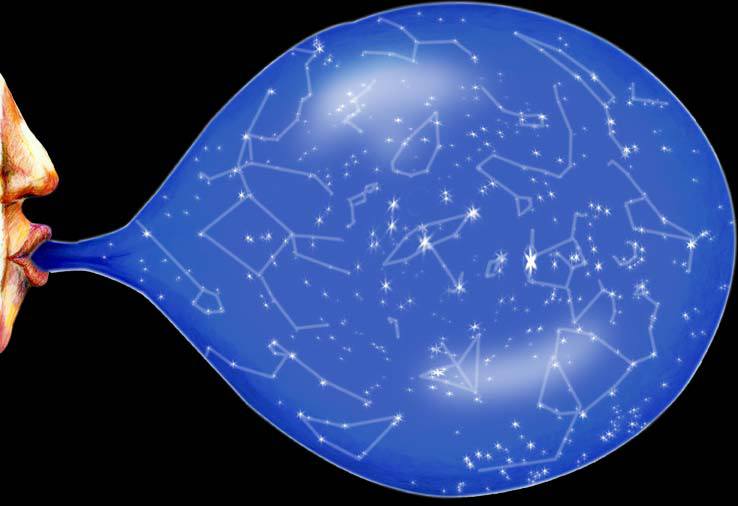
Which point on the picture best represents our location in the galaxy?

a)

A

b)

B

c)

C

d)

D

26.

Select all ingredients a comet is composed (made) of

a)

Dust

b)

Iron

c)

Ice

d)

Small rocky particles

27.

A _____________ bursts through Earth's atmosphere at amazingly fast speeds and appears as a "shooting star"

a)

Meteorite

b)

Meteor

c)

Meteoroid

28.

A meteor that does not burn up in Earth's atmosphere and reaches Earth's surface

a)

Meteorite

b)

Meteoroid

c)

Meteor

29.

A small rock in space that is orbiting the sun. This object is similar to an asteroid, but it is smaller in size. It will become a meteor once it enters Earth's atmosphere

a)

Meteoroid

b)

Meteor

c)

Meteorite

30.

What is weathering?

a)

The movement of sediment

b)

The breaking of sediment

c)

The dropping of sediment

31.

What is erosion?

a)

The movement of sediment

b)

The breaking of sediment

c)

The dropping of sediment

32.

What is deposition?

a)

The movement of sediment

b)

The breaking of sediment

c)

The dropping of sediment

33.

Small pieces of rock that have been weathered from a larger rock are known as...

a)

sand

b)

sediment

c)

soil

34.
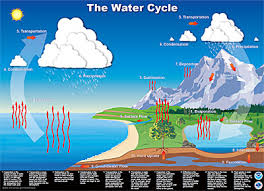
What is it called when plants give off water vapor as a waste product?
a)
condensation
b)
evaporation
c)
sublimation
d)
transpiration
35.
During which stage do clouds form?
a)
condensation
b)
evaporation
c)
precipitation
36.
Which stages does liquid water from the ocean turn into water vapor?
a)
condensation
b)
evaporation
c)
precipitation
d)
run off
37.

Water in its gas form is called ____________________,

a)

water vapor

b)

precipitation

c)

ice

d)

air

38.

This provides the power to keep the water cycle running.

a)

The Sun

b)

The Earth

c)

The wind

d)

living things

39.
The weight of the atmosphere is ...
a)
temperature
b)
humidity
c)
air pressure
d)
weather
40.

What protects Earth from ultraviolet rays from the sun?

a)

ozone layer

b)

mesosphere

c)

air pressure

d)

troposphere

41.
In what layer would you find the ozone layer?
a)
troposphere
b)
stratosphere
c)
mesosphere
d)
thermosphere
42.
The Northern Lights occur in which layer?
a)
mesosphere
b)
exosphere
c)
thermosphere
d)
stratosphere
43.
What layer comes next:
Troposphere - 
stratosphere -
?????
a)
mesosphere
b)
exosphere
c)
thermosphere
d)
ionosphere
44.

What layer of the atmosphere is closest to outer space?

a)

mesosphere

b)

exosphere

c)

troposphere

d)

stratosphere

45.
In what layer of the atmosphere would you find clouds and weather?
a)
troposphere
b)
stratosphere
c)
mesosphere
d)
thermosphere
46.
Because the earth is spinning on its axis, the global winds appear to curve. This is known as the __________ ________.
a)
Coriolis Effect
b)
Greenhouse Effect
c)
Climate Effect
d)
Atmosphere Effect
47.
In what direction do winds always blow?
a)
From areas of high pressure to areas of low pressure
b)
From areas of low pressure to areas of high pressure
48.
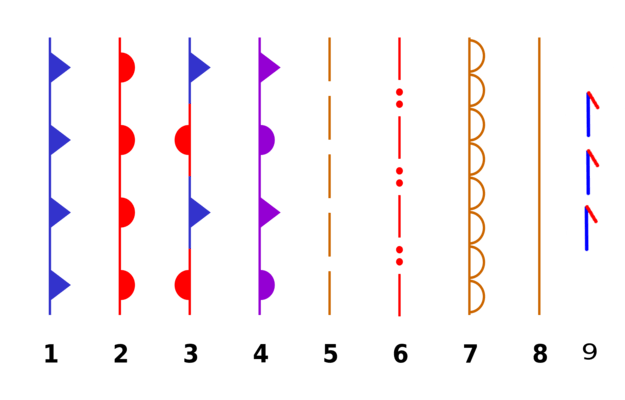
What does symbol # 3 mean?
a)
stationary front
b)
occluded front
c)
warm front
d)
cold front
49.
_____________ air is more dense and tends to sink
a)
cold
b)
warm
c)
moist
d)
dry
50.
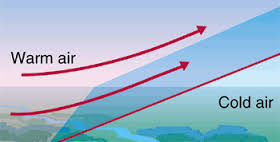
Which type of front is pictured?
a)
Cold front
b)
Warm front
c)
Occluded front
d)
Stationary front
51.
What symbol is this?
a)
warm front
b)
cold front
c)
stationary front
d)
occluded front
52.
Which front leads to steady rain for several days?
a)
warm front
b)
cold front
c)
stationary front
d)
occluded front
53.
This image represents this type of boundary
a)
Divergent
b)
Transform
c)
Convergent
d)
Subduction
54.
At a divergent boundary, tectonic plates move in what way? 
a)
Tectonic plates move towards each other
b)
Tectonic plates slide past each other
c)
Tectonic plates move up and down
d)
Tectonic plates move away from each other
55.
What is a tectonic plate?
a)
A piece of the Earth's crust
b)
A piece of Earth's mantle
c)
A piece of Earth's core
d)
A piece of Earth's Moon
56.
Name the boundary
a)
convergent
b)
transform
c)
divergent
d)
subduction
57.
Transform boundaries are most likely to produce what phenomenon?
a)
volcanoes
b)
deep sea trenches
c)
underwater mountain ranges
d)
earthquakes
58.

The process of when one tectonic plate moves under another

a)

convergent plate boundary

b)

divergent plate boundary

c)

transform plate boundary

d)

subduction

59.
What type of boundary is in this image?
a)
convergent plate boundary
b)
divergent plate boundary
c)
transform plate boundary
d)
subduction
60.

What is/are formed when two oceanic plates collide? (Multiple answer)

a)

Trench

b)

Tsunami

c)

Volcanic Island Arc

d)

Mountain Ranges

61.
What geologic feature/event would you most likely to find at a convergent boundary between two pieces of continental crust?
a)
Volcano
b)
Mountain
c)
Rift
d)
Island Arc
62.
The Himalayas in Asia are an example of what type of plate boundary?
a)
divergent
b)
continent-to-continent convergent
c)
ocean-to-continent convergent
d)
transform
63.

Which landform is not typically found at oceanic-oceanic convergent plate boundaries

a)

Oceanic Trench

b)

Volcanic Islands

c)

Mid-Oceanic Ridge

d)

Undersea Volcanoes

64.

This rock is formed in layers.

a)

Sedimentary

b)

Igneous

c)

Metamorphic

65.

This rock is changed by heat and pressure.

a)

Sedimentary

b)

Igneous

c)

Metamorphic

66.

This rock may be formed from magma that hardens.

a)

Sedimentary

b)

Igneous

c)

Metamorphic

67.
An igneous rock containing large crystals is most likely a(n)
a)
Chemical Rock
b)
Foliated Rock
c)
Extrusive Rock
d)
Intrusive Rock
68.

Geologists have classified rocks into three major groups of rocks which are:

a)

inorganic, organic and chemical rocks

b)

igneous, sedimentary and metamorphic rocks

c)

metamorphic, chemical and non chemical rocks

d)

sedimentary, inorganic and igneous rocks

69.

Which rock is formed form the cooling of volcanic ash on Earth's surface?

a)

intrusive igneous

b)

foliated metamorphic

c)

extrusive igneous

d)

organic sedimentary

70.
What are the three components of soil?
a)
insects, sand, topsoil
b)
clay, sand, humus
c)
topsoil, subsoil, bedrock
d)
earthworms, sand, silt
71.
Which of the following is NOT one of the three layers of soil?
a)
topsoil
b)
undersoil
c)
subsoil
d)
bedrock
72.
Humus is.....
a)
the dead parts of plants and animals in soil.
b)
A food we eat with pretzels.
c)
The tiny particles inside of soil
d)
The roots that come off of a plant and live in soil.
73.
What are some things that you can add to a compost pile?
a)
leaves, apple core, and tin foil
b)
grass clippings, banana peel, and newspaper
c)
egg shells, plastic spoon, and ziploc bags
d)
metal fork, rubber spatula, and shoelaces
74.
The top layer of soil is called ________.
a)
bedrock
b)
topsoil
c)
subsoil
d)
grass
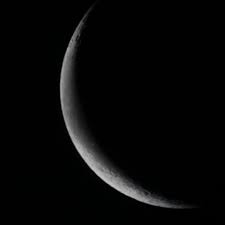
75.
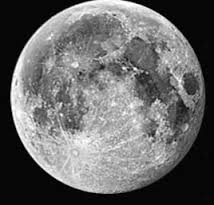
Name the moon phase
a)
waning crescent
b)
waxing crescent
c)
waning gibbous
d)
waxing gibbous
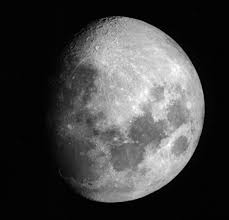
76.
Name the moon phase
a)
waning crescent
b)
waxing crescent
c)
waning gibbous
d)
waxing gibbous
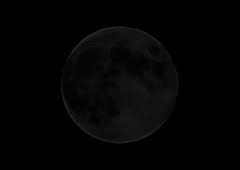
77.
Name the moon phase
a)
First Quarter
b)
Last Quarter
c)
New Moon
d)
Full Moon
78.
Name the moon phase
a)
First Quarter
b)
Last Quarter
c)
New Moon
d)
Full Moon
79.
The cycle of the moon lasts about a _.
a)
day
b)
year
c)
week
d)
month
80.
Changes in the moon's appearance are
a)
phases
b)
eclipses
c)
stages
d)
cycle
81.
Which represents the distribution of water on Earth?
a)
3% freshwater, 97% salt water
b)
97% freshwater, 3% salt water
c)
71% freshwater, 29% salt water
d)
29% freshwater, 71% salt water
82.
Where is most of the freshwater found on Earth?
a)
lakes
b)
glaciers
c)
oceans
d)
rivers
83.
Most of the Earth's water is in
a)
salty oceans
b)
freshwater lakes
c)
freshwater ponds
d)
glaciers
84.

What percent of Earth's freshwater is available for humans to use?

a)

3

b)

less than 1

c)

97

d)

10

85.
The total amount of water on Earth is constantly changing.
a)
true
b)
false
86.

Valleys cut deep into the ocean floor

a)

Plankton

b)

Salinity

c)

Surface Current

d)

Ocean Trench

87.

Flat, deep, and smooth part of the ocean floor. Cold temperatures are found here.

a)

Continental Shelf

b)

Abyssal Plain

c)

Continental Slope

d)

Seamounts

88.

gently sloping shelf of land extending from the shoreline to the continental edge

a)

Continental Slope

b)

Continental Shelf

c)

Continental Rise

d)

Abyssal Plain

89.
What do you call an underwater mountain?
a)
trench
b)
abyssal plain
c)
seamount
d)
volcanic island
90.
mountain ranges in the ocean
a)
mid -ocean ridge
b)
trenches
c)
rift
d)
ocean basin
91.
Describe a continental air mass.
a)
Dry
b)
Wet
c)
Cold
d)
Warm
92.
Describe a maritime air mass.
a)
Dry
b)
Wet
c)
Cold
d)
Warm
93.
Describe a tropical air mass.
a)
Dry
b)
Wet
c)
Cold
d)
Warm
94.

Describe an polar air mass.

a)

Dry

b)

Wet

c)

Cold

d)

Warm

95.
A dry and cold air mass would be...
a)
Maritime polar
b)
Continental polar
c)
Maritime tropical
d)
Continental tropical
96.
A wet and hot air mass would be a...
a)
Maritime tropical
b)
Maritime polar
c)
Continental polar
d)
Continental tropical
97.

Which layer of Earth is in the liquid state of matter?

a)

Crust

b)

Inner Core

c)

Lithosphere

d)

Outer Core

98.

The lithosphere consists of the –

a)

upper mantle and the crust

b)

lower mantle and the outer core

c)

inner and outer core.

d)

crust and the entire mantle.

99.

According to scientific data, which layer of Earth is the thickest?

a)

Crust

b)

Inner core

c)

Mantle

d)

Outer Core

100.

Oceans, and other bodies of water, are found on which layer of Earth?

a)

Outer core

b)

Mantle

c)

Inner core

d)

Crust