
 Worksheets
EOC 6th Grade Final Review
Total questions: 97
Worksheet time: 1hrs 22mins
Science can change and is a continually ongoing process.
True
False
What step does every scientific experiment begin with?
hypothesis
question/problem
background research
conclusion
Which of these contains the steps of the scientific method in the correct order?
Ask a question, do background research, state your hypothesis, conduct an experiment, analyze data, make a conclusion
State your hypothesis, ask a question, do background research, conduct an experiment, analyze data, make a conclusion
Ask a question, state your hypothesis, do background research, conduct an experiment, make a conclusion, analyze data
State your hypothesis, ask a question, do background research, make a conclusion, conduct an experiment, analyze data
The __________________________________ is the organized way scientists answer questions and solve problems.
scientific method
scientific explanation
scientific notation
scientific guesses


In 6th grade, every proper hypothesis begins with what word?
Does
If
Because
Then
When should you write a hypothesis?
After writing procedures
After making observations and doing research on a question/problem
After buying materials for an experiment
At the very beginning of the experiment
SC.7.N.1.2
Scientists frequently repeat the experiments of others scientists. Why is this important in science?
a. Scientists often ask each other for help in performing experiments.
b. Replication of experiments helps to confirm and verify results.
c. Scientists frequently perform other scientists’ experiments in order to practice their technique.
d. Repeating experiments is an effective way to make sure a laboratory is in optimal condition.
a
b
c
d
SC.7.N.1.2
Cara read an article on why repetition and replication are so important, but she did not understand the difference between them. Which of the following best explains the two terms?
a. Repetition is when a scientist repeats an experiment; replication is when a scientist conducts an experiment on genetic material.
b. Repetition is when a scientist does the same experiment a number of times; replication is when other scientists reproduce a scientist’s experiment.
c. Repetition is when a scientist publishes in more than one scientific periodical; replication is when another scientist reproduces another scientist’s results.
d. Repetition is when a scientist commits an error in an experiment the first time and must repeat it; replication is when a scientist repeats an experiment to make sure it is valid.
a
b
c
d
SC.6.N.1.2
Experiments are often repeated many times by the same or different scientists. What is the most important reason more than one scientist should conduct an investigation using the same methods?
a. If the results are the same, replication of the investigation helps to confirm the results.
b. The competition makes the scientists work more carefully.
c. More than one scientist is interested in the problem.
d. Different scientists might perform the experiment differently.
a
b
c
d
SC.6.N.1.4
Ty and Crystal are working together to learn about surface tension. They each add pennies to their own cup of water to see how many they can add before the cup overflows. Ty is able to add 15 pennies. Crystal is able to add 38. What should their next step be?
a. They should discuss differences in their methods.
b. They should each claim that their answer is right.
c. They should record their results and move on to a different investigation.
d. They should repeat the experiment using different pennies.
a
b
c
d
What is the BEST reason you always repeat an experiment?
Make sure your data is consistent and accurate
Make sure your data supports your prediction
Make sure your experiment is easy to do
Make sure your experiment has lots of data
When doing an experiment Mrs. Blackman says you should always take careful notes. You were sick and tired of Mrs. Blackman telling you what to do so you didn't take careful notes. In the end Mrs. Blackman is always right and your experiment was a disaster. What do you think went wrong with your experiment since you didn't take careful notes?
Mrs. Blackman gave you a bad grade
You have to take detailed notes so that your experiment can be repeated
Detailed notes let others know that you did an experiment
Detailed notes are important so that you can change data

A specialized cell is a cell that has ...
the ability to divide
a specific role to do
no specific function in the body
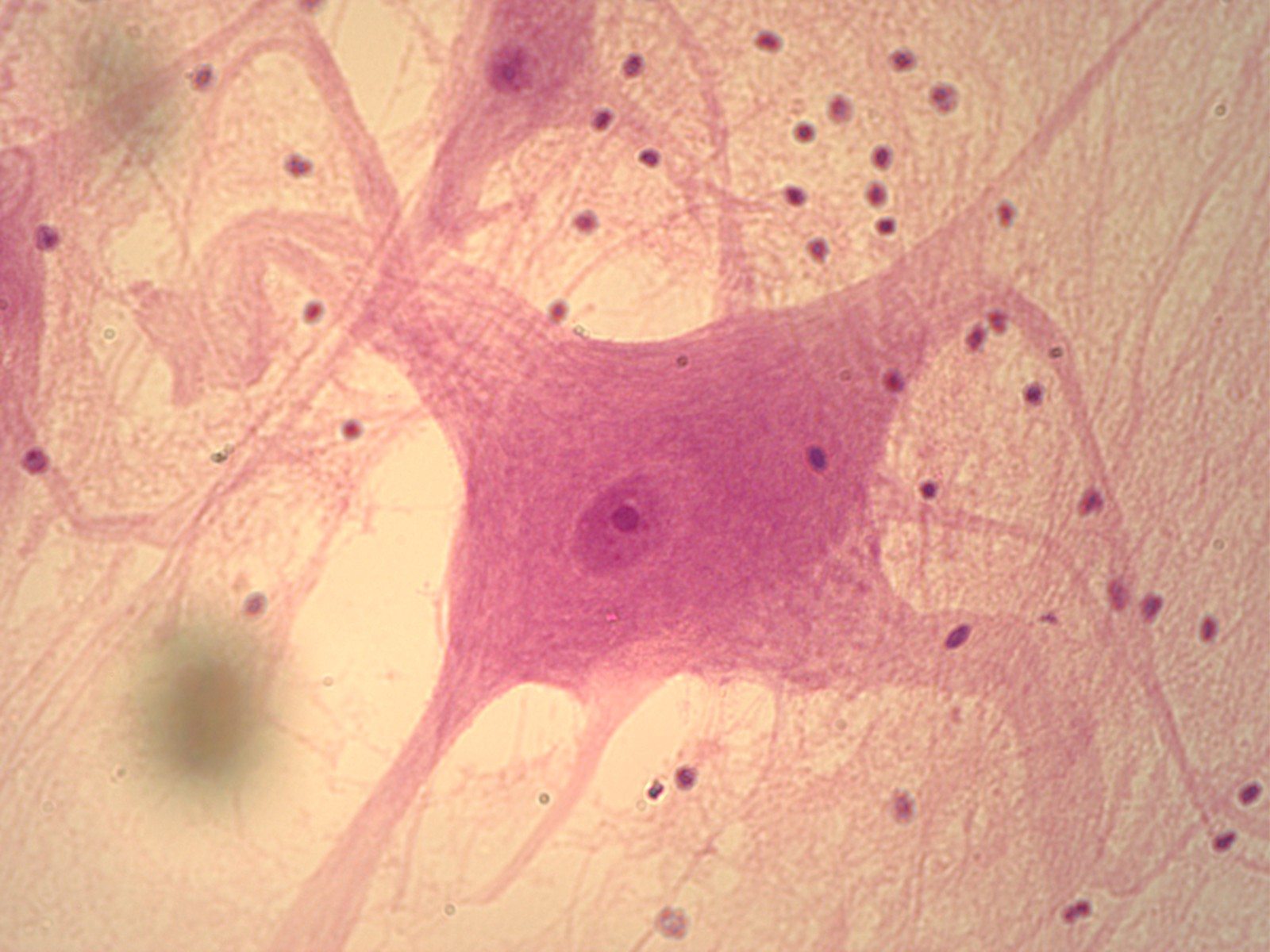
This type of tissue transmits information throughout the body to and from the brain.
Nervous Tissue
Connective Tissue
Muscular Tissue
Epithelial Tissue

Which of the following tissues is made up of cells that contract to help the body move?
Epithelial Tissue
Connective Tissue
Muscle Tissue
Nervous Tissue

organ systems make up.....
Tissues
Organs
Organ systems
Organisms
What is the correct order of organization?
cells->tissue->organs->organ systems-> organism
tissue->cells->organs->organ systems-> organism
organs->organ systems-> organism->cells->tissue
Which system collects and removes wastes from the blood?
Muscular
Circulatory
Digestive
Excretory
There are three tenets of the Cell Theory. Which of the following is NOT a tenet?
Cells are the basic structure and function of life.
All living things are made of one or more cells.
The cell is the basic unit of matter.
All cells come from preexisting cells.
____ is credited with being the first scientist to observe cork cells.
Leewenhoek
Shleidon
Hooke
Which of the following statements is true?
Plants and animal cells have cell walls for protection.
Animal cells have one large vacuole; the plant cell has tiny ones.
Plant cells contain chlorophyll; animal cells have lysosomes.
Animal cells are box shaped; plant cells are circular
Sometimes called the “powerhouse” of the cell, this organelle is where respiration takes place.
Mitochondria
Nucleus
Vacuole
Bacteria is classified as a what?
Prokaryote
Eukaryote
If it does not rain for a long period of time, plants’ leaves will begin to wilt or sag. They have used up the water that they stored in their ___________
Vacuole
Chloroplast
Mitochondria


This organelle controls what goes in and out of plant and animal cells.
Cell Wall
Cell Membrane
Chloroplasts
Cytoplasm
The _____________ stores food, water, wastes, and other materials in both plant and animal cells.
Vacuole
Mitochondria
Cytoplasm
Nucleus
The _____________ holds the DNA, and controls the functions of eukaryotic cells.
Nucleus
Nuclear Membrane
Mitochondria
Chloroplast
The _____________ is a gel-like fluid that fills plant and animal cells. It holds the organelles in place and gives each cell its shape.
Cytoplasm
Cell Membrane
Cell Wall
Chloroplast
What can only be found in plant cells?
Cell membrane
Vacuole
Chloroplast
Mitochondria
Cell organelles work together to maintain
homeostasis
eukarya
prokarya
organisms


What is the Net Force and the direction of the object's movement as a result of the net force?
2N, Right
0N, Left
3N, Right
4N, Left

What is the Net Force and the direction of the object's movement as a result of the net force?
5N, Right
5N, Left
9N, Right
9N, Left

What is the Net Force and the direction of the object's movement as a result of the net force?
8N, Right
8N, Left
0N, Right
0N, No Movement

What is the Net Force and the direction of the object's movement as a result of the net force?
9N, Right
9N, Left
3N, Right
3N, Left

What is the Net Force and the direction of the object's movement as a result of the net force?
12N, Right
12N, Left
4N, Left
4N, Right

What is the Net Force and the direction of the object's movement as a result of the net force?
1N, Right
1N, Left
9N, Left
9N, Right

What is the Net Force and the direction of the object's movement as a result of the net force?
3N, Right
3N, Left
6N, Left
6N, Right
A group of components (parts) that work together is a...
Sphere
System
Habitat
Cycle
Contains solid inner metal core, liquid outer core, and rocky mantle and crust.
Hydrosphere
Geosphere
Biosphere
Atmosphere
Contains all living things on Earth.
Biosphere
Geosphere
Atmosphere
Hydrosphere
All of Earth’s water.
Cryosphere
Geosphere
Hydrosphere
Biosphere
Contains all living things on Earth.
Biosphere
Geosphere
Atmosphere
Hydrosphere
Thin envelope of gases surrounding the Earth and contains the weather.
Atmosphere
Hydrosphere
Biosphere
Geosphere

The process by which rocks are broken down
Weathering
Deposition
Erosion
Sedimentation

The process in which sediment settles out (drops to the bottom) of the water or wind that is carrying it
Weathering
Erosion
Sedimentation
Deposition

Fragments of weathered rocks are known as ____.
sediments
deposits
limestones
sandstones

The MECHANICAL breaking down of rocks into smaller pieces is...
Physical weathering
Chemical weathering

The breakdown and decomposition of rocks as a result of chemical reactions and processes
Physical weathering
Chemical weathering

Water gradually wearing down and smoothing rocks over a long period of time is an example of...
physical weathering
chemical weathering
deposition
erosion

When iron in rocks reacts with oxygen, it forms iron oxide (rust), which weakens rocks and causes them to break apart. This is an example of...
physical weathering
chemical weathering
erosion
deposition

Waves dropping sand onto land until a beach is formed is an example of...
physical weathering
erosion
deposition
chemical weathering



