
 Worksheets
2.4 Chemistry NCEA
Total questions: 135
Worksheet time: 2hrs 59mins
What type of particle(s) makes up HCl?
Molecules
Metal cations & delocalised electrons
Cations & anions
Atoms
What type of particle(s) makes up HCl?
Molecules
Metal cations & delocalised electrons
Cations & anions
Atoms
What type of attractive forces exist between HCl particles?
Weak intermolecular forces
Metallic bonds
Ionic bonds
Covalent bonds
What type of particle(s) makes up SiO2?
Molecules
Metal cations & delocalised electrons
Cations & anions
Atoms
What type of attractive forces exist between SiO2 particles?
Weak intermolecular forces
Metallic bonds
Ionic bonds
Covalent bonds
What type of particle(s) makes up diamond (C)?
Molecules
Metal cations & delocalised electrons
Cations & anions
Atoms
What type of attractive forces exist between diamond (C) particles?
Weak intermolecular forces
Metallic bonds
Ionic bonds
Covalent bonds
What type of particle(s) makes up graphite (C)?
Molecules
Metal cations & delocalised electrons
Cations & anions
Atoms
What type of attractive forces exist between copper (Cu) particles?
Weak intermolecular forces
Metallic bonds
Ionic bonds
Covalent bonds
What type of particle(s) makes up copper (Cu)?
Molecules
Metal cations & delocalised electrons
Cations & anions
Atoms
What type of particle(s) makes up sodium (Na)?
Molecules
Metal cations & delocalised electrons
Cations & anions
Atoms
What type of attractive forces exist between sodium (Na) particles?
Weak intermolecular forces
Metallic bonds
Ionic bonds
Covalent bonds
What type of particle(s) makes up gold (Au)?
Molecules
Metal cations & delocalised electrons
Cations & anions
Atoms
What type of attractive forces exist between gold (Au) particles?
Weak intermolecular forces
Metallic bonds
Ionic bonds
Covalent bonds
What type of attractive forces exist between graphite (C) particles?
Weak intermolecular forces
Metallic bonds
Ionic bonds
Covalent bonds & weak intermolecular forces
What type of attractive forces exist between methane (CH4) particles?
Weak intermolecular forces
Metallic bonds
Ionic bonds
Covalent bonds
What type of particle(s) makes up methane (CH4)?
Molecules
Metal cations & delocalised electrons
Cations & anions
Atoms
What type of particle(s) makes up water (H2O)?
Molecules
Metal cations & delocalised electrons
Cations & anions
Atoms
What type of attractive forces exist between water (H2O) particles?
Weak intermolecular forces
Metallic bonds
Ionic bonds
Covalent bonds
What type of attractive forces exist between iodine (I2) particles?
Weak intermolecular forces
Metallic bonds
Ionic bonds
Covalent bonds
What type of particle(s) makes up iodine (I2)?
Molecules
Metal cations & delocalised electrons
Cations & anions
Atoms
What type of particle(s) makes up carbon dioxide (CO2)?
Molecules
Metal cations & delocalised electrons
Cations & anions
Atoms
What type of attractive forces exist between carbon dioxide (CO2) particles?
Weak intermolecular forces
Metallic bonds
Ionic bonds
Covalent bonds
What type of attractive forces exist between calcium oxide (CaO) particles?
Weak intermolecular forces
Metallic bonds
Ionic bonds
Covalent bonds
What type of particle(s) makes up calcium oxide (CaO)?
Molecules
Metal cations & delocalised electrons
Cations & anions
Atoms
What type of attractive forces exist between lithium sulfate (Li2SO4) particles?
Weak intermolecular forces
Metallic bonds
Ionic bonds
Covalent bonds
What type of particle(s) makes up lithium sulfate (Li2SO4)?
Molecules
Metal cations & delocalised electrons
Cations & anions
Atoms
What type of particle(s) makes up ammonium nitrate (NH4NO3)?
Molecules
Metal cations & delocalised electrons
Cations & anions
Atoms
What type of attractive forces exist between ammonium nitrate (NH4NO3) particles?
Weak intermolecular forces
Metallic bonds
Ionic bonds
Covalent bonds

X atom has 12 protons. what is the electron arrangement of atom X?
2.8
2.8.8
2.8.2
2.10
An atom has 10 protons in its nucleus. how many electrons does the atom have?
10
11
12
13
Y atom has 13 protons in its nucleus. How many valence electrons does Y atom have?
13
3
10
8
E2+ has an electron arrangement of 2.8. how many proton does E2+ have?
10
8
12
2
F3- has an electron arrangement of 2.8.8. How many protons does F3- have?
15
18
8
10

what is the electron arrangement of atom N?
2.
2.8
2.5
2.8.8
What is the formula for Sodium Nitrate?
NaN
NaN2
Na(NO3)2
NaNO3
SN
Identify Gallium(III) Sulfate
GaSO4
Ga2(SO4)3
Ga3(SO4)2
Ga2SO4
What is the name of AgNO3?
Silver(III) Nitrate
Silver Mononitrate
Silver(I) Nitrate
Monosilver Nitrate
If copper(II) and phosphate bond together, the formula would be:
Cu2(PO4)3
CuPO4
Cu3(PO4)2
Cu3PO4

Which of the following is NOT a property of ionic compounds?
They conduct electricity when molten
They conduct electricity when in solution
They have high boiling points
They are insoluble in water
NaCl
Ionic compounds can conduct when molten or dissolved because ...
There are strong electrostatic attractions present
The ions are free to move and conduct
Ions can vibrate
There is a metal present

This could be the dot diagram of
Mg
Cl
C
O
How many valence electrons should Lithium have in its Lewis dot model?
1
2
3
4
How many valence electrons should Oxygen have in its Lewis dot model?
5
6
7
8

This is a correct dot diagram for nitrogen (N)
true
false

This is a correct dot diagram for carbon (C)
true
false

This is a correct dot diagram for neon (Ne)
true
false
Which of these is incorrect?


How many electrons should Boron have around its Lewis dot model?
1
2
3
4


In chemical compounds, covalent bonds form when
both atoms already have full valence shells.
electrons are completely transferred between two metals.
pairs of electrons are shared between two non-metal atoms.
two non-metal atoms are attracted to each other by opposite charges.

What is the name of this shape?
Tetrahedral
Trigonal Pyramidal
Angular or Bent
Linear

A mystery substance has a low melting point, does not dissolve in water, does not conduct electricity, and is made of non-metals. Which type of bonding is most likely to be present?
Metallic
Ionic
Covalent Network
Covalent Molecular
A mystery substance has a very high melting point, does not dissolve in water, does not conduct electricity, and is made of non-metals. This substance is very hard. Which type of bonding is most likely to be present?
Metallic
Ionic
Covalent Network
Covalent Molecular
Poor electrical conductivity
Ionic compounds
Covalent compounds
Conducts electricity well when melted or dissolved
Ionic compounds
Covalent compounds
Always a solid at room temperature
Ionic compounds
Covalent compounds
Generally high melting & boiling points
Ionic compounds
Covalent compounds
Generally low melting and boiling points
Ionic compounds
Covalent compounds

What kind of bond does this show?
Ionic
Covalent
What happens when you put an ionic compound in water?
The ions separate
The ions pack more closely together
Nothing happens
In nonpolar covalent bonds....
Electrons are more attracted to one atom than the other
Electrons are equally shared between atoms
In polar covalent bonds...
Electrons are more attracted to one atom than the other
Electrons are equally shared between atoms

Which of these atoms will electrons be most attracted to in a covalent bond?
Na
H
Be
F

What type of bonding does this picture show?
Ionic
Covalent

What type of bonding does this picture show?
Ionic
Covalent

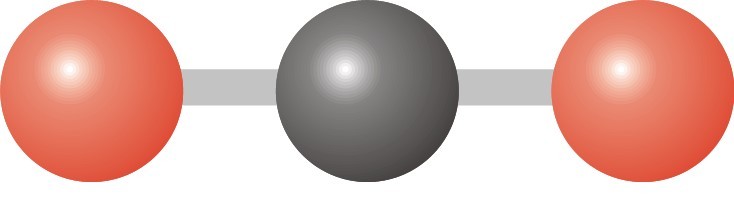
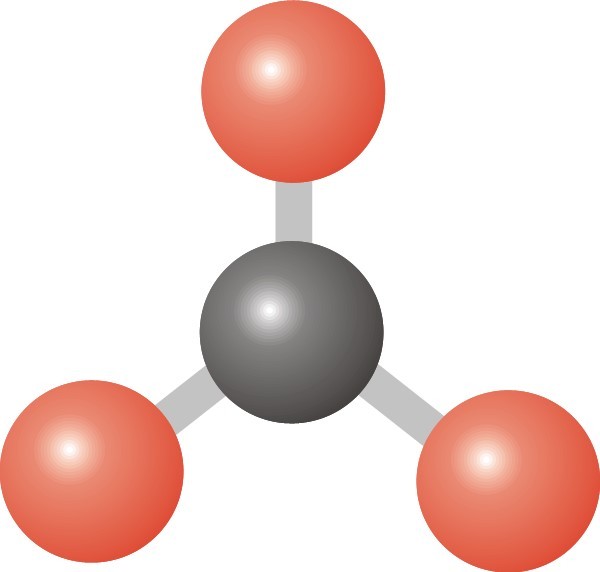
What is the bond angle for a trigonal pyramidal molecule?
90
107
109.5
120


Determine the molecular geometry of the given structure.
Trigonal Pyramidal
Trigonal Bipyramidal
Trigonal Planar
Tetrahedral
A molecular geometry with 3 bonding pairs is
Trigonal pyramidal
Trigonal planar
Trigonal bipyramidal
T-shaped
A molecular geometry with 2 lone pairs and 2 bonding pairs is
Tetrahedral
Trigonal pyramidal
Bent
Linear


Choose the correct shape for this molecule:
Trigonal planar
Linear
Bent
Tetrahedral


Which Lewis Dot Model drawing correctly shows an O2 molecule?


Which best describes a triple bond?
3 shared pairs of electrons
3 shared electrons
a central electron with 3 atoms bonded around it
In an endothermic reaction, heat is ...
taken in
given out


What is the Heat of Reaction ΔH for this reaction?
-200 KJ
200 KJ
400 KJ
-300 KJ
How much activation energy is needed for this reaction?
300 KJ
500 KJ
400 KJ
100 KJ
Are the products or reactants of this reaction storing more energy in their chemical bonds?
Both storing the same
No way to tell
Products
Reactants
What type of reaction is this?
Exothermic
Endothermic
Energy Producing
No way to tell
What kind of equation is this: 2KI + MgCl2 + 200KJ ----> 2KCl + MgI2
Endothermic
Exothermic
In this equation, is more energy stored in the bonds of the reactants or products: NaCl + AgF +100KJ -----> NaF + AgCl
Products
Reactants
H-H = 436
Cl-Cl = 242
H-Cl = 431
What is the enthalpy change for the decomposition of hydrogen chloride?
2 HCl --> H2 + Cl2

The average bond enthalpies for O-O and O=O are 146kJ/mol and 496kJ/mol respectively. Calculate the enthalpy change for the reaction shown.
-102kJ
+102kJ
+146kJ
-248 kJ
Calculate the enthalpy change, in kJ/mol for the reaction
H2 (g) + ½O2 (g) → H2O (g)
Data of bond energy:
H−H = +436 kJ/mol
O=O = +498 kJ/mol
H−O = +464 kJ/mol
−243 kJ/mol
−6 kJ/mol
+6 kJ/mol
+221 kJ/mol
The enthalpy change for the reaction between hydrochloric acid and sodium hydroxide is −56 kJ/mol. Therefore ...
the reaction is exothermic and the temperature rises
the reaction is exothermic and the temperature falls
the reaction is endothermic and the temperature rises
the reaction is endothermic and the temperature falls
Which of these diagram correctly represent an endothermic reaction?


In an endothermic reaction in aqueous solution, which of the following is correct?
temperature increases, sign of enthalpy change is positive
temperature increases, sign of enthalpy change is negative
temperature decreases, sign of enthalpy change is positive
temperature decreases, sign of enthalpy change is negative

