wayground logo

Free Printable Worksheets

Font size

S
M
L
XL
Worksheets

Ch 5 Matter

Total questions: 25

Worksheet time: 18mins

Name
Class
Date
1.
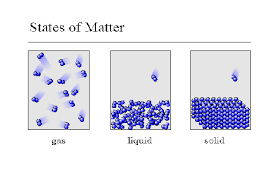
What are the three states of matter?
a)
solid, volume, mass
b)
density, volume, mass
c)
solid, liquid, gas
d)
density, gas, volume
2.
Something that takes up space and has mass.
a)
volume
b)
matter
c)
mass
d)
density
3.
A state of matter that has a definite volume and shape.
a)
solid
b)
liquid
c)
gas
d)
matter
4.
The amount of space something takes up
a)
density
b)
volume
c)
mass
d)
matter
5.
You can measure ______ with grams.
a)
mass
b)
volume
c)
conductivity
d)
melting point
6.
You can measure ______ with grams.
a)
mass
b)
volume
c)
conductivity
d)
melting point
7.
Liquid matter takes the shape of _______.
a)
a gas
b)
water
c)
a pet
d)
Its container
8.
Water in its solid form is _____________.
a)
a vapor
b)
ice
c)
a liquid
d)
boiling
9.
The amount of matter something contains is its ______________.
a)
gas
b)
solid
c)
weight
d)
mass
10.
Which form of matter fills the space like it has in the balloon?
a)
liquid
b)
string
c)
solid
d)
gas
11.
What is happening when my water bottle in the freezer goes from a liquid state to a solid state?
a)
melting
b)
evaporating
c)
freezing
d)
cutting
12.
What happens when my glass of water is sitting in the sun and disappears into a gas?
a)
evaporation
b)
burning
c)
melting
d)
freezing
13.
My glass of ice water is sitting in the sun and has droplets of water on the outside of the glass. What is happening?
a)
condensation
b)
evaporation
c)
melting
d)
freezing
14.
Which form of matter does not take the shape of its container?
a)
liquid
b)
gas
c)
solid
d)
air
15.
At higher temperatures
a)
particles in an object have less energy
b)
particles in an object move faster
c)
a gas contracts
16.

Select the change in the state of matter for freezing.

a)

Solid to gas

b)

Liquid to solid

c)

Gas to solid

d)

Liquid to gas

17.

Select the change in the state of matter for boiling.

a)

liquid to gas

b)

gas to solid

c)

gas to liquid

d)

solid to liquid

18.
Particles of a liquid
a)
are tightly packed together and stay in a fixed position.
b)
have no viscosity.
c)
decrease in volume with increasing temperature.
d)
are free to move around one another but still touch.
19.
Particles (molecules) in a ______________________ have more energy than the other states of matter.
a)
gas
b)
solid
c)
liquid
20.

How do the particles move in diffusion?

a)

From a region of low concentration to a region of high concentration

b)

From a region of high concentration to a region of low concentration

c)

From a region of low concentration to a region of low concentration

d)

From a region of high concentration to a region of high concentration

21.

The movement of particles is __________, resulting in the particles being spread throughout the container

a)

Structured

b)

In a straight line

c)

Random

d)

In curved, way motions

22.

When does diffusion stop?

a)

After a day and a night

b)

When the particles are evenly spread out

c)

When there are no particles left

d)

When all the particles leave the system

23.

Select two changes in the states of matter that absorbs heat.

a)

freezing

b)

boiling

c)

condensation

d)

melting

24.

Select two changes in the states of matter that releases heat.

a)

freezing

b)

boiling

c)

condensation

d)

melting

25.

The change in the state of matter where solid changes into gas is called _________.

a)

freezing

b)

melting

c)

sublimation

d)

evaporation