
Font size
 Worksheets
Properties of Organic Molecules
Total questions: 30
Worksheet time: 17mins
Which characteristic is a property of organic substances?
good heat conductivity
good electrical conductivity
low melting point
high melting point
What is the maximum number of covalent bonds that a carbon atom can form?
1
2
3
4

Given the formula representing a molecule:
Which statement explains why the molecule is nonpolar?
Electrons are shared between the carbon atoms and the hydrogen atoms.
Electrons are transferred from the carbon atoms to the hydrogen atoms.
The distribution of charge in the molecule is symmetrical
The distribution of charge in the molecule is asymmetrical.

Given the formula representing a molecule:
The molecule is
symmetrical and polar
symmetrical and nonpolar
asymmetrical and polar
asymmetrical and nonpolar
Hexane (C6H14) and water do not form a solution. Which statement explains this phenomenon?
Hexane is polar and water is nonpolar.
Hexane is ionic and water is polar.
Hexane is nonpolar and water is polar.
Hexane is nonpolar and water is ionic.
The attraction that nonpolar molecules have for each other is primarily caused by the presence of
hydrogen bonding
high ionization energy
electronegativity differences
van der Waals (dispersion) forces
Which characteristic of the compound C5H12 causes it to have a higher normal boiling point than C2H6?
The distance between molecules of C5H12 is greater.
The force of attraction between molecules of C5H12 is greater.
C5H12 has a larger number of ionic bonds
C5H12 has a larger number of double bonds
A molecule of any organic compound has at least one
ionic bond
double bond
oxygen atom
carbon atom
Which structural formula is incorrect?


Organic compounds that are essentially non-polar and exhibit weak intermolecular forces have
low vapor pressure
low melting points
high boiling points
high electrical conductivity in solution
In general, which property do organic compounds share?
high melting point
high electrical conductivity
readily soluble in water
slow reaction rate
Which representation is the structural formula of an organic compound?


Compared with the rate of an inorganic reaction, the rate of an organic reaction is usually
faster, because organic compounds are ionic.
faster, because the organic compounds are molecules.
slower, because organic compounds are ionic.
slower, because the organic compounds are molecules.
Organic compounds differ from inorganic compounds in that organic compounds generally have
low melting points and are electrolytes
low melting points and are nonelectrolytes
high melting points and are electrolytes
high melting points and are nonelectrolytes
Which of the following compounds has the highest normal boiling point?
C2H6
C3H8
C4H10
C5H12

A student investigated four different substances in the solid phase. The table is a record of the characteristics (marked with an X) exhibited by each substance. Which substance has characteristics most like those of an organic compound?
A
B
C
D
This reaction starts with a Hydrocarbon that reacts with oxygen and produces carbon dioxide and water.
Decomposition
Synthesis
Combustion
Single Replacement
_C4H10 + _O2 → _CO2 + _H2O

A molecule is polar when
it is asymmetrical with at least one polar bond
it is symmetrical
it is asymmetrical
it is symmetrical with at least one polar bond

What is fractional distillation?
a process used to separate crude oil
a process used to burn up fuels
a way to make different products
how oil is extracted from the ground
Fractional distillation separates crude oil based on the different __________ of the molecules in the mixture
melting point
boiling point
freezing point
chemical reactivity
Which of these elements are found in a hydrocarbon
carbon
oxygen
helium
hydrogen
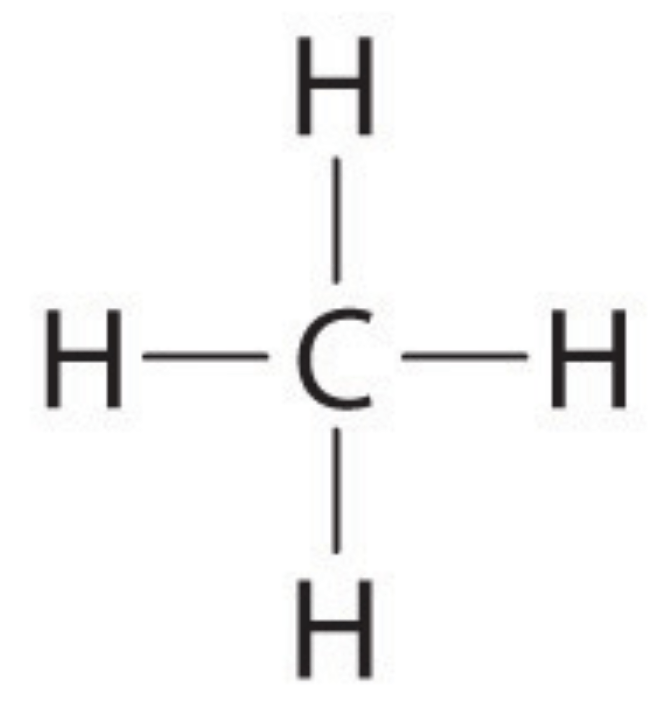
Classify the following molecule.
polar
nonpolar

Classify the following molecule.
polar
nonpolar

Is the following molecule polar or nonpolar?
polar
nonpolar
What is the empirical formula of a substance that has a molecular formula of C8H10N4O2?
CHNO
C4H5N2O
C9H7N3O
C2H6N2O


