wayground logo

Free Printable Worksheets

NEW

Font size

S
M
L
XL
Worksheets

2nd Year Summer Quiz KG

Total questions: 68

Worksheet time: 38mins

Name
Class
Date
1.
What is the entrance to the lungs called? 
a)
Lungs
b)
Bronchi
c)
Trachea
2.
Oxygen from the air enters the blood stream at what location?
a)
Cardiac Notch
b)
Pulmonary Vein
c)
Alveoli
d)
Paranasal Sinuses
3.
Inhale!!!
My lungs ________
a)
Got Smaller
b)
Got Bigger
4.
EXHALE!!!
My lungs are __________________ air. 
a)
Taking in
b)
Letting out
5.
Where is the bronchi?
a)
A
b)
B
c)
C
d)
D
6.
What does the lung send to blood cells
a)
Oxygen
b)
Nitrogen
c)
Carbon Dioxide
7.
When you breathe, your lungs take in ___ and remove ___. 
a)
Air/Oxygen
b)
Oxygen/Carbon Dioxide 
c)
Carbon Dioxide/Waste 
d)
Waste/air 
8.
What is the main function of the respiratory system?
a)
to provide oxygen and remove carbon dioxide from the body
b)
to bring oxygen to the body
c)
to break down food and absorb nutrients
d)
to remove oxygen from the body and deliver carbon dioxide
9.
What happens to your breathing rate when you exercise?
a)
It increases
b)
It decreases
c)
It stays the same
10.
Which statement is NOT correct?
a)
Red blood cells transport oxygen from the cappilaries surrounding the alveoli towards the heart
b)
Red blood cells transport carbon dioxide from the cappilaries surrounding the alveoli towards the heart
c)
Red blood cells transport carbon dioxide away from the heart towards the capillaries surrounding the alveoli
d)
The alveoli are very moist to allow gases to diffuse into the blood stream
11.

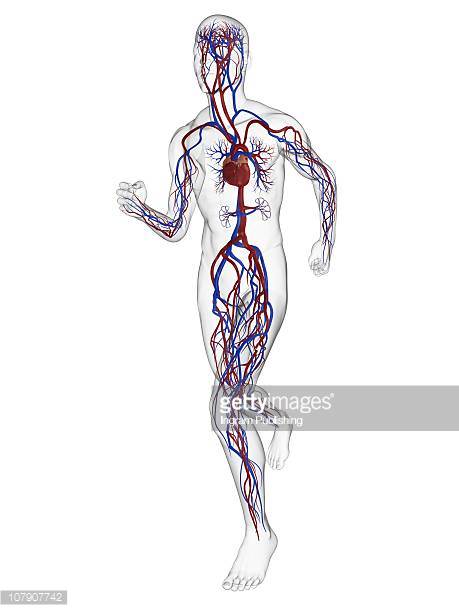
What is the main organ of the circulatory system?

a)

small intestine

b)

bone

c)

lungs

d)

heart

12.

The job of the heart is to . . .

a)

pump blood around the body.

b)

send food to the small intestines.

c)

break down food.

d)

give energy to the body.

13.
The circulatory system works with the ___________ system to provide our body with oxygen.
a)
respiratory
b)
digestive
c)
muscular
d)
skeletal
14.

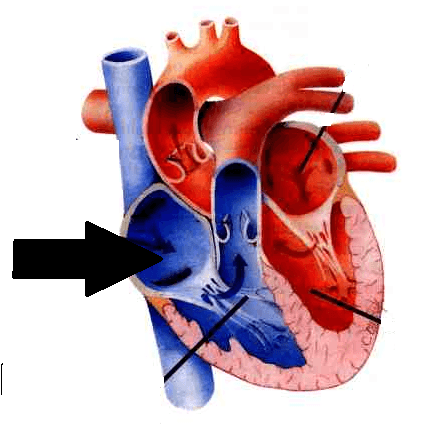
Identify

a)

Left atrium

b)

Right atrium

c)

Left ventricle

d)

Right ventricle

15.

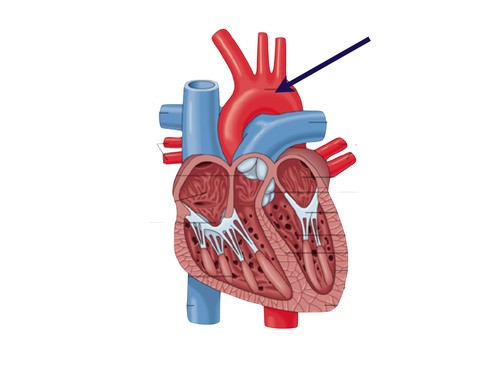
Identify

a)

Pulmonary veins

b)

Pulmonary artery

c)

Aorta

d)

Vena cava

16.

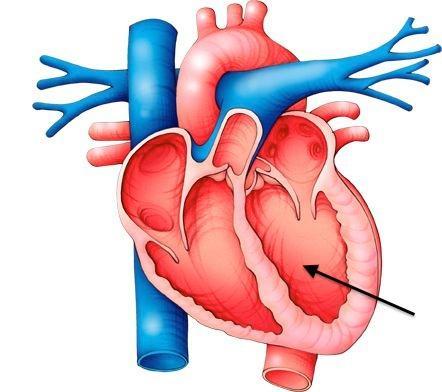
Identify

a)

Left atrium

b)

Right atrium

c)

Left ventricle

d)

Right ventricle

17.
What does Deoxygenated mean?
a)
Oxygen-rich
b)
Blood flow
c)
Oxygen-poor
d)
Water Flow
18.

Carry blood away from heart; mostly oxygen-rich

a)

Arteries

b)

Veins

c)

Capillaries

19.
What is pulmonary circulation?
a)
Blood travelling to and from the lungs
b)
Blood travelling to and from the body
c)
A blood clot in the lungs
d)
The vessel that brings blood to the lungs
20.

The cells in the blood that help fight germs and illnesses are the...

a)

red blood cells

b)

platelets

c)

white blood cells

d)

axons

21.
__________ Very small tubes that connect arteries to veins; the smallest blood vessels.
a)
Veins
b)
Capillaries 
c)
Arteries
22.
Red blood cells transport __________ around our body.
a)
oxygen
b)
plasma
c)
bones
d)
cardiac muscles
23.
This particle is found in the nucleus and has no charge
a)
Neutron
b)
Proton
c)
Electron
24.
This particle is found in the nucleus and has a positive charge
a)
Electron
b)
Proton
c)
Neutron
25.
This is a negatively charged particle found outside the nucleus
a)
Electron
b)
Proton
c)
Neutron
26.
All matter is made of what?
a)
energy 
b)
atoms 
c)
electrons 
d)
compounds 
27.
Contributes basically no mass to an atom.
a)
protons
b)
neutrons
c)
electrons
d)
protons and neutrons
28.
The atomic number for Oxygen is 8, so
a)
there are 8 protons in the atom
b)
the atomic mass is less than 8
c)
the mass of the atom is 8
d)
the atom is decaying
29.
The sum of the number of protons and the number of neutrons is called the _____
a)
atomic number
b)
mass number
c)
isotope number
d)
average weight
30.
number of neutrons =  _____
a)
atomic number - mass number
b)
isotope number - atomic weight
c)
mass number - atomic weight
d)
mass number - atomic number
31.
An atom has a mass of 54 while is atomic number is 32.  How many electrons does it have?
a)
22
b)
32
c)
54
d)
0
32.
An atom has a mass of 54 while is atomic number is 32.  How many neutrons does it have?
a)
22
b)
32
c)
54
d)
86
33.
Niels Bohr suggested that electrons.......
a)
are found in specific orbits
b)
electrons are scattered throughout the atom
c)
electrons move according to their energy level
d)
electrons are positive
34.
An atom has 10 protons and a mass of 18. It has __ neutrons
a)
10
b)
18
c)
28
d)
8
35.

What is an ion?

a)

An atom

b)

A charged atom/group of atoms

c)

A negatively charged atom

d)

A positively charged atom

36.

An atom that loses an electron has...

a)

A positive charge

b)

A negative charge

37.

Ionic bonding is...

a)

When atoms share electrons

b)

When atoms stick together

c)

Attraction between oppositely charged ions

d)

Attraction between same charged ions

38.

What type of bond involves the sharing of electrons between atoms?

a)

covalent bond

b)

ionic bond

c)

metallic bond

d)

transfer bond

39.

Identify the following compound as ionic or covalent: MgO

a)

ionic

b)

covalent

40.
How many Valence Electrons are on Oxygen
a)
2
b)
7
c)
6
d)
1
41.

When sulfur gains an electron from beryllium it becomes a...

a)

positive ion

b)

negative ion

42.

When sodium loses an electron to bromine, sodium becomes a...

a)

positive ion

b)

negative ion

43.

Carbon and Oxygen will make a ___________ bond.

a)

ionic

b)

covalent

c)

metallic

44.

MgO

a)

ionic

b)

covalent

c)

metallic

45.

NaCl

a)

ionic

b)

covalent

c)

metallic

46.
Some scientists believe that this dwarf planet is actually a very large comet caught in a permanent orbit.
a)
Eris
b)
Pluto
c)
Mars
d)
Neptune
47.
This is the largest planet in the solar system.
a)
Saturn
b)
Jupiter
c)
Uranus
d)
Venus
48.
Only planet known to have life
a)
Earth
b)
Mars
c)
Venus
d)
Mercury
49.
What is the closest planet to the sun?
a)
Jupiter
b)
Neptune
c)
Mars
d)
Mercury
50.
What is the fourth planet from the sun?
a)
Mercury
b)
Mars
c)
Earth
d)
Venus
51.
What is the sixth planet from the sun?
a)
Saturn
b)
Uranus
c)
Neptune
d)
Jupiter
52.

How does Cosmic Microwave Background Radiation support the Big Bang Theory?

a)

Microwaves are found everywhere in the universe.

b)

Microwaves occurred at the time of the Big Bang

c)

Microwaves are useful in our everyday lives

53.

The Big Bang Theory explains the formation of the...

a)

Earth

b)

Sun

c)

Universe

d)

Solar System

54.
What does the Big Bang theory suggest?
a)
The universe was just there
b)
The Milky Way is the only solar system
c)
The universe is continually expanding
d)
The universe is collapsing in toward a single point
55.
What were the original two elements in our universe?
a)
Lithium and Carbon
b)
Hydrogen and Neon
c)
Helium and Chlorine
d)
Hydrogen and Helium
56.

In relation to us, most galaxies are…

a)

Moving toward us

b)

Moving away from us

c)

Not moving

57.

Stronger acids have a pH closer to...

a)

7

b)

0

c)

14

d)

9

58.

Weaker bases have a pH closer to...

a)

8

b)

0

c)

14

d)

4

59.

A pH level of 7 indicates

a)

acid

b)

base

c)

neutral

d)

none of the following

60.

The pH scale is a range from:

a)

1-7

b)

0-14

c)

1-5

d)

1-14

61.

What is the only substance with a neutral pH of 7?

a)

Milk

b)

Orange Juice

c)

Pure water

d)

Bleach

62.

Which of the following is an acid?

a)

soap

b)

baking soda

c)

orange juice

d)

pure water

63.

What would be considered the weakest base?

a)

3

b)

14

c)

8.2

d)

11.6

64.

Which property is not associated with acids?

a)

Sour taste

b)

strong acids can burn you

c)

turns litmus paper blue

d)

reacts with metals

65.

What type of paper is used to test for acids and bases?

a)

Red paper

b)

Blue paper

c)

Lined paper

d)

Litmus paper

66.

You test a solution with pH paper, and the paper turns blue. The solution is ______.

a)

neutral

b)

an acid

c)

a base

d)

an acid & a base

67.

These can burn you if they are strong enough.

a)

Acids

b)

Bases

c)

Water

d)

Acids & Bases

68.
What methods can you use to measure the pH of a solution?
a)
Observing color or clarity
b)
Measuring mass or volume
c)
Measuring density or electrical conductivity
d)
Using acid base-indicators or pH meters