
NEW
Font size
 Worksheets
Carbon Compounds (1)
Total questions: 30
Worksheet time: 9mins
Which property of carbon is important in the forming of many types of organic compounds
carbon has 6 electrons
carbon has 6 protons
carbon has 4 valence electrons
carbon can only bond with hydrogen
Because carbon has 4 valence electrons
it can form up to 4 covalent bonds
it can form ionic bonds
it can form only double bonds
it can form covalent bonds with H only

This is an example of a
straight carbon chain
branched carbon chain
carbon ring structure
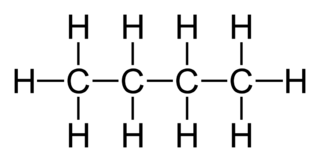
C3H8
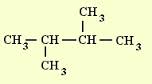
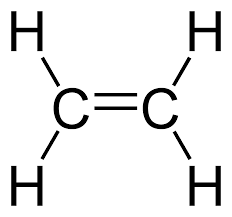
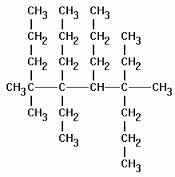

Reaction between this compound and two mole of H2 in the presence of Ni catalyst will produce
3-methylbutene
3-methylbutane
2-methylbutane
2-methylbutene
n-butane
What is the observation obtained when alkene react with acidified KMnO4
decolourize purple solution
decolourize reddish brown solution
decolourize blue solution
yellow precipitate formed
What term describes alkene molecules that contain a C=C double bond?
saturated
unsaturated
What are the first 3 alkenes in increasing carbon chain length?
Methene, ethene, propene
Ethene, propene, pentene
Ethene, propene, butene
Butene, ethene, propene
Methene, ethene, propane
What conditions are necessary in the reaction of alkenes with hydrogen?
300°C, Iron catalyst
60°C, Nickel catalyst
600°C, High pressure
Low temperature, Nickel catalyst
600°C, High temperature
Which statement about ethene is correct?
It has no geometric isomers because there is free rotation around the C=C bond.
It reacts with HBr in a nucleophilic addition reaction.
It burns in excess oxygen to produce carbon dioxide and water.
The C=C bond is twice as strong as the C–C bond in ethane.
All alkenes have .... bond
double
triple
ionic
metallic
The alkene C3H6 is .... at room temperature
gas
liquid
solid
plasma
If H2 is added to C4H8, the product will be C4H12
True
False
Polymerization is used to produce all following product except for:
PVC
Polyethylene
Paper
Polystyrene
When but-2-ene is shaken with bromine water, the brown bromine water is decolourised.
What is the product of this reaction?
1,2-dibromobutene
2,3-dibromobutene
1,2-dibromobutane
2,3-dibromobutane

