
 Worksheets
Grade 4
Total questions: 10
Worksheet time: 4mins
Name
Class
Date
1.
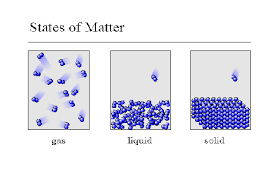
At higher temperatures
a)
particles in an object have less energy
b)
particles in an object move faster
c)
a gas contracts
2.
What is happening when my ice cream changes from a solid to a liquid?
a)
freezing
b)
melting
c)
burning
d)
evaporation
3.
What is happening when my water bottle in the freezer goes from a liquid state to a solid state?
a)
melting
b)
evaporating
c)
freezing
d)
cutting
4.
True or False
In a chemical reaction, no new atoms are created, and no atoms are destroyed.
In a chemical reaction, no new atoms are created, and no atoms are destroyed.
a)
true
b)
false
5.
A chemical change is different than a physical change because in a chemical change
a)
Chemicals are used
b)
Molecules do not physically touch
c)
A new substance is formed and in a physical change no new substance is formed
d)
The change can be seen but in a physical change it cannot
6.
Which one caries the sun energy
a)
Electromagnetic waves
b)
Transverse waves
c)
compressional waves
7.
By which process is thermal energy transferred through a vacuum?
a)
conduction only
b)
convection only
c)
conduction and convection only
d)
radiation only
8.
Which type of surface is the best absorber of infra-red rays?
a)
black and rough
b)
black and smooth
c)
white and rough
d)
white and smooth
9.
We feel the intense heat from the Sun when we stand in the open during noon time. How is heat transferred from the Sun to the Earth?
a)
By radiation only.
b)
By conduction and radiation only.
c)
By convection and radiation only.
d)
By conduction, convection and radiation.
10.

The diagram shows a vacuum flask.
The main reason for the vacuum is to reduce heat transfer by
a)
conduction and convection.
b)
conduction only.
c)
radiation only.
d)
convection only.
100 %

