
NEW
Font size
 Worksheets
ch 11 A&P Cardio vascular system
Total questions: 32
Worksheet time: 17mins

The smallest blood vessels are the
arteries
arterioles
capillaries
veins

The correct blood flow through the heart is:
Body - RA - RV - lungs - LA - LV - body
Body - LA - LV - lungs - RA - RV - body
Body - RV - RA - lungs - LV - LA - body
Body - LV - LA - lungs - RV - RA - body

The right atrium
delivers deoxygenated blood to the lungs
delivers oxygenated blood to the body
receives deoxygenated blood from the body
receives oxygenated blood from the lungs

Blood from the LEFT ventricle goes to the
aorta
left atrium
right atrium
left ventricle
De-oxygenated blood is first received in the
left atrium
left ventricle
right atrium
right ventricle
The layer of the walls of arteries that helps maintain diastolic blood pressure is made of:
fibrous connective tissue and elastic connective tissue
smooth muscle and fibrous connective tissue
smooth muscle and elastic connective tissue
fibrous connective tissue and simple squamous epithelium
Backflow of blood within veins is prevented by:
Smooth muscle
Valves
Precapillary sphincters
The middle layer
In capillaries, O2 and CO2 are exchanged between the blood and tissue fluid by the process of:
Osmosis
Filtration
Active Transport
Diffusion
A systematic blood pressure reading always consists of two numbers, which are called:
systemic/systolic
systolic/diastolic
diastolic/systolic
diastolic/systemic
In hepatic portal circulation, blood from the digestive organs and spleen circulates through the _____ before returning to the ______
brain/liver
liver/heart
liver/brain
heart/liver
Following a large loss of blood, as in severe hemorrhage, blood pressure will?
Increase
Decrease
Remain the same
Increase, then decrease
Epinephrine increases blood pressure because it:
causes vasodilation
decreases heart rate and force
increases heart rate and force
increases water reabsorption by the kidneys
ADH increases blood pressure because it:
causes vasodilation
increase heart rate and force
decreases water reabsorption by the kidneys
increases water reabsorption by the kidneys

Separates the ventricles of the heart.
Bicuspid valve
interventricular septum
aortic valve
tricuspid valve


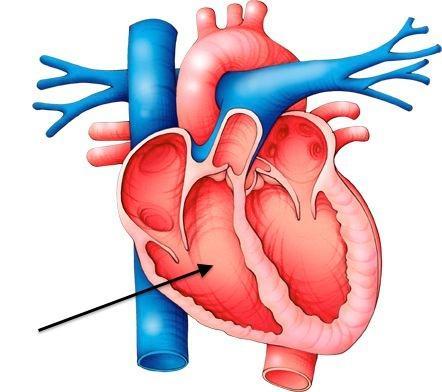
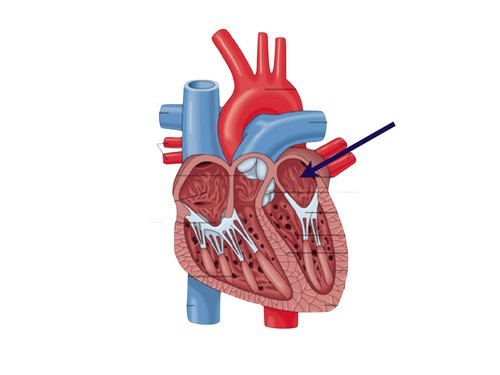

Name part N.
Right atrium
left atrium
right ventricle
left ventricle

Name part A.
Pulmonary artery
Pulmonary vein
Superior vena cava
Aorta

Name part B.
Pulmonary arteries
Pulmonary veins
Superior Vena cava
Aorta

Name part M.
Tricuspid valve
Semilunar valve
Bicuspid valve
Mitral valve
Systemic circulation begins at the:
right atrium
right ventricle
left ventricle
left foot
Venous return in the deep veins in the legs is increased by the:
low pressure in the right atrium
respiratory pump
low pressure in the left atrium
skeletal muscle pump
When blood pressure decreases, the kidneys secrete:
renin
more water
erythropoietin
all of these
Which type of blood vessel has valves inside?
Artery
Vein
Capillary
None of the above
Which type of blood vessel has a 'pulse'?
Artery
Vein
Capillary
None of the above

