wayground logo

Free Printable Worksheets

Font size

S
M
L
XL
Worksheets

Transect

Total questions: 40

Worksheet time: 2hrs 36mins
Name
Class
Date
1.
Temperature, light, air, water, and soil are all  _____  parts of the environment
a)
alive
b)
biotic 
c)
abiotic
d)
living
2.
Is a deer an abiotic or biotic factor? 
a)
abiotic
b)
biotic
3.
Is a fern an abiotic or biotic factor? 
a)
abiotic
b)
biotic
4.
Is a weather an abiotic or biotic factor? 
a)
abiotic
b)
biotic
5.
Is sunlight an abiotic or biotic factor? 
a)
abiotic
b)
biotic
6.
A living or once-living organisms in an ecosystem is a
a)
population
b)
biotic factor
c)
abiotic factor
d)
community
7.
Which of the following is not an abiotic factor?
a)
sun
b)
temperature
c)
soil
d)
grass
8.
A nonliving element in an ecosystem is an 
a)
animal
b)
abiotic factor
c)
biotic factor
d)
organism
9.
Which of the following is not a biotic factor?
a)
mushroom
b)
air
c)
elephant
d)
coyote
10.
Which of the fallowing has only abiotic factors?
a)
Sunlight, algae, and temperature
b)
Guppy, crab, oxygen
c)
Sunlight, soil, and weather
d)
Algae, temperature, and dog
11.
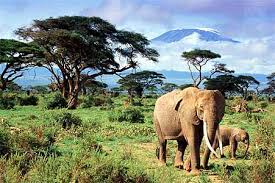
What are the biotic factors in this image?
a)
sunlight, elephants, and grasses
b)
sunlight, water,  and air
c)
elephants, plants, trees 
12.
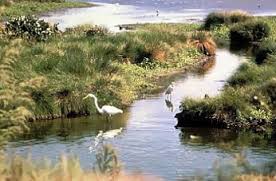
What are the abiotic factors in this image? 
a)
water, sunlight, dirt, air
b)
birds and plants
c)
water, plants, and birds 
13.
A certain plant needs moisture, carbon dioxide, oxygen, light, and minerals to survive. This scenario shows that this particular living organism depends on .
a)
Biotic and Abiotc Factors
b)
Biotic Factors 
c)
Abiotic Factors 
d)
None of the Above
14.
Which of the following lists has ONLY biotic factors?
 
a)
snail, algae, guppy, sunlight
b)
temperature, Daphnia (water flea), snail, guppy (fish)
c)
snail, guppy (fish), Daphnia (water flea), algae
d)
temperature, pH, conductivity, nitrite concentration
15.
The factors in an ecoysystem that have never had the ability to live.
a)
Biotic Factor
b)
Abiotic Factor
c)
Biome
d)
Community
16.
The study of relationships between biotic and abiotic factors interacting in the same area.
a)
Ecology
b)
Biology
c)
Zoology
d)
Botany
17.

Abiotic means

a)

living

b)

nonliving

18.

What is the difference between the biotic and abiotic factors?

a)

Biotic factors are living things and abiotic factors are nonliving things.

b)

Biotic factors are nonliving things and abiotic factors are living things.

19.
Biotic means
a)
living
b)
nonliving
20.

What is a example of a abiotic factor?

a)

Panda

b)

Bacteria

c)

Butterfly

d)

Weather

21.

Which of the following is a biotic factor?

a)

sun

b)

temperature

c)

soil

d)

grass

22.

A hollow, sealed glass sphere contains sand, water, air, algae, and tiny brine shrimp. The sphere is a model ecosystem. Which of these is a biotic factor of this ecosystem?

a)

air

b)

algae

c)

sand

d)

water

23.

Refer to the diagram. Which list includes abiotic factors only?

a)

Items A, C, D

b)

Items B, C, E

c)

Items A, D

d)

Items A, B, C, D, E

24.

Which of these is a biotic factor in a river ecosystem?

a)

the types of microorganisms that live in the river water

b)

the amount of soil and other particles carried by the river

c)

the speed at which the river water flows toward the ocean

d)

the amount of rain that flows off the land and into the river

25.

These are used to study the distribution of organisms

a)

microscopes

b)

transects

c)

measuring cylinders

d)

quadrats

26.

what is a transect?

a)

a square frame enclosing a known area

b)

the distribution of an organism

c)

a line used to help find out how organisms are distributed

d)

an insect

27.

abiotic factors are:

a)

living factors that affect communities

b)

a range of experimental methods

c)

a measure of the variety of all the different species within a particular ecosystem

d)

non living factors that affect living organisms

28.

In the image, what the line is called the:

a)

quadrat

b)

transect

c)

rocks

d)

water

29.

In the image, what the white square is called the:

a)

quadrat

b)

transect

c)

rocks

d)

water

30.
Where an organism lives
a)
habitat
b)
niche 
c)
heterotrogh
d)
biosphere
31.
A collection of organisms that make up a community as well as all of the nonliving aspects of the environment.
a)
Population
b)
Community
c)
Habitat
d)
Ecosystem
32.
An individual belonging to a specific species
a)
Biotic
b)
Community
c)
Organism
d)
Reptile
33.
All of the living and nonliving things in an area that interact with each other are called a/an ______.
a)
community
b)
habitat
c)
population
d)
ecosystem
34.
An area where an organism finds food, shelter and water in a specific arrangement
a)
niche
b)
biosphere
c)
biome
d)
habitat
35.
The living part of an ecosystem
a)
Biotic
b)
Abiotic
c)
Mother Earth
d)
Flowers
36.
The non-living part of an ecosystem
a)
Ocean
b)
Lava Flow
c)
Birds
d)
Abiotic
37.
The study of how living things interact with one another and with their environment.
a)
Biology
b)
Lithology
c)
Ecology
d)
Farmacology
38.
Organisms that look similar and can produce fertile offspring
a)
Species
b)
Fish
c)
Community
d)
Trees
39.
Two or more members of a particular species living and interacting in the same area
a)
Community
b)
Population
c)
Organisms
d)
Biosphere
40.
Different populations living and interacting with each other in the same area
a)
Biome
b)
Ecosystem
c)
Community
d)
Niche