wayground logo

Free Printable Worksheets

Font size

S
M
L
XL
Worksheets

EST preparation GAIT

Total questions: 184

Worksheet time: 2hrs 2mins

Name
Class
Date
1.
Line, color, value, texture, shape, form, and space are considered...
a)
elements of design
b)
principles of design
2.
Balance, pattern, movement, emphasis, rhythm, unity, and contrast are considered...
a)
principles of design
b)
elements of design
3.
Pattern uses the art elements in planned or random repetitions to enhance surfaces of paintings or sculptures.  Which of the examples given below is NOT a pattern?
a)
quilt
b)
grapefruit (sliced open)
c)
jewelry
d)
plain white canvas
4.
The principle of contrast refers to differences in values, colors, textures, shapes, and other elements.  Which company used contrast in commercials to promote a popular product?
a)
Apple
b)
Samsung
c)
Microsoft
d)
LG
5.
Rhythm is the __________ of visual movement--colors, shapes, or lines.  Fill in the missing word.
a)
repetition
b)
stopping
c)
replacing
6.
Visual movement is used by artists to direct viewers through their work, often to a certain point in the picture. This is called a...
a)
empty space
b)
back drop
c)
focal point
7.
The principle of balance refers to the distribution of visual weight in a work of art.  This famous image, popular in Chinese culture, is called...
a)
Yin & Yang
b)
Pisces symbol
c)
the Rooster
8.
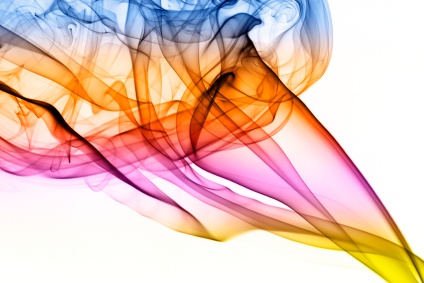
The principle of emphasis is used by artists to create dominance & focus in their work.  Your eye is drawn to which color?
a)
red 
b)
green
9.
The principle of unity provides the cohesive quality that makes an art work feel complete & finished. The painting 'The Starry Night' was painted by which artist?
a)
Vincent Van Gogh
b)
Picasso
c)
Salvador Dali
10.
The element of space has depth, width, and height.  Actual space is a ___-dimensional volume that can be empty or filled with objects. Choose the best answer based on the image provided.
a)
1
b)
2
c)
3
11.
The element of texture refers to the surface quality, both simulated & actual, of artwork.  Texture describes how something...
a)
feels
b)
smells
c)
sounds like
12.
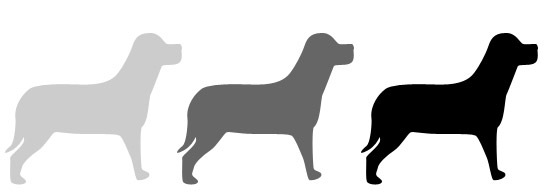
The element of value refers to light and dark. Value contrasts helps us to see & understand a 2-dimensional work of art. What popular fruit is shown in this image?
a)
pumpkin
b)
apple
c)
cucumber
13.
The element of color depends on light because it's made of light.  The whiter the light, the more true the colors will be.  Hue refers to the names of the colors. Which trio of colors are considered primary?
a)
green, orange, violet
b)
red, blue, yellow
14.
The element of form describes the volume & mass or the three dimensional aspects of objects that take up space. Which object is not shown in the following image?
a)
rectangular prism
b)
cube
c)
cylinder
15.
The element of line is a mark made by a pointed tool--brush, pencil, stick, pen, etc. and is often defined as a moving dot.  True or false?
a)
true
b)
false
16.

An design element that refers to the lightness and darkness of a color.

a)

hue

b)

value

c)

movement

d)

intensity

17.

A mark created by a path of a moving point.

a)

line

b)

value

c)

contrast

d)

form

18.

The empty or open area between, around, above, below and within objects.

a)

form

b)

balance

c)

color

d)

space

19.
Any three dimensional object that can be measured by height, width and depth.
a)
emphasis
b)
space
c)
form
d)
shape
20.

The surface quality or the way something feels such as rough-smooth

a)

shape

b)

texture

c)

color

d)

line

21.

A definite area; described as geometric or organic, positive or negative.

a)

line

b)

form

c)

shape

d)

space

22.

Element of art produced when a wavelength of light reflects a hue.

a)

primary

b)

secondary

c)

teriary

d)

color

23.

Area in a work of art that catches and holds the viewers attention also called focal point.

a)

space

b)

unity

c)

emphasis

d)

balance

24.

The relation of one object to another in size, amount, and or number.

a)

variety

b)

monochromatic

c)

proportion

d)

triad

25.

The use of different lines shapes, textures,colors and other elements of design to create interest in a work of art.

a)

variety

b)

emphasis

c)

space

d)

value

26.
The area around, above or inside an object is called:
a)
form
b)
perspective
c)
contrast
d)
space
27.

Composition is

a)

The artistic arrangement of the parts of a picture

b)

the different values in a work of art

c)

Using recycled materials in a piece of artowrk

d)

An image combined of two different things or a compound.

28.

The definition of Line is

a)

a dot that went for a walk or the path of a moving dot

b)

a straight thing

c)

A never ending dash

d)

A line that connects to itself

29.

Shape is

a)

a form with definite edges

b)

a geometric form

c)

A line that connects to itself

d)

A form with an inside and an outside

30.

Form is

a)

A round object

b)

Something with Value

c)

A 3-D shape

d)

a shape

31.

Another word for shading is

a)

Pencil

b)

shadows

c)

value

d)

gray

32.

Texture is

a)

The lights and darks in an image

b)

A work of art that has a lot of contrast

c)

When something feels smooth

d)

The way something feels or looks like it feels

33.

The complement of red is

a)

Blue

b)

Green

c)

Orange

d)

Pink

34.

Mixing Gray with a color is known as

a)

Shade

b)

Tint

c)

Tone

d)

Hue

35.

The illusion of Depth is

a)

Texture

b)

space

c)

a ruler

d)

an ocean

36.

Which of the following is not an element of art?

a)

color

b)

line

c)

texture

d)

composition

37.

Which of the following is NOT a law of space?

a)

how far away something is can be measured with a ruler

b)

objects get smaller as they go back into space

c)

overlapping creates depth

d)

Things that are closest are more detailed and usually darker or have more contrast
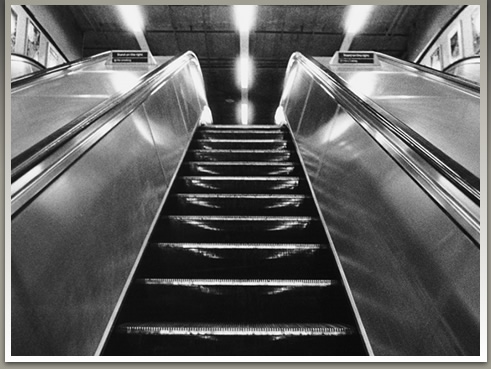
38.
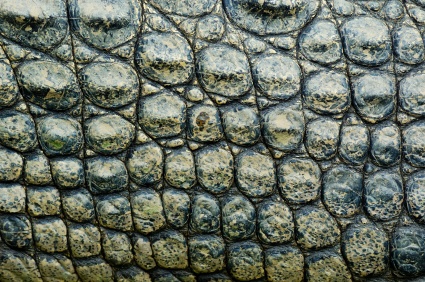
This image is a good example of which element?
a)
movement
b)
pattern
c)
line
d)
form
39.
The image is a good example of which element?
a)
pattern
b)
texture
c)
shape
d)
emphasis
40.
This principle can be defined as: the relationship among the elements of a visual that helps all the elements function together.
a)
unity
b)
form
c)
shape
d)
balance
41.
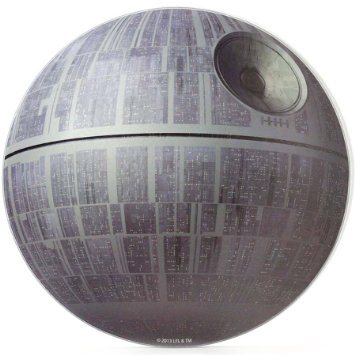
This image is a good example of which element?
*hint- three dimensional
a)
rhythm
b)
contrast
c)
form
d)
shape
42.
__________ is the repetition or alternation of elements, often with defined intervals between them.  _________ can create a sense of movement, and can establish pattern and texture.
a)
pattern
b)
value
c)
emphasis
d)
rhythm
43.
This image is a good example of which element?
a)
value
b)
balance
c)
emphasis
d)
color
44.
This image is a good example of which principle?
a)
pattern
b)
form
c)
line
d)
color
45.
__________ is the equal distribution of visual weight in a design.
a)
emphasis
b)
balance
c)
space
d)
value
46.
This image is a good example of which element?
a)
pattern
b)
unity
c)
space
d)
color
47.
_________ refers to the area around a shape or form.
a)
space
b)
color
c)
unity
d)
emphasis
48.
This image is a good example of what principle?
a)
space
b)
emphasis
c)
line
d)
texture
49.
The picture shows an example of ...
a)
horizontal lines
b)
vertical lines
c)
zigzag lines
d)
curved lines
50.
In design, there are 3 main types of balance:
1)  __________
2)  asymmetrical
3)  radial
a)
symmetrical
b)
weighted
c)
tip of the nose
d)
pan
51.
This picture shows what type of balance?
a)
radial
b)
symmetrical
c)
asymmetrical
d)
rock
52.
The relative size and scale of the various elements in a design refers to ...
a)
balance
b)
proportion
c)
color
d)
unity
53.

Which of the following is not an example of how to create emphasis...?

a)

Make one element larger

b)

Make all items the same size

c)

Use various colors

d)

Use different styles of type

54.
The primary colors are?
a)
Red, Yellow, and Orange
b)
Orange,Green, and Purple
c)
Blue, Red, and Yellow
d)
Orange, Red, and Blue
55.
Line, color, value, texture, shape, form, and space are considered...
a)
elements of design
b)
principles of design
56.
Balance, pattern, movement, emphasis, rhythm, unity, and contrast are considered...
a)
principles of design
b)
elements of design
57.
_____ refers to the lightness or darkness of a color.
a)
Shape
b)
Value
c)
Intensity
d)
Texture
58.

What is a self contained 2-dimensional defined area and can be geometric or organic?

a)

Shape

b)

Color

c)

Size

d)

Value

59.
What is the surface quality of a shape - rough, smooth, soft hard glossy etc.
a)
Texture
b)
Value
c)
Color
d)
Size
60.

A mark with length and direction, created by connecting two points.

a)

Rhythm

b)

Line

c)

Movement

d)

Space

61.

An element of design referring to the way the elements are arranged to create a feeling of stability in a work. (equal visual weight)

a)

Balance

b)

Space

c)

Form

d)

Emphasis

62.
What do we call the empty or open area between, around, above, below, and within objects?
a)
Balance
b)
Movement
c)
Rhythm
d)
Space
63.

The ____________ surface characteristics of a work of art that are either felt or perceived visually.

a)

Line

b)

Form

c)

Texture

d)

Color

64.

The volume and shape of a three-dimensional work, or an image that gives the illusion of being three dimensional.

a)

Line

b)

Form

c)

Texture

d)

Color

65.

A feeling of equality in weight, attention, or attraction of the various elements within a composition as a means of accomplishing unity.

a)

Balance

b)

Symmetrical Balance

c)

Asymmetrical Balance

d)

Proportion

66.

This can be described as having equal "weight" on equal sides of a centrally placed axis.

a)

Balance

b)

Symmetrical Balance

c)

Asymmetrical Balance

d)

Proportion

67.

This is an example of

a)

balance

b)

line

c)

shape

d)

form

e)

texture

68.

This is an example of

a)

balance

b)

line

c)

shape

d)

form

e)

texture

69.

This is an example of

a)

balance

b)

line

c)

shape

d)

form

e)

texture

70.

This is an example of

a)

balance

b)

line

c)

shape

d)

form

e)

texture

71.

This is an example of

a)

balance

b)

line

c)

shape

d)

form

e)

texture

72.

Which of these is a representation of a shape?

a)
b)
c)
d)
73.

The white space in this image would be

a)

positive

b)

negative

c)

neutral

74.

Which image is not a good representation of texture?

a)
b)
c)
d)
75.
It is the weight distributed in the design by the placement of your elements.
a)
Balance
b)
Proximity
c)
Repetition
d)
Contrast
76.

What is an element in art that gives a sense of 3-dimensionality or depth (Shape + value = ???)

a)

color

b)

value

c)

form

d)

line

77.

The complete computer made up of the CPU, memory and related electronics (main cabinet), all the peripheral devices connected to it and its operating system.

(a)  

78.

Is a collection of computers and other hardware interconnected by communication channels that allow sharing of resources and information.

(a)  

79.
Which statement is true about the installation of new software in Windows 7?
a)
Installing a program is always the same.
b)
A well-installed program will always work on any computer.
c)
Programs are usually installed from a CD, DVD, the Internet or a network
80.
Which of these is the first step in uninstalling Microsoft Office Professional Plus 2010?
a)
Click on the Control Panel
b)
Click on the Start Button
c)
Select Microsoft Office Professional Plus 2010
81.
Which option is true about the Change option from the Uninstall a program tool?
a)
When modifying a program this becomes a native program of Windows 7
b)
When changing a program it disappears from the list of programs window.
c)
Changing a program consists of installing or uninstalling optional characteristics of the application
82.
What is a way to verify that the version of Windows installed on your device is original and legal?
a)
Check the activation
b)
Update features
c)
Defragmentation
83.
What happens when you install a program that is not compatible with your computer's OS?
a)
Some old programs may not work well.
b)
A message will always be displayed tell you that it is not compatible
c)
You cannot install a program that is incompatible with the OS
84.
Which statement is true about freeware licenses?
a)
Freeware licenses are always for a lower quality version of the program.
b)
It usually includes a user license with some restrictions
c)
Freeware licenses do not have any restrictions
85.
Which statement is true about a software license?
a)
It allows unlimited duplication and distribution.
b)
It is considered an contract between an author and a user
c)
It allows users to sell for a profit after making any changes or improvements they want.
86.

What is meant by upgrading software?

a)

Adding a patch to fix mainly underlying bugs that have been reported

b)

Adding new features and functionality and bug fixing

c)

Saving an application on your computer for the first time

87.

What is meant by installing software?

a)

Adding a patch to fix mainly underlying bugs that have been reported

b)

Adding new features and functionality as well as bug fixing

c)

Saving an application on your computer for the first time

88.

Why is it important to recognise prompts?

a)

To upgrade or install software in a timely matter

b)

To allow a hardware device to run with minimal efficiency

c)

To make sure the security of your system is not compromised

89.

Which of these are prompts that would make you think about upgrading or installing new software?

a)

Another software being less troublesome

b)

Having new hardware with no additional application needs

c)

Your software having minimal functionality

d)

Your software having less security

90.

One advantage of upgrading/installing is greater security. Which of these are increased security features?

a)

Safer file transfer

b)

Improved email scanning

c)

Increased link scanning

91.

Which of the following are not advantages of upgrading or installing new software?

a)

Increased compatibility

b)

Software being more resource hungry

c)

Downtime

d)

Future proofing

92.

What is future proofing?

a)

Not needing to install another similar software for some considerable time

b)

Software that you will be able to use for some time, but will need to be updated as technology advances

c)

Software that can be used in the future and that will not need to be significantly updated, even when technology changes

93.
What is Software?
a)
User Applications and Operating Systems
b)
Physicals parts of a Computer
94.
What is Hardware?
a)
Computer Instructions or Data
b)
Physicals parts of a Computer
95.

All of the following are types of data except ____.

a)

A. text

b)

B. thumb drive

c)

C. images

d)

D. numbers

96.

Which is NOT part of a computer system?

a)

A. mainframe technology

b)

B. people

c)

C. hardware

d)

D. data

97.

Input and output devices perform the same function.

a)

True

b)

False

98.
One of the maintenance aim is 
a)
Develop new system in line with business need 
b)
Preserve our IT systems in optimal condition
c)
Report the problem as thy occur 
99.
Critical hardware components and software should be covered by 
a)
warranty or maintenance agreement
b)
Business operational plan 
c)
Job data documentation
100.
What can the IT do to keep the software maintained? 
a)
Adapt the software in line with changes to business requirements
b)
Provide maintenance equipments for any computerised device
c)
Analyses the risk on the business continuity 
101.
UPS stand for
a)
Uninterruptible power supply
b)
United Parcel Service
c)
University of Puget Sound
102.
Which of the following devices can supply backup power to a PC when the electricity fails and provides for line conditioning as well? 
a)
SPS
b)
UPS
c)
Surge suppressor
103.
An uninterruptible power supply (UPS) is not part of a preventative maintenance program.
a)
True
b)
False
104.
What does Equipment documentation include?
a)
How often maintenance procedures should be done
b)
All orgnaization  resources
c)
The operational work 
105.
Common computer cleaning  include using 
a)
Network cable, tools 
b)
Firewall and 
c)
Keyboard,Mouse,Monitor
106.
Dust buildup inside a computer causes the system to overheat
a)
True
b)
False
107.
Predictive maintenance involves
a)
Performing maintenance activities in  unpredictable manner.
b)
Determining the best time to perform preventive maintenance on equipment.
c)
Performing maintenance activities when it is needed 
108.
data can be Protected  from threats using 
a)
Service packs, 
b)
Market software 
c)
Personal protective equipment
109.

Laser, ink jet, and dot matrix are types of __________ .

a)

A. monitors

b)

B. printers

c)

C. storage devices

d)

D. input devices

110.

Which of the following is not considered an input device?

a)

A. keyboard

b)

B. scanner

c)

C. mouse

d)

D. monitor

111.
Common computer cleaning  include using 
a)
Network cable, tools 
b)
Firewall and 
c)
Keyboard,Mouse,Monitor
112.

Troubleshooting will always be a process of:

a)

Giving up immediately

b)

give and take

c)

frustration

d)

Trial and error

113.

It is a copy of the data on a computer hard drive that is saved to media such as a CD, DVD, or tape drive?

a)

Backup

b)

Troubleshooting

c)

Recording

d)

Reformat

114.

It is a software that allow you computer to communicate with hardware devices?

a)

Driver

b)

Windows

c)

Operating System

d)

Back-up

115.
What type of maintenance is required when the 'circumstances change in the environment in which the system runs'?
a)
Adaptive
b)
Corrective
c)
Perfective
116.
What type of maintenance is required when there needs to be 'changes to the software because unexpected errors have occurred, that have to be put right'?
a)
Adaptive
b)
Corrective
c)
Perfective
117.
What is a software patch?
a)
A mini program which will make the changes to correct a problem.
b)
A mini program designed to analyse and configure a computer.
c)
A mini program which enables your operating system and other programs to access hardware functions.
118.
Places all the parts of a file in one location
a)
zipped 
b)
malware
c)
defragmenting
d)
disk clean up
119.
What happens once changes have been made to a system?
a)
Users have to be re-trained
b)
Software is released to the client
c)
Payment is made
d)
Further testing takes place
120.
A short line of text that a web site puts on your computer's hard drive when you access their website.  They may be used to monitor your computer.
a)
Malware
b)
Cookie
c)
Short text
d)
Linux
121.
A system tool used to clean up your disk
a)
Disk clean up
b)
Cookie
c)
defragmenting
d)
GUI
122.
Software viruses are annoying bits of code that can corrupt your program files.  To protect your computer, you should use this software
a)
Mac-Os
b)
RAM
c)
Antivirus
d)
Malware
123.
Refers to programs that are designed to damage computers without the owner's knowledge
a)
Antivirus
b)
Malware
c)
Linux
d)
Zipped
124.
Used to select multiple files in a series 
a)
Control Key
b)
Shift Key
c)
Task Bar
d)
Ram
125.
The last character in a file name, after the period that usually identifies the program used to create the file
a)
Windows Exploer
b)
Android-Os
c)
File Extension
d)
Windows 10
126.
A type of user interface that allows you to use a mouse and click on icons, menus, options, and buttons
a)
GUI - Graphical User Interface
b)
MS-DOS
c)
Pretty face
d)
Malware
127.
A type of unchangeable memory residing in chips on your motherboard.  It contains the bare minimum of instructions needed to start your computer
a)
ROM
b)
RAM
c)
GUI
d)
Zipped
128.

To avoid injury in the workplace, you should not:

a)

Keep the keyboard at a comfortable height.

b)

Take frequent breaks.

c)

Take your shoes off while working.

d)

Place the monitor at a comfortable distance.

129.

This means you'll make a list of things that could be causing the problem and then test them out one by one to eliminate them.

a)

Process of elimination

b)

Process of listing

c)

Process of problem solving

d)

Process of endurance

130.

To restart your computer when your computer is frozen, you should:

a)

Press and hold Shift+ESC on your keyboard

b)

Press and hold the tab key on your keyboard

c)

Press and hold Ctrl+Alt-Delete on your keyboard

d)

Press and hold Shift+Backspace on your keyboard

131.

As a last resort, if your computer still won't shut down, you can:

a)

use a thumb drive to restart

b)

let it cool off and try again

c)

disconnect the printer cable

d)

unplug the power cable from the electrical outlet

132.
Is the font in this image serif or sans-serif?
a)
serif
b)
sans-serif
133.
Is the font in this image serif or sans-serif?
a)
serif
b)
sans-serif
134.
The arrow is pointing to what part of the type?
a)
Ascender
b)
Baseline
c)
Cap Height
d)
X-Height
135.
Adjusting the spacing between letters is known as
a)
leading
b)
kerning
c)
nit-picking
d)
typesetting
136.
"Leading" refers to the:
a)
space between letters
b)
space between lines of text
c)
text alignment
d)
space between words
137.
TRUE or FALSE: When designing text, it is typically best to select two or three fonts to create visual hierarchy.
a)
true
b)
false
138.
Select the correct order of visual hierarchy:
a)
Level 1: body text
Level 2: subheadings
Level 3: headings
b)
Level 1: headings
Level 2: subheadings
Level 3: body text
c)
Level 1: subheadings
Level 2: headings
Level 3: body text
139.
TRUE or FALSE: If everything stands out, nothing stands out.
a)
true
b)
false
140.

A serif font

a)

is very fancy and hard to read.

b)

has small lines or "tails" at the beginning and end of the letters.

c)

does not have small lines or "tails."

d)

looks like cursive letters.

141.

Sans serif means

a)

without serifs

b)

sandy tails

c)

with serifs

d)

fancy letters

142.

Sans serif fonts

a)

have little lines or "tails" at the beginning and ends of the letters.

b)

do not have the little lines or "tails."

c)

are very decorative and fancy.

d)

look like cursive letters.

143.

Serif fonts are best used for

a)

professional documents or publications like a resume or article.

b)

anything on a computer screen.

c)

old people.

d)

nothing, they are outdated.

144.

Sans serif fonts are best used for

a)

professional documents like a resume or article.

b)

anything on a computer screen like a website or app.

c)

nothing, they are outdated.

d)

old people.

145.

Display fonts

a)

have small lines or "tails" at the beginning and ends of a letter

b)

do not have the small lines or "tails."

c)

are decorative fonts.

d)

are not real.

146.

Display fonts are best used for

a)

professional documents like a resume or article.

b)

documents on a computer screen.

c)

small amounts of text like a title or header.

d)

anywhere you want to use them.

147.

The font itself can send a certain message to the viewer.

a)

True

b)

False

148.

There are some fonts that are considered outdated and unprofessional.

a)

True

b)

False

149.

When creating a document like a flyer or business card you should

a)

use a lot of fonts

b)

use only one plain font

c)

stick to two fonts

150.

Which image shows a serif font?

a)
b)
c)
151.

Which image shows a display font?

a)
b)
c)
152.
Bad contrast in color can make your text unreadable and your eyes squint
a)
True
b)
False
153.
Which type of font is commonly used for headlines and mobile devices?
a)
Serif
b)
Sans Serif
154.

This is the text, images, and other objects on a web page.

a)

purpose

b)

content

c)

audience

d)

usability

155.

What is the most important reason that companies need to pay attention to user experience?

a)

to design an attractive website.

b)

to understand their customers' needs.

c)

to get and keep customers.

156.

Which principle? "The ease of use / how user friendly the website is"

a)

Accessibility

b)

Usability

c)

Clarity

d)

Content

157.

Which principle? "space left untouched or unused for content on a web page"

a)

white space

b)

Site layout

c)

Consistency

d)

Simplicity

158.

Which principle? "Giving consideration to where elements go on a web page"

a)

Navigation

b)

white space

c)

site layout

d)

alignment

159.

Which principle? "website design must ensure all users have equal access to information"

a)

Navigation

b)

clarity

c)

typography

d)

accessibility

160.

Which principle? "it is important that users can find their way around a website easily"

a)

Navigation

b)

clarity

c)

site layout

d)

accessibility

161.

Which principle? "the type of font used is important - fonts should be clear and legible"

a)

simplicity

b)

clarity

c)

accessibility

d)

typography

162.

Which principle? "how elements are positioned on a web page and how they interact with each other"

a)

site layout

b)

white space / spacing

c)

alignment

d)

media and objects

163.

Which principle? "being clear is a key aspect of good website design"

a)

site layout

b)

white space / spacing

c)

accuracy

d)

clarity

164.

Which principle? "everything in a website should be correct and meaningful"

a)

clarity

b)

consistency

c)

accuracy

d)

alignment

165.

The focal point of the design which captures the viewer's attention.

a)

Balance

b)

Repetition

c)

Emphasis

d)

Unity

166.

How does an audience an a target audience differ?

a)

OAPs

b)

Children

c)

Audience is a particular group of people, target audience is everyone

d)

Audience is everyone, target is a particular group of people

167.

Which is NOT used to define a target audience?

a)

Gender

b)

Hair colour

c)

Ethnicity

d)

Age range

168.

Which is used to define a target audience?

a)

Height

b)

Weight

c)

Location

d)

Looks

169.

Target audience for this poster?

a)

3-5 year olds, girls, English speaking, English speaking countries

b)

10-15 year olds, cross gender, English speaking, English speaking countries

c)

3-5 year olds, cross gender, English speaking, English speaking countries

d)

3-5 year olds, cross gender, English speaking, International

170.

Target audience for this poster?

a)

40 + year olds, women, English speaking, English speaking countries

b)

10-18 year olds, cross gender, English speaking, English speaking countries

c)

40 + year olds, men, English speaking, English speaking countries

d)

40 + year olds, women, White British, English speaking countries

171.

Target audience for this poster?

a)

7-11 year olds, females, English speaking, English speaking countries

b)

2-3 olds, females, English speaking, English speaking countries

c)

7-11 year olds, males, English speaking, English speaking countries

d)

7-11 year olds, females, English speaking, National

172.

Target audience for this poster?

a)

16 + year olds, cross gender, English speaking, international (English speaking)

b)

60+ year olds, cross gender, English speaking, international (English speaking)

c)

16 + year olds, males, English speaking, international (English speaking)

d)

16 + year olds, females, English speaking, international (English speaking)

173.

Target audience for this poster?

a)

11-13 year olds, males. English speaking, International (English speaking)

b)

30 + year olds, cross gender. English speaking, International (English speaking)

c)

30 + year olds, females. English speaking, International (English speaking)

d)

30 + year olds, males. English speaking, International (English speaking)

174.

Target audience for this poster?

a)

60 + years old, females, English speaking, national

b)

60 + years old, males, English speaking, national

c)

60 + years old, cross gender, English speaking, national

d)

40 + years old, cross gender, English speaking, national

175.

Target audience for this poster?

a)

5 - 9 year olds, males, English speaking, international (English speaking)

b)

5 - 9 year olds, cross gender, English speaking, international (English speaking)

c)

11-13 year olds, cross gender, English speaking, international (English speaking)

d)

18-20 year olds, cross gender, English speaking, international (English speaking)

176.

Target audience for this poster?

a)

60+ year olds, females, English speaking, international (English speaking)

b)

60+ year olds, males, English speaking, international (English speaking)

c)

40+ year olds, cross gender, English speaking, international (English speaking)

d)

60+ year olds, cross gender, English speaking, international (English speaking)

177.

_____ means different from anything else.

a)

Demographics

b)

Defensible

c)

Differentiated

d)

Target

178.

A _____ is a particular group of consumers at which a product or service is aimed.

a)

target market

b)

differentiated offering

c)

pro forma

d)

patent

179.

Members of a target market have similar _______.

a)

wants

b)

needs

c)

interest

d)

wants, needs, & interest

180.

Which of the following might result from a company choosing to market their products to a mass audience instead of targeting a specific market?

a)

increased efficiency

b)

increased customer loyalty

c)

increased profits

d)

wasting time & money

181.

Tells you who your customer is by providing statistical information about their age, gender, location, education level, income level, etc.

a)

demographics

b)

psycholgraphics

c)

geographics

d)

target marketing

182.

Which of the following is an example of demographic information?

a)

married with children

b)

loves to travel

c)

enjoys volunteering

d)

participates in an art club

183.

What audience does Mcdonald's try to target?

a)

Fitness Instructors

b)

People in a hurry

c)

Chefs

d)

Body Builders

184.

What audience does Mercedes Benz try to target?

a)

Teenagers

b)

Children

c)

People who are wealthy

d)

People in poverty