wayground logo

Free Printable Worksheets

Font size

S
M
L
XL
Worksheets

6th Grade SS Year End Review

Total questions: 53

Worksheet time: 32mins
Name
Class
Date
1.
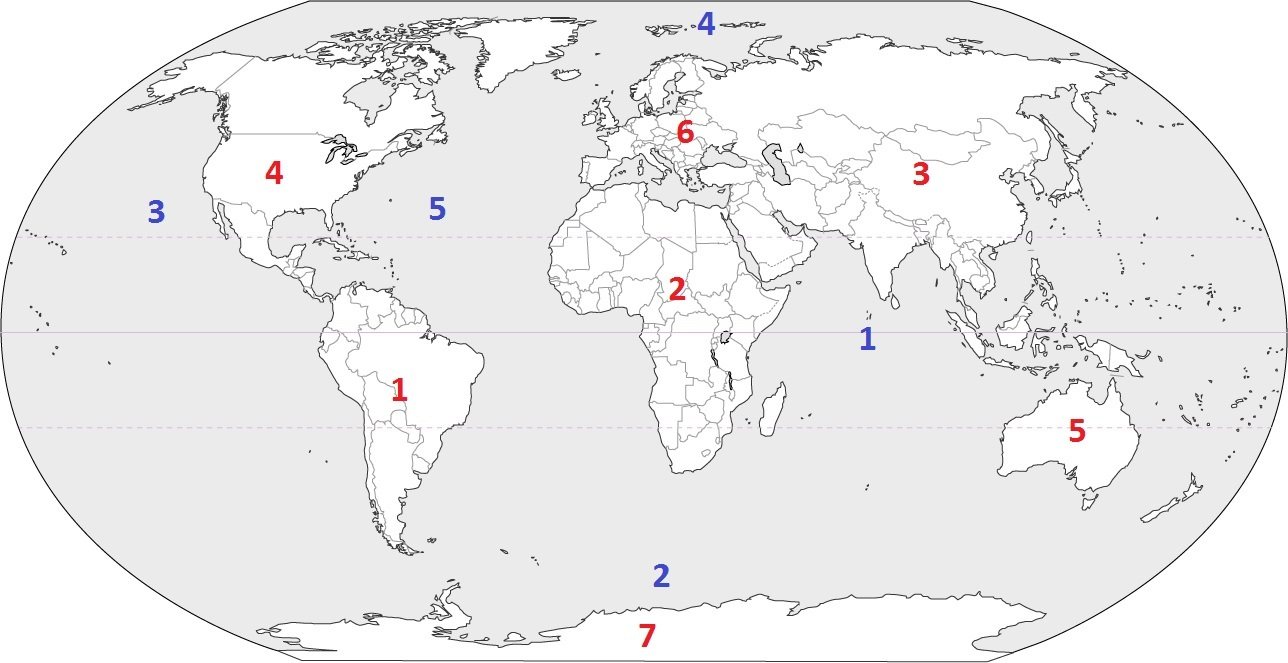
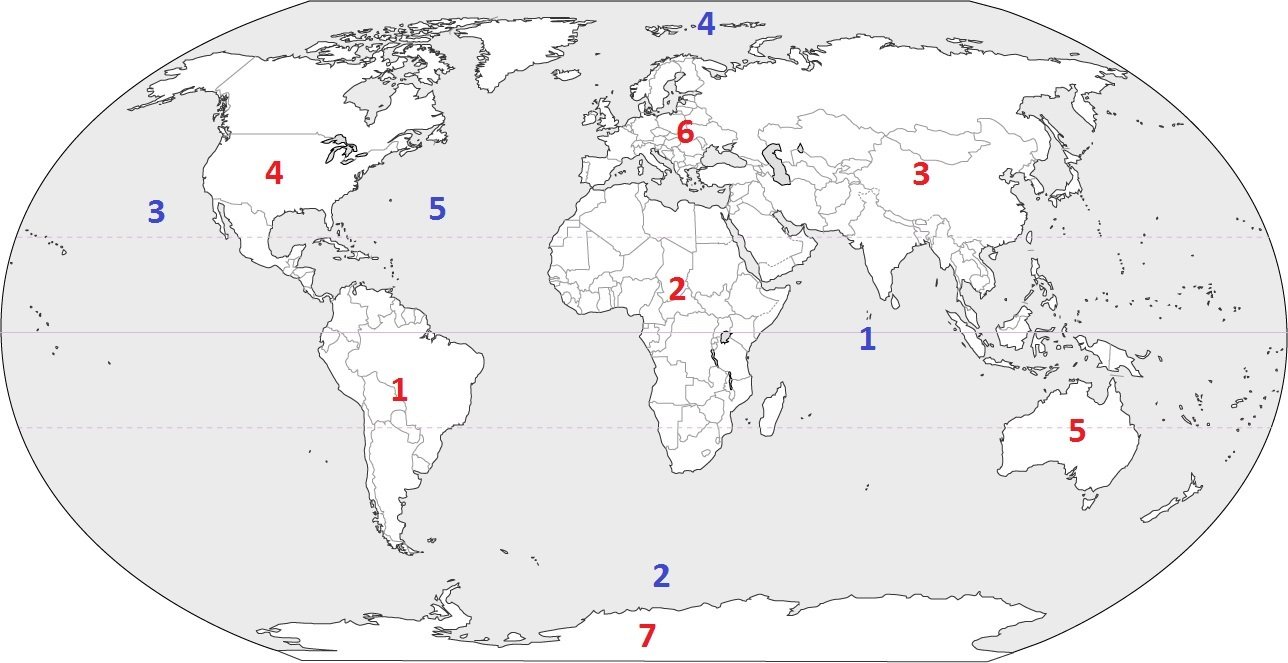
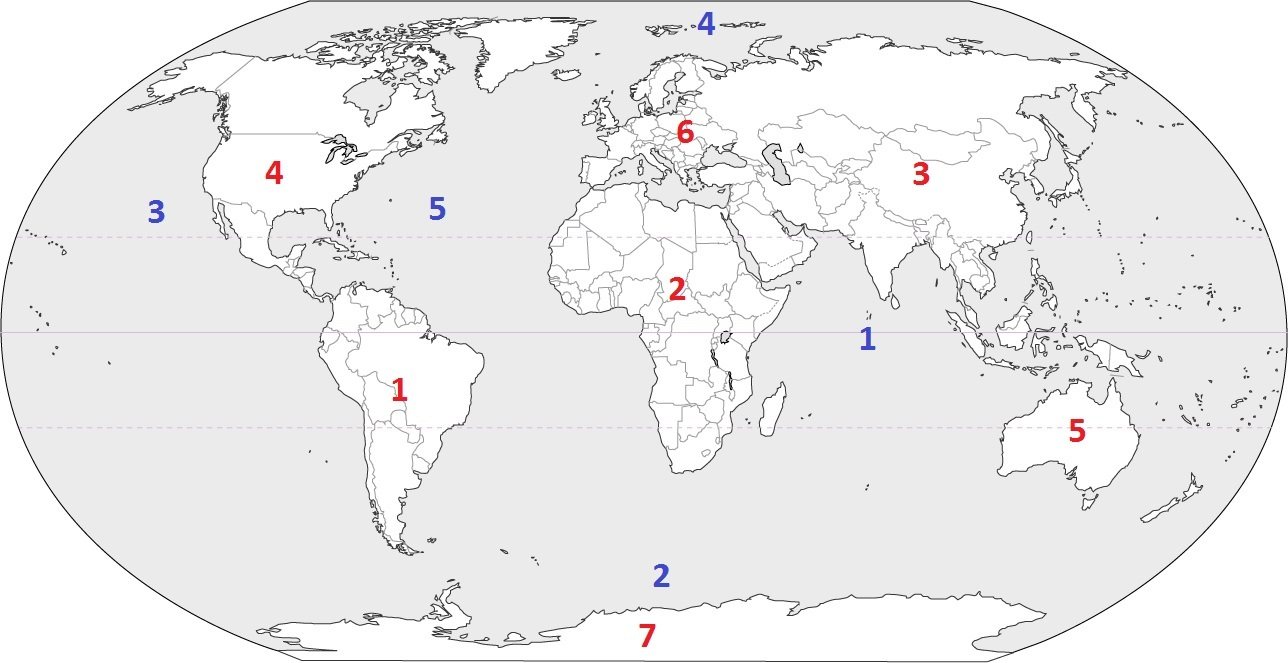
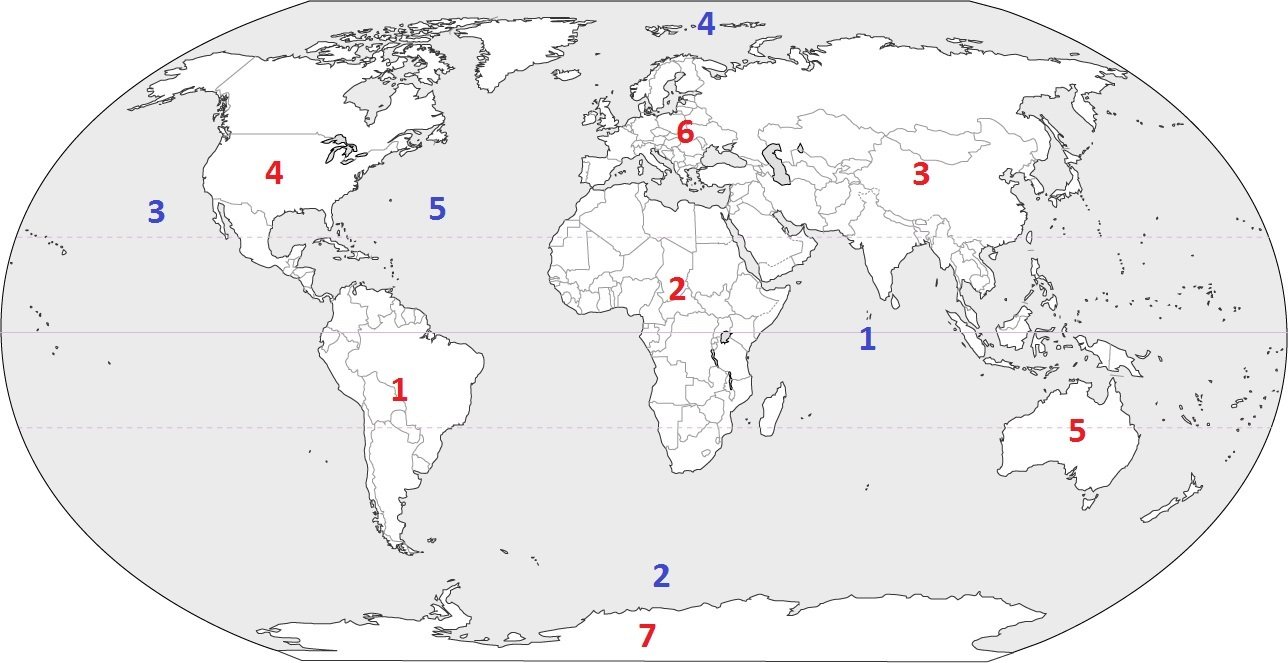
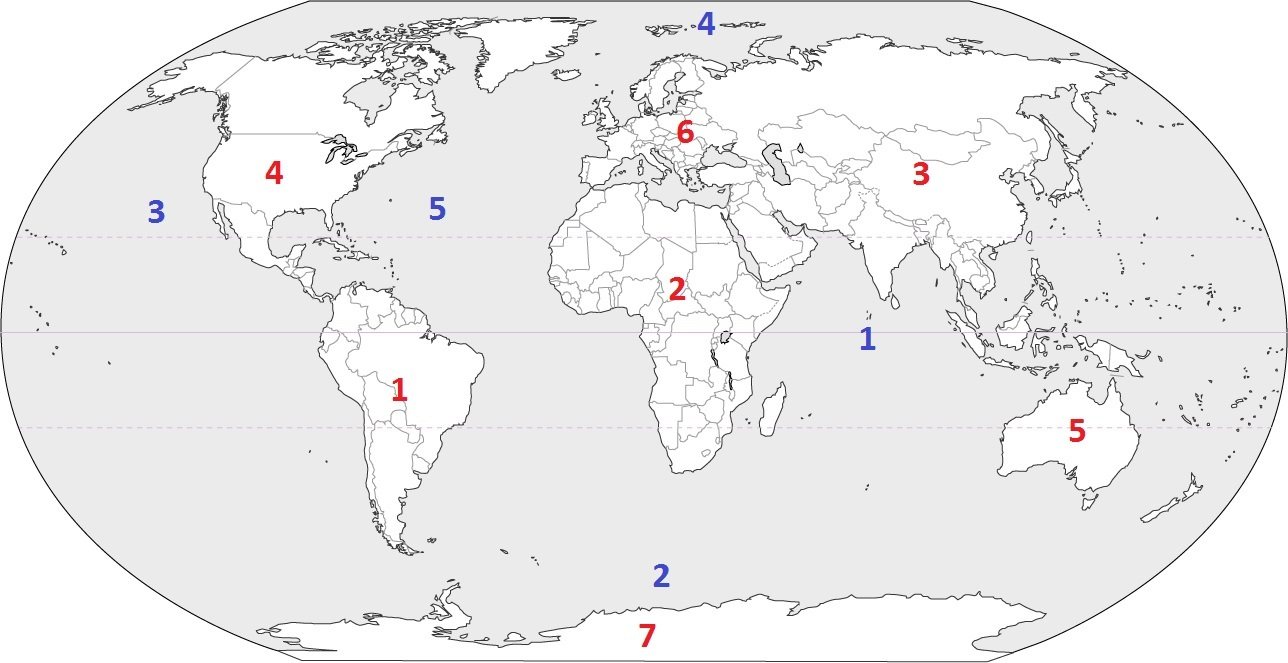
Which continent is located at #3?
a)
Australia
b)
Asia
c)
Europe
d)
South America
2.
Which continent is located at #5?
a)
South America
b)
Asia
c)
Australia
d)
Antarctica
3.
Which continent is located at #4?
a)
South America
b)
North America
c)
Europe
d)
Africa
4.
Identify the ocean at location #3
a)
Atlantic Ocean
b)
Arctic Ocean
c)
Pacific Ocean
d)
Indian Ocean
5.
Identify the ocean at location #5
a)
Atlantic Ocean
b)
Southern Ocean
c)
Pacific Ocean
d)
Arctic Ocean
6.
Identify the ocean at location #1
a)
Southern Ocean
b)
Arctic Ocean
c)
Atlantic Ocean
d)
Indian Ocean
7.
Which event on this timeline happened FIRST? 
a)
Last use of hieroglyphic writing
b)
Rosetta Stone is carved
c)
Settlers in Nile Valley
d)
Development of hieroglyphic writing
8.
Timelines are read from
a)
right to left
b)
left to right
c)
upside down
d)
not read
9.
B.C.E. stands for
a)
Before Christ
b)
Best Common Era
c)
Before Common Era
d)
Common Era
10.
AD
a)
Anno Domini
b)
After Death
c)
After Dinner
d)
Already Done
11.
What was the first river valley to appear?
a)
China
b)
Egypt
c)
Indus
d)
Mesopotamia
12.
Name the civilization: 
- Nile River
- Hieroglyphics
- Pyramids
a)
Egypt
b)
Mesopotamia/
Sumer
c)
India
d)
China
13.
Name the civilization: 
- Huang He (Yellow) River
- Calligraphy writing
- Paper and Silk
a)
Egypt
b)
Mesopotamia/
Sumer
c)
India
d)
China
14.
What is a city state?
a)
A city surrounded by agricultural land.
b)
A city.
c)
A city with a wall.
d)
An empire.
15.
What made Hammurabi famous?
a)
He was a powerful king who built an empire.
b)
He had some harsh laws.
c)
He created the first written laws.
16.

The ancient civilizations of Mesopotamia and Egypt were similar in that both cultures

a)

established trade routes to China

b)

used the ziggurat form for their temples

c)

developed along rivers

d)

used a hieroglyphic writing system

17.

What is a scribe?

a)

Record Keeper

b)

A god

c)

A person

d)

A tool

18.

Qin Shi Huangdi, the first emperor of China is widely known for stopping the invading Barbarians of the North by building which historical monument?

a)

The Pottala Palace

b)

The Great Wall

c)

The Terracota Army

d)

The forbidden city

19.

How did China's rulers and dynasties acquire their right to rule?

a)

Eightfold Path

b)

Mandate of Heaven

c)

The People

d)

Edict of Law

20.
What is the belief in many gods?
a)
Monotheistic
b)
Polytheistic
c)
Animism
d)
Symbolism
21.

How were civilizations able to sustain a growing population?

a)

Fortified military bases

b)

Strong rulers

c)

Growing a surplus of food

d)

Trading with other civilizations

22.
What word best describes the land of the Greek peninsula?
a)
rocky and mountainous
b)
flat
c)
desert
d)
rolling plains
23.
A city-state which favored democracy and a well-rounded education. 
(Also, the largest city-state by a wide margin)
a)
Sparta
b)
Athens
c)
Delphi
d)
Corinth
24.
What does the word "Democracy" mean?
a)
"rule by the government"
b)
"rule by the many"
c)
"rule by the wealthy"
d)
"rule by the people"
25.
A great city in Greece, that had an Oligarchy type of Government, taught boys to be good soldiers, and took what they needed from neighbors.
a)
Sparta 
b)
Athens 
26.
A Greek Philosopher that taught people use a question and answer way of thinking.
a)
Socrates 
b)
Aristotle 
27.
A Government with the power in the hands of a few wealthy people.
a)
Oligarchy 
b)
Tyranny
c)
Monarchy
d)
Democracy
28.
A single ruler who passes their reign on to their son
a)
Monarchy
b)
Oligarchy
c)
Tyranny
d)
Democracy
29.
A military leader seizing military power illegally
a)
Tyranny
b)
Oligarchy
c)
Monarchy
d)
Democracy
30.
How does Athenian democracy differ from our democracy?
a)
In Athens they directly voted to make decisions and we elect representatives.
b)
Athens had less people on a jury than we have today.
c)
Athens didn’t allow foreigners to vote or make decisions.
d)
Women had more rights in Athenian democracy.
31.
a building constructed in Athens in the 400s BC.
a)
Parthenon
b)
Hypatia
32.
The games held every four years at a festival to honor Zeus were called
a)
Goodwill Games
b)
Marathons
c)
Olympics
d)
Triathlons 
33.
Which structure is considered to be the finest example of Greek architecture?
a)
The temple of Apollo
b)
The stadium at Olympia
c)
The Great Library at Alexandria
d)
The Parthenon
34.
A structure that carries water over long distances
a)
colosseum
b)
dome
c)
aqueduct
d)
arch
35.
Who were the two main characters in the story that tells the beginnings of Rome?
a)
Romulus & Remus
b)
Zeus & Hera
c)
Ronulus & Roman
d)
Bill & Ted
36.

Why was Rome's geographic setting important?

a)

Strong winds brought heavy spring rains to the land.

b)

Its position was central to Italy and the known Western world.

c)

It was surrounded by deserts which kept is safe from invasion.

d)

Farmers depended on yearly flooding to plant crops.

37.
What city was buried in ash when Mount Vesuvius erupted?
a)
Naples
b)
Florence
c)
Rome
d)
Pompeii
38.

Which of the following is NOT a reason that led to the fall of the Roman Empire?

a)

Empire was hard to defend because of size.

b)

The economy was failing.

c)

Invasions from barbarian tribes.

d)

Science convinced people the earth was flat and they fell off the edge.

39.
He was a dictator of Rome and later killed by senators because he became too powerful.
a)
Julius Ceasar
b)
Ceasar Augustus
c)
Constantine
d)
Sparticus 
40.
The Pax Romana was a 200 year period of 
a)
Peace
b)
War
c)
Conflict
d)
Conquests
41.
What were the two top officials in the Roman government chosen to serve one year?
a)
Consuls
b)
Praetors
c)
Tribunes
d)
Senators
42.
Rome's most important legislative or law-making body of 300 Patrician men was called the
a)
 Forum
b)
House of Representatives
c)
Congress
d)
Senate
43.
The complex structure of Roman government to limit the power of any one group or persons is called a system of 
a)
Checks and balances
b)
Checks and penalties
c)
Checks and denarii
d)
Checks on power
44.
What is a gladiator?
a)
men who fought against one another or against large animals as a form of entertainment for others.
b)
a panel of ordinary people who, in many democracies, take part in cases that are brought to trial.
c)
a place for the public to gather to hear speeches, shop, worship at temples, and mingle with friends.
d)
a form of government in which people elect leaders, called representatives, to stand in for them.
45.

Which word means an object that tells about how people lived in the past?

a)

Modern times

b)

Artifact

c)

Ancient times

d)

Civilization

46.

What was the main reason the ancient Egyptians built pyramids?

a)

They built them for entertainment.

b)

It was a tomb for their pharaohs.

c)

To practice building large structures.

d)

To keep their treasure safe

47.

Which ancient civilization was first to use the wheel for transportation?

a)

Egypt

b)

Rome

c)

Greece

d)

Mesopotamia

48.

A ______________ is someone who travels from place to place.

a)

summerian

b)

Hammurabi

c)

nomad

d)

Tigris

49.

This civilization used hieroglyphics.

a)

Mesopotamia

b)

Egypt

c)

India

d)

China

50.

This civilization began on a peninsula that is shaped like a boot.

a)

Ancient Mesopotamia

b)

Ancient Egypt

c)

Ancient Greece

d)

Ancient Rome

51.

This civilization is where democracy began.

a)

Ancient Mesopotamia

b)

Ancient Egypt

c)

Ancient Greece

d)

Ancient Rome

52.

The philosophers Socrates, Plato and Aristotle were from this ancient civilization.

a)

Ancient Mesopotamia

b)

Ancient Egypt

c)

Ancient Greece

d)

Ancient Rome

53.

This civilization's name means, "The land between two rivers."

a)

Ancient Mesopotamia

b)

Ancient Egypt

c)

Ancient Greece

d)

Ancient Rome