wayground logo

Free Printable Worksheets

Font size

S
M
L
XL
Worksheets

Calday Transport in Plants

Total questions: 50

Worksheet time: 29mins
Name
Class
Date
1.
The plant tissue that carries food materials DOWNWARD from the leaves to the rest of the pant is the ______.
a)
Phloem
b)
Stomata
c)
Chlorophyll
d)
Xylem
2.
Vascular tissue that transports water and minerals UPWARDS from a plant's roots is know as ______.
a)
Chlorophyll
b)
Phloem
c)
Stomata
d)
Xylem
3.
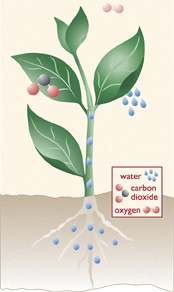
Plant absorbs water through the _________. 
a)
stem
b)
roots 
c)
leaves 
d)
all of the above
4.
The plant transport system are made up of ____ types of tubes.
a)
1
b)
2
c)
3
d)
many
5.
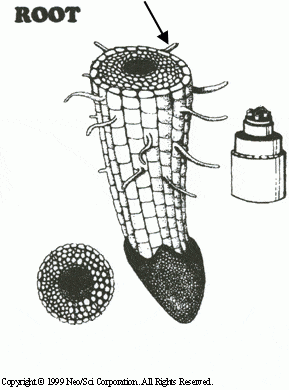
What is the name of the part of the root that allows water and minerals enter?
a)
root hairs
b)
epidermis
c)
phloem
d)
phyla
6.
what is the function of root hair?
a)
it is place to store the food
b)
it has large surface area to absorb more water
7.
How do water enter the roots from the soil?
a)
diffusion
b)
osmosis
c)
transpiration
d)
active transport
8.
Water vapour exits a plant leaf by
a)
the stomata
b)
the epidermis
c)
the palisade cells
d)
the spongy mesophyll
9.
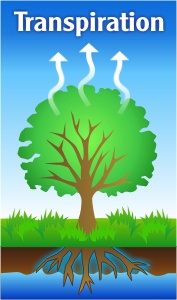
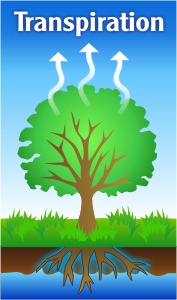
Transpiration is
a)
the movement of water through a plant from the roots up the stem
b)
the loss of water from the leaves of a plant by the process of evaporation
c)
the flow of water into plant roots by osmosis from the soil
d)
the process of minerals and sugars moving through plant veins
10.
This is the definition for which word:The movement of particles down a concentration gradient (from a high concentration to a low concentration)
a)
Osmosis
b)
Diffusion
c)
Active transport
d)
Transpiration
11.
This is the definition for which word:The movement of water molecules from a high concentration of water to a low concentration of water across a partially permeable membrane.
a)
Osmosis
b)
Diffusion
c)
Active transport
d)
Transpiration
12.
Why is the evaporation of water from leaves important?
a)
It cools leaves and helps move water up the plant.
b)
It makes the plant wilt
c)
It helps the plant to respire
13.
Which of these is true?
a)
Xylem vessels carry water and dissolved minerals up the plant
b)
Phloem tissue carry water and dissolved minerals up the plant
c)
Xylem vessels carry dissolved sucrose up and down the plant
14.
What happens to the transpiration rate as light intensity increases?
a)
It increases
b)
It stays the same
c)
It decreases
15.

Where is xylem found in the plant?

a)

leave -> roots -> stem

b)

roots -> stem -> leaves

c)

root hairs -> leaves -> veins

d)

stem -> roots

16.

Water and minerals move in which direction within the plant

a)

Upward

b)

Down

17.

Where does sugar transport begin?

a)

Roots

b)

Leaves

c)

Root hairs

d)

Vascular bundles

18.
Plant transports food made in the leaves to __________. 
a)
roots 
b)
stem
c)
flowers 
d)
all of the above
19.

What does xylem transport?

a)

Water and minerals

b)

Water only

c)

Sugar

d)

Food

20.

Is mature xylem alive or dead?

a)

Alive

b)

Dead

21.

What do the guard cells do?

a)

Control active transport

b)

Control nutrients moving into the cell

c)

Controls the rate of transpiration (loss of water through the leaf)

22.

Which environmental condition lowers the rate of transpiration?

a)

Abundant sunshine

b)

High humidity

c)

Cloudy days

d)

High temperatures

23.

What does phloem transport?

a)

Water

b)

Minerals

c)

Fruit

d)

Sugar

24.

Are phloem cells alive or dead?

a)

Alive

b)

Dead

25.

What is the main factor that influences the rate of sugar transport?

a)

movement of water

b)

Rate of photosynthesis

c)

capillary action

d)

uprooting plants

26.

Which of the following is NOT a characteristic of plants?

a)

Being photosynthetic

b)

Being multicellular

c)

Being Eukaryotic

d)

No membrane bound organelles

27.

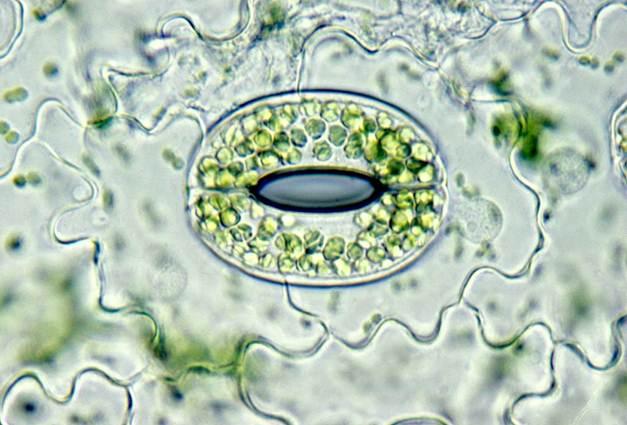
Structures represented in the illustration below are found in the lower epidermis of a plant leaf. The illustration at the right shows the response to a certain environmental condition.


The response represented in the illustration would most likely be caused by-

a)

a reduced supply of oxygen

b)

long periods of rainfall

c)

high concentration of glucose

d)

little available water

28.

Students are instructed to place leafy celery stalks into color water in a beaker overnight. The following day, the students observed the color of the celery leaves changed from green to red. The students cut across the edge of the celery and observed the small tube openings along the edge are also red.


How do the plant systems work together to make the movement of the liquid possible?

a)

The roots absorb the water, minerals move up the stem, while the stem moves food produced in the leaves down to the roots.

b)

The roots anchor the plant into the soil and the stem holds the leaves up.

c)

The roots absorb their own water and minerals and the leaves push out CO2.

d)

The roots lose water vapor to the soil and the stem loses water vapor through the leaves.

29.

Remember when you put the celery in the water? What happened to the water level by the next day?

a)

The level dropped A LOT, because the celery sucked it up.

b)

The level stayed the same, because the celery was dead.

c)

The level dropped a little, because of evaporation.

30.

What is the purpose of the XYLEM?

a)

To bring food from the soil to the whole plant.

b)

To carry water and nutrients from the roots to the whole plant.

c)

To carry food from the chloroplasts around to all parts of the plant.

31.

If plants don't store up water, how does water leave the plant?

a)

The roots get rid of excess water.

b)

Most plants DO store water.

c)

It is released from the leaves by TRANSPIRATION.

32.

What is the name of the microscopic holes in leaves that are opened and closed to allow water to TRANSPIRE?

a)

water doors

b)

stomata

c)

leaf eyes

d)

transpiration holes

33.

What is absorbed by the plant by it's roots, and transpiration takes place as the water exits the ________?

a)

Leaves

b)

Stem

c)

Branch

d)

Roots

34.

What is the effect of increasing light intensity in transpiration?

a)

It decreases transpiration rates

b)

It increases transpiration rates

c)

It doesn't impact the rate of transpiration

35.

What is a cuticle? Choose 2

a)

A waxy layer of a fatty substance called cutin covering the epidermis

b)

A waxy layer of a fatty substance called cutin covering the dermis

c)

Part of Xylem

d)

A plant cuticle is a protecting film covering the epidermis of leaves

36.
How is water transported from stems to leaves?
a)
xylem
b)
phloem
c)
stems
d)
roots
37.

Select all of the environmental factors that would increase transpiration.

a)

Increased humidity

b)

Increased wind speed

c)

Increased temperature

d)

Decreased surface area

38.

Which label points to palisade mesophyll?

a)

B

b)

G

c)

J

d)

H

39.

Choose the two statements that indicate what would be happening in the plant when stomata are open.

a)

Guard cells are turgid

b)

Guard cells are plasmolysed

c)

Transpiration increase

d)

Transpiration decrease

40.
Which is NOT a function of roots?
a)
Take in water
b)
Take in nutrients
c)
Anchor plant to ground
d)
Make food
41.
Transpiration is
a)
the movement of water through a plant from the roots up the stem
b)
the loss of water from the leaves of a plant by the process of evaporation
c)
the flow of water into plant roots by osmosis from the soil
d)
the process of minerals and sugars moving through plant veins
42.
What is the effect of increasing leaf area on transpiration?
a)
It increases transpiration rate
b)
It decreases transpiration rate
43.
What is the effect of increasing wind speed on transpiration?
a)
It increases transpiration rate
b)
It decreases transpiration rate
44.
What is the effect of increasing temperature on transpiration?
a)
It increases transpiration rate
b)
It decreases transpiration rate
45.
What is the effect of increasing light intensity on transpiration?
a)
It increases transpiration rate
b)
It decreases transpiration rate
46.

Which process are the phloem tubes part of?

a)

Translocation

b)

Transpiration

47.

Which process are the xylem tubes part of?

a)

Translocation

b)

Transpiration

48.
Tia looked at a leaf under a microscope and noticed a number of pores on its surface. These pores are called __________________
a)
cells
b)
veins
c)
stomata
d)
chlorophyll
49.
Which feature would be most helpful to a plant in a desert?
a)
small leaves
b)
large seeds
c)
small roots
d)
smelly flowers
50.
The stomata is also used in photosynthesis and respiration.
a)
True, carbon dioxide & oxygen go through it
b)
True, glucose goes through it
c)
False