wayground logo

Free Printable Worksheets

Font size

S
M
L
XL
Worksheets

2019-2020 Biology Final Study Guide

Total questions: 206

Worksheet time: 4hrs 54mins

Name
Class
Date
1.
This variable in an experiment is the one being changed by the scientist. 
a)
dependent variable
b)
independent variable
c)
data
d)
control group
2.
In an appropriately designed experiment, a scientist is able to test the effect of
a)
 a single variable
b)
 multiple variables
c)
 the hypothesis
d)
 scientific observations
3.
An experiment was carried out to determine whether drinking caffeinated soda increases pulse rate. The pulse rates of two groups of people at rest were measured. Group A was then given caffeinated soda and group B was given caffeine-free soda. One hour after drinking the soda, the pulse rates were measured. The participants in the experiment were all the same age, and they were all given the same amount of soda. The dependent variable in this experiment is the
a)
type of soda given to each group
b)
amount of soda given to each group
c)
 pulse rate of each group
d)
age of participants in each group
4.

The Flash wants to determine the speed he needs to vibrate at to phase (pass) through the wall. He attempts to vibrate at different speeds and records his results. What is the independent variable of his experiment?

a)

The Flash himself

b)

His ability to pass through the wall

c)

The speed he vibrates at

d)

The velocity the flash can run

5.

Mr. Kelley wants to test out a new hair growing product to see if it can help regrow hair. He uses Super Hair Grow Solution 1 on Group A, Super Hair Grow Solution 2 on Group B, Super Hair Grow Solution 3 on Group C and Regular Shampoo on Group D. After 30 days he notices the following: What is the control group?

a)

Group A

b)

Group B

c)

Group C

d)

Group D

6.

What is the correct order of the scientific method?

a)

Draw a conclusion, Design an experiment, Form a hypothesis, Make an observation

b)

Design an experiment, Make an observation, Draw a conclusion, Form a hypothesis

c)

Make an observation, Form a hypothesis, Design an experiment, Draw a conclusion

d)

Form a hypothesis, Draw a conclusion, Make an observation, Design an experiment

7.
Many science words can be easily broken down to find their true meaning.  Look at the PREFIX below and match it to its meaning.
BIO
a)
Home
b)
Life
c)
Not
d)
Without
8.
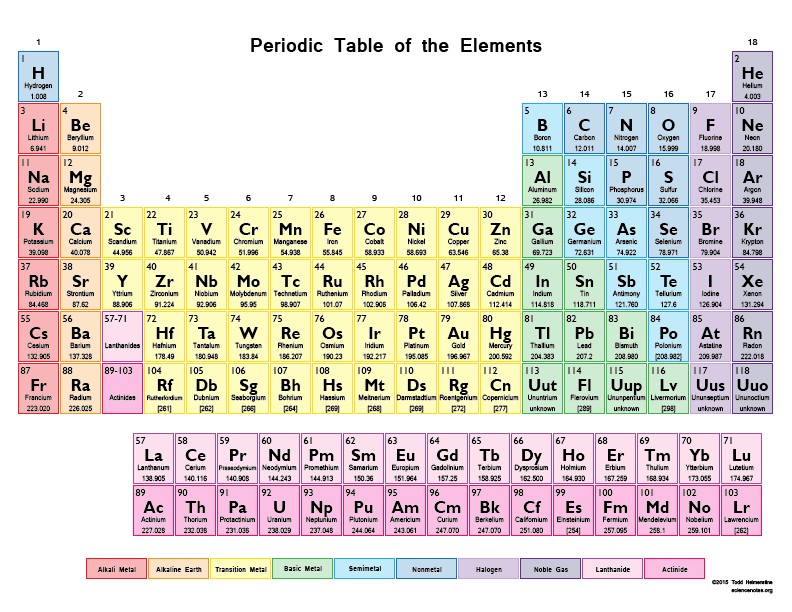
What is the atomic mass of "F"
a)
9
b)
18
c)
17
d)
19
9.
The particles that are found in the nucleus of an atom are
a)
neutrons and electrons
b)
electrons only
c)
protons and neutrons
d)
protons and electrons
10.

If an atom gains new electrons, does the atom become more positive or more negative?

a)

more positive

b)

more negative

c)

both

d)

neither

11.

Atoms of the same element that have a different number of neutrons are called ____________.

a)

isomers

b)

isotopes

c)

ions

d)

indicators

12.

The smallest particle of an element also know as the basic unit of matter.

a)

Element

b)

Atom

c)

Ion

d)

Isotope

13.

You discover an element with an atomic number=15 and has 16 neutrons. What is the atomic mass?

a)

1

b)

15

c)

16

d)

31

14.

Protons can be used to determine

a)

The atomic charge

b)

The atomic mass

c)

The atomic number

d)

An ion

15.
The name of the information that you get from your experiment (you organize it into charts and graphs).
a)
observations
conclusion
b)
data
c)
variables
d)
hypothesis
16.
A student is planning an experiment to find out how the height from which he drops a ball affects how high the ball bounces. The dependent variable is the _____.
a)
Diameter of the ball
b)
Force acting on the ball
c)
Height that the ball bounces
d)
Height from which the ball is dropped
17.
Explaining the color of a chemical would be what kind of observation?
a)
Qualitative 
b)
Quanitative
18.
Which of the following would be considered quantitative data?
a)
Color
b)
Smell
c)
6.84 cm
d)
texture
19.
If I read this question carefully, then I will answer it correctly. What is the independent variable?
a)
I hope so
b)
Yes
c)
Reading or not reading carefully
d)
Likelihood of a correct answer
20.
Which is NOT a step in the scientific method?
a)
Make observation
b)
Form a theory
c)
Collect data
d)
Form a hypothesis
21.
A testable explanation to a problem that has not yet been tested. 
a)
data
b)
theory
c)
hypothesis
d)
fact
22.
This variable in an experiment is the one being changed by the scientist. 
a)
dependent variable
b)
independent variable
c)
data
d)
control group
23.
An experiment is performed on plants to see how different liquids affect plant growth. Each plant in the experiment is given a different liquid; water, apple juice, or milk. Each plant has the same amount of soil, sunlight, and listens to the same music. In this investigation, the independent variable is ...
a)
The type of plant
b)
The amount of sunlight
c)
The type of music
d)
The type of liquid
24.
Dependent variable means
a)
the scientist controls what to test
b)
educated guess
c)
ask a question
d)
what is being measured
25.
If you increase the amount of spinach you eat, then you will increase the iron in your blood. 
What's the dependent variable?
a)
increase the amount of iron in your blood
b)
spinach you eat
26.
What is the first step in the scientific method?
a)
Ask a question
b)
Conclusion
c)
No Horse Play
d)
Observe
27.
If I ride my bike to school instead of walking, then I will get to school faster. What is the dependent variable?
a)
True
b)
How fast you get to school
c)
Riding a bike or walking
d)
False
28.
Will a construction paper air plane fly faster than an airplane made from notebook paper? Choose the best hypothesis.
a)
If I make a paper airplane from notebook paper, then it will fly faster than construction paper.
b)
Yes.
c)
No.
d)
I think the construction paper air plane will fly faster.
29.
If I study for my scientific method test, then I will have a better test score. What is the dependent variable?
a)
Scientific Method
b)
Studying
c)
Independent variable
d)
Test score
30.
If I listen to Mr. Castro's instructions, then I will have less accidents in the lab. What is the independent variable?
a)
Yes
b)
Maybe
c)
Listening or not listening to instructions
d)
Likelihood of having an accident in lab 
31.
What are the first two steps of the scientific method in order?
a)
1, 2
b)
Observation, Ask a question
c)
Ask a question, For a hypothesis
d)
Make a plan, Experiment
32.
Mr. McNiece wanted to see how different types of music affected students' pulse rates. She played different types of music: heavy metal, rap, R&B, alternative, pop, country, and classical music. Identify the independent variable.
a)
classical music resulted in the highest pulse rate
b)
high pulse rate
c)
pulse rate
d)
types of music
33.
Mr. McNiece wanted to see how different types of music affected students' pulse rates. She played different types of music: heavy metal, rap, R&B, alternative, pop, country, and classical music. What constant should be considered when doing this experiment?
a)
types of music
b)
use all dead people
c)
using a different student for each music type
d)
amount of time the music was played
34.
Nick wanted to see how high an ice cube would float in different temperatures of water. Identify the independent variable.
a)
amount of water
b)
height of ice cube
c)
temperature of water
d)
size of ice cube
35.
Tiffany was investing how fast it took Hayden to react to different sounds. Identify the dependent variable. 
a)
different sounds
b)
how much time it took Hayden to react
c)
Hayden
d)
the trumpet playing over and over
36.
Mario studied how far room temperature water would spurt out of a platic milk carton when 3mm holes were punched at different heights from the bottom of the container. Identify the dependent variable
a)
3 mm holes
b)
distance water traveled out of carton
c)
different heights of holes in container
d)
ice water from Iceland
37.
Which of the following correctly lists the steps of the scientific method?
a)
Observe, Experiment, Hypothesize, Analyze, Conclude
b)
Observe, Hypothesize, Analyze, Experiment Conclude
c)
Observe, Hypothesize, Experiment, Analyze, Conclude
d)
Observe, Analyze, Hypothesize, Experiment, Conclude
38.
Which of the following terms refers to a group that receives treatment with the independent variable?
a)
Constant group
b)
Control group
c)
Dependent group
d)
Experimental group
39.
Which of the following terms refers to the group that receives no treatment with the independent variable?
a)
Constant group
b)
Control group
c)
Dependent group
d)
Experimental group
40.

Subatomic particles with a negative charge

a)

Electrons

b)

Neutrons

c)

Protons

d)

Quarks

41.
Subatomic particles with a positive charge
a)
neutrons
b)
atomic mass
c)
protons
d)
isotopes
42.
Measure mainly of the nuclear particles: protons + neutrons
a)
Subatomic Particles
b)
Atomic Number
c)
Atomic Mass
d)
Gluons
43.
Value representing the number of protons in an element
a)
Atomic Mass
b)
Mass Number
c)
Valence Electrons
d)
Atomic Number
44.
Subatomic particles that are neutral in charge
a)
Neutrons
b)
Protons
c)
Nucleus 
d)
Electrons
45.
Atoms of the same element with a different number of neutrons
a)
Ion
b)
Gluons
c)
Isotope
d)
Quarks
46.
A charged atom
a)
Ion
b)
Isotope
c)
Electron Cloud
d)
Quark
47.
Where electrons are likely to be found as they travel around the nucleus
a)
Nucleus
b)
Electron Cloud
c)
Within a Proton
d)
Within a Neutron
48.
A tiny but very dense, positively charged portion of the atom that holds most of the atomic mass
a)
Electron Shells
b)
Orbitals
c)
Electron Cloud
d)
Nucleus
49.
Arrangement of elements organized by atomic number
a)
Electron Cloud 
b)
Periodic Table 
c)
Electron Configuration
d)
None of these
50.
Calculation used to find the number of neutrons in an atom
a)
Atomic Mass - Atomic Number
b)
Atomic Number - Atomic Mass
c)
Atomic Mass - Electrons
d)
none of these
51.
The nucleus of an atom can be described as:
a)
spacious and negatively charged
b)
dense and positively charged
c)
spacious and positively charged
d)
dense and negatively charged
52.
Electrons are not factored into atomic mass because:
a)
They are so small their mass is negligible
b)
They're not in the nucleus
c)
They're too big
d)
They move so quickly their mass is zero
53.
What does the nucleus of an atom contain?
a)
Electrons and neutrons
b)
Protons and neutrons
c)
Neutrinos and positrons
d)
DNA and RN
54.
This particle determines what element you have - the elements identity.
a)
electron
b)
proton
c)
neutron
d)
valence shell
55.
What is the mass number and name of an element with 8 protons and 8 neutrons?
a)
16 - Carbon
b)
16 - Oxygen
c)
24 - Oxygen
d)
8 - Neon
56.
What is the atomic number?
a)
the number of protons
b)
the number of protons and neutrons
c)
the number of neutrons
d)
the number of protons and electrons
57.
What is the mass number defined as?
a)
the number of protons
b)
the number of protons and neutrons
c)
the number of neutrons
d)
the number of protons and electrons
58.
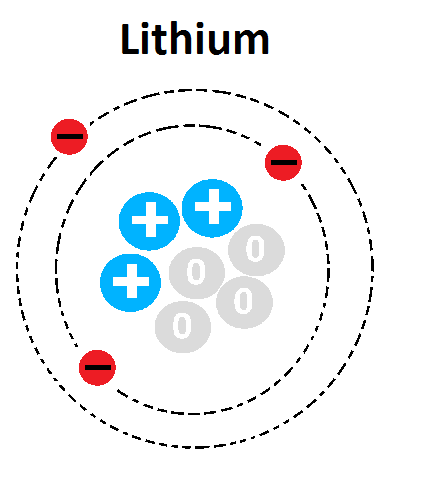
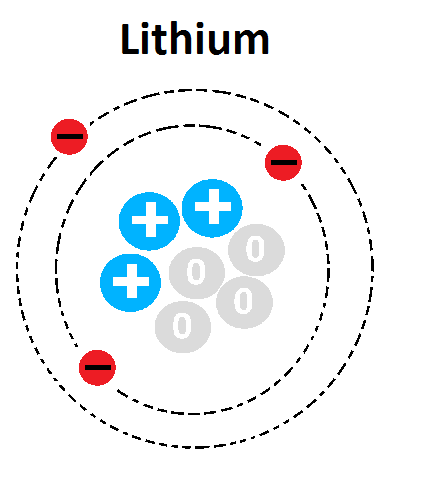
What is the atomic number of this atom?
a)
1
b)
3
c)
4
d)
7
59.

What is the mass number of this atom?

a)

1

b)

3

c)

4

d)

7

60.

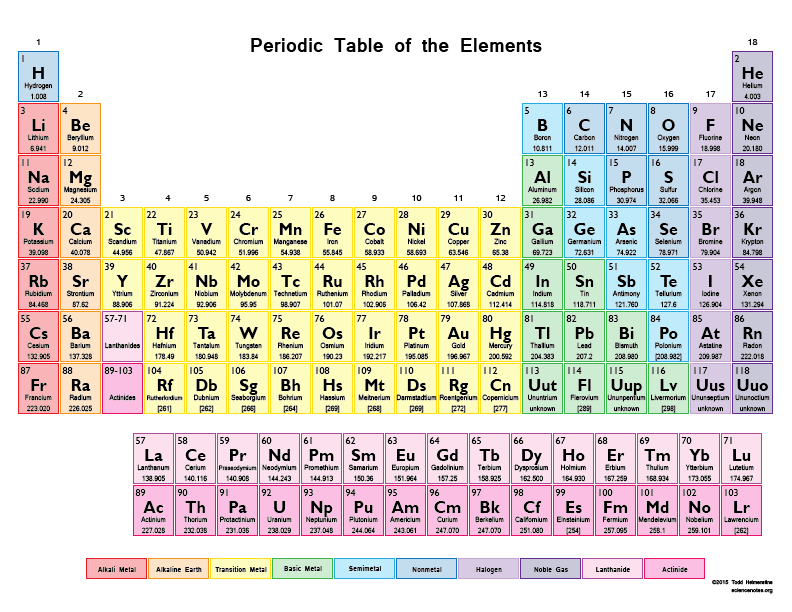
What is the atomic number of Barium, Ba? (enlarge the periodic table)

a)

20

b)

38

c)

56

d)

88

61.

What is the atomic number of Nickel? (enlarge the periodic table)

a)

110

b)

28

c)

46

d)

78

62.

How many protons are in a sodium atom, Na? (tap to enlarge the periodic table)

a)

Sodium has 1 proton.

b)

Sodium has 3 protons.

c)

Sodium has 11 protons

63.

An element has the mass number 12 and atomic number 6. The number of neutrons in it is:

a)

6

b)

10

c)

4

d)

8

64.

the Latin word "corona," which means ...........

a)

virus

b)

bacteria

c)

crown

d)

clown

65.

8. Are antibiotics effective in preventing and treating the new coronavirus?

a)

Yes

b)

No

c)

Unsure

66.

Coronavirus infections are likely to be more serious for:

a)

Teens

b)

Active Adults

c)

Frequent Flyers

d)

People with weakened immune systems

67.

Which symptom cannot Viruses cause ?

a)

fever

b)

pneumonia

c)

swollen

d)

diarrhea

68.

How is the coronavirus spread?

a)

Through the air by sneezing, coughing

b)

Through the air by birds

c)

Through the ground by worms

d)

Through the water by fish

69.

How long should you wash your hands?

a)

40 seconds

b)

30 seconds

c)

20 seconds

70.

A virus infects a host in order to:

a)

Take in nutrients

b)

Make the host sick

c)

Make copies of itself

d)

Destroy the host's cells

71.

After an initial infection, B-cells recognize the measles virus. How is this helpful in human immune response?

a)

The B-cells use this recognition to defend the body against other pathogens, such as bacteria.

b)

The B-cells more quickly recognize and respond to any other virus that invades the body.

c)

The B-cells produce antibodies more quickly if the measles virus is encountered again.

d)

The B-cells transfer this recognition to T-cells, which will then devour the viruses.

72.
The purpose of the immune system is to:
a)
Help germs invade your body
b)
Fight off sickness
c)
Make your nose run
d)
Give you diarrhea
73.
What are the 4 types of GERMS?
a)
parasite,ouchy,bug,animal
b)
parasite, fungi, animal,insect
c)
parasite,fungi,virus,bacteria
d)
bug,bird,goat,bear
74.
Produced by B cells and designed to mark antigens to be destroyed.
a)
Antigens
b)
Active Immunity
c)
Antibodies
d)
Antibiotics
75.
What do memory cells do?
a)
Kills the virus
b)
Eats the virus
c)
Patrol the area and make the immune system work faster next time.
d)
Makes antibodies
76.

These are important because they remember the pathogen for the future.

a)

Macrophage

b)

Lymphocyte

c)

Memory T and B cells

d)

Antibodies

77.

What attaches to antigens and tags the pathogen for destruction?

a)

Pathogen

b)

Antibodies

c)

B-cells

d)

Lymphocyte

78.

What is the molecule located on the outside of a pathogen that the immune system recognizes?

a)

Lymphocyte

b)

Antigen

c)

Pathogen

d)

Inflammation

79.

What is the specific response targeting a specific pathogen?

a)

Immune response

b)

Antigen

c)

Memory T and B cells

d)

Antibodies

80.

What micro-organism is responsible for causing disease?

a)

Pathogen

b)

Antibodies

c)

B-cells

d)

Lymphocyte

81.

T or F - Vaccines work be directly attacking the disease.

a)

true

b)

false

82.

T or F - Viruses can be treated with antibiotics.

a)

true

b)

false

83.

What is the role of the immune system?

a)

To pump blood throughout the body

b)

To protect the body from disease-causing agents

c)

To contain disease-causing organisms to a single area of the body

d)

To give Mr. Elwonger something to test us over

84.

Which of the following virus causes Covid-19 ?

a)

SARS- Cov-2

b)

Ebola

c)

Hantavirus

d)

MERS

85.

Which of the following disease is caused by the novel Coronavirus?

a)

SARS-COV-2

b)

Hants Pulmunary Syndrome

c)

COViD-19

d)

MERS

86.

The genetic material of SARS-COV-2 comprises of

a)

Protosova

b)

DNA

c)

RNA

d)

Chrominome

87.

Which of the following symptoms are not observed in Covid-19 patient ?

a)

Fever

b)

Cough

c)

Breathing difficulties

d)

Big boils on the skin

88.

From where coronavirus got its name?

a)

1. Due to their crown-like projections.

b)

Due to their leaf-like projections

c)

Due to their surface structure of bricks.

d)

None of the above

89.

What are the precautions that need to be taken to protect from the coronavirus?

a)

Add more garlic into your diet.

b)

Visit your doctor for antibiotics treatment

c)

Add more garlic into your diet.

d)

Cover your nose and mouth when sneezing.

90.

Which virus is responsible for Covid-19?

a)

MERS-2

b)

H1N1

c)

SARS-COV-1

d)

SARS-COV-2

91.
The scientist(s) who discovered dominant and recessive traits
a)
Mendel
b)
Avery
c)
Griffith
d)
Watson & Crick
92.
In the early 1900s, most scientists thought it was _____________ that carried traits form parent to offspring. 
a)
Carbohydrates
b)
Lipids
c)
Proteins
d)
DNA
93.
This scientist(s) conducted experiments that involved injecting mice with S bacteria and R bacteria.
a)
Avery
b)
Griffith
c)
Watson & Crick
d)
Hershey & Chase
94.
The work of scientists including Griffin, Avery, Hershey & Chase and Franklin helped us to determine the __ are responsible for carrying genetic material.
a)
Amino Acids
b)
Proteins
c)
Nucleic Acids
d)
Carbohydrates
95.
What organism was Griffith using when he discovered that a harmless strain of bacteria could transform into a lethal strain of bacteria?
a)
pea plants
b)
fruit flies
c)
bacteriophages
d)
mice
96.

The offspring of a cross between parents that have contrasting traits:

a)

purebred

b)

hybrid

c)

dominant

d)

recessive

97.

The likelihood that a specific event will occur:

a)

accountability

b)

dominant

c)

probability

d)

recessive

98.

When the two alleles of a particular gene are different:

a)

heterozygous

b)

homozygous

c)

genotype

d)

phenotype

99.

The set of alleles that an individual has:

a)

heterozygous

b)

phenotype

c)

homozygous

d)

genotype

100.

The allele that is fully expressed by itself:

a)

recessive

b)

homozygous

c)

dominant

d)

heterozygous

101.

The allele that is not expressed when the dominant corresponding allele is present:

a)

dominant

b)

heterozygous

c)

recessive

d)

homozygous

102.

A version of a gene:

a)

allele

b)

trait

c)

character

d)

generation

103.

When the two alleles of a particular gene are the same:

a)

homozygous

b)

genotype

c)

heterozygous

d)

phenotype

104.

Known as the father of modern genetics:

a)

Watson

b)

Crick

c)

Darwin

d)

Mendel

105.

Dominant alleles are represented with a:

a)

capital letter

b)

lower case letter

c)

shape

d)

symbol

106.

A detectable trait or traits that result from the genotype such as color, shape, etc:

a)

genotype

b)

homozygous

c)

heterozygous

d)

phenotype

107.

The passing of genetic traits from parents to offspring:

a)

geneology

b)

heredity

c)

cellology

d)

physiology

108.

Gregor Mendel did experimented on what kind of plants?

a)

Lilacs

b)

Peas

c)

Apples

d)

Sunflowers

109.

What is the scientific study of heredity?

a)

Genetics

b)

Epistemology

c)

Pathology

d)

Podiatry

110.

A ___________ is the genetic makeup or allele combination.

a)

Phenotype

b)

Gene

c)

Genotype

d)

Homozygous

111.

When the genotype has 2 identical alleles it is known as...

a)

Heterozygous

b)

Co-dominance

c)

Homozygous

d)

Recessive

112.

What allele will always show up when present in the genetic combination?

a)

Recessive

b)

Purebred

c)

Traits

d)

Dominant

113.
If green is dominant over purple, then what is the genotype for this individual?
a)
Purple
b)
Green
c)
GG
d)
gg
114.
What is the genotype for this organism?
(E= 3 eyes, e= 1 eye)
a)
EE
b)
Ee
c)
ee
d)
EE or Ee
115.
Which of the following terms refers to the different possibilities of a gene?
a)
chromosome
b)
DNA
c)
Punnett Squares
d)
allele
116.
A phenotype is the...
a)
letter combination
b)
dominant gene
c)
recessive gene
d)
physical appearance
117.
Tt is-
a)
homozygous dominant
b)
homozygous recessive
c)
heterozygous
d)
none of these
118.
If a pea plant were homozygous recessive for height, how would its alleles be represented?
a)
TT
b)
Tt
c)
tt
d)
tT
119.
One reason for Mendel's success with genetic studies of peas was that he
a)
used only hybrid pea plants
b)
used peas with large chromosomes
c)
studied large numbers of offspring
d)
discovered the sources of variation in peas
120.
When is a recessive allele expressed in offspring?
a)
when two copies are present
b)
when parents have no dominant alleles
c)
when the offspring is heterozygous
d)
when one copy is present
121.
This is a part of the chromosome that carries information and controls a trait
a)
trait
b)
gene 
c)
chromosome
d)
offspring
122.
A single piece of coiled DNA found in the cells; contains genes that encode traits.
a)
gene
b)
chromosome
c)
trait
d)
DNA
123.

The possible colors for a bug are green (G) and yellow (g). If a bugs genotype is Gg, and is green, which is the dominant trait?

a)

Green

b)

Yellow

124.

Purple (P) is dominant to white (p), what is the phenotype of the flower?

a)

White

b)

Pp

c)

pp

d)

Purple

125.
Chromosomes are found in the ____________ of the cell
a)
Chloroplast
b)
Nucleus
c)
Cytoplasm
d)
Mitochondria
126.
What are the two genotypes that show the DOMINANT Phenotype
a)
GG, gg
b)
GG, Gg
c)
Gg, gg
127.
Which of the following pairs is homozygous dominant?
a)
Hh
b)
pp
c)
HH
d)
aa
128.
Which macromolecule is shown?
a)
lipid
b)
protein
c)
nucleic acid
d)
carbohydrate
129.
Which is the monomer (building block) for lipids?
a)
fatty acids & glycerol
b)
nucleotide
c)
amino acids
d)
monosaccharide
130.
The type of polysaccharide which serves as a strengthening tissue in the cell wall of plants.  
a)
cellulose
b)
glucose
c)
sucrose
d)
fructose
131.
Which organic molecule is paired with its function?
a)
nucleic acid : to store energy
b)
proteins : to provide insulation
c)
lipids : to regulate metabolic 
d)
carbohydrate : to provide quick–release energy
132.
What molecule is this?
a)
monosaccharide
b)
nucleic acid
c)
amino acid
d)
fatty acid
133.
What type of macromolecule are enzymes?
a)
Protein
b)
Carbohydrate
c)
Lipid
d)
Nucleic Acid
134.
The opening of the stomata allows water to evaporate from inside the leaf in a process known as transpiration. As this occurs, water molecules cling to one another and pull water in a continuous stream up the stem of the plant from the roots to the leaves. Which property of water makes this movement possible? 
a)
cohesion
b)
freezing
c)
high specific heat
d)
temperature-dependent density
135.

You arrive at Thanksgiving dinner and want to make sure you eat enough starch, what food could you eat to increase your starch intake?

a)

Cranberry Sauce

b)

Turkey

c)

Gravy

d)

Stuffing

136.

What is the ratio of carbohydrate elements?

a)

1:2:3

b)

1:1:1

c)

2:1:2

d)

1:2:1

137.

Which of the following is a disaccharide?

a)
b)
c)
d)
138.

Glucose is a type of sugar that is

a)

produced by plants with a process called photosynthesis.

b)

produced by animals with a process called cellular respiration.

c)

produced by plants with a process called cellular respiration.

d)

produced by animals with a process called photosynthesis.

139.

Most carbohydrate names end with which ending:

a)

-ase

b)

-ese

c)

-ise

d)

-ose

140.

What is the chemical formula for glucose?

a)

C1 H2 O1

b)

C6 H12 O6

c)

C12 H22 O11

d)

H2O

141.
All polymers are made up of...
a)
monosaccharides
b)
monomers
c)
proteins
d)
None of these
142.
What does hydrophobic mean?
a)
Likes water as a friend
b)
Dissolves in water
c)
Loves water
d)
Hates water
143.
What does polar mean?
a)
Unequal charge
b)
Equal charge
c)
Arctic area
d)
Bear that drinks Coca-Cola
144.
How many layers is the lipid bilayer?
a)
1
b)
2
c)
3
d)
4
145.
What word describes when water is attracted to other substances?
a)
cohesion
b)
adhesion
c)
capillary action
d)
surface tension
146.
Cellulase is an enzyme some organisms use to digest cellulose, which is present in plant cell walls.  Which statement best describes the role of cellulase in this reaction?
a)
It increases the time it takes the reaction to occur.
b)
It changes the pH of cells in which the reaction occurs.
It raises the temperature at which the reaction can occur.
c)
It raises the temperature at which the reaction can occur.
d)
It reduces the amount of energy needed to start the reaction.
147.
Which statement describes one reason for carbon's central role in macromolecules?
a)
It bonds only with other noncarbon atoms.
b)
It can form single, double, and triple bonds.
c)
It shares four electrons with every atom it bonds to.
d)
It forms macromolecules in rings rather than in chains.
148.
Which two substances are products of photosynthesis and reactants of cellular respiration?
1. water
2. oxygen
3. glucose
4. carbon dioxide
a)
substances 1 and 2
b)
substances 1 and 4
c)
substances 2 and 3
d)
substances 3 and 4
149.

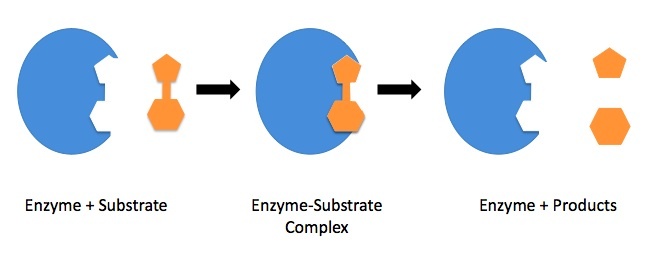
Where do substrates bind (fit) on an enzyme?

a)

catalyst

b)

product

c)

activation energy

d)

active site

150.

How do enzymes speed up chemical reaction?

a)

Increasing activation energy

b)

Decreasing activation energy

c)

Increasing number of reactants

d)

Decreasing the number of products

151.

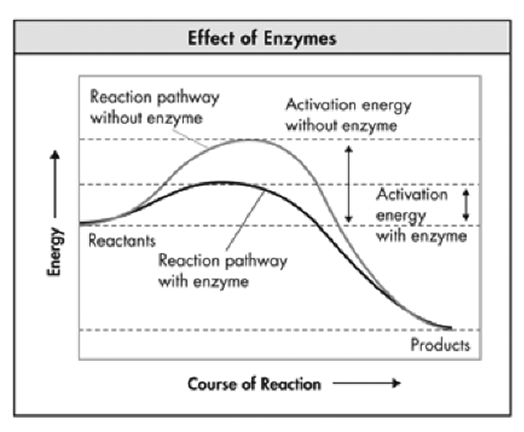
The graph shows how enzymes affect reactions in cells. Which statement best summarizes the information shown in the graph?

a)

Enzymes increase the energy of the reactants.

b)

Enzymes decrease the energy level of the products.

c)

Enzyme decrease the activation energy of the reaction.

d)

Enzymes reverse the direction of the reaction.

152.
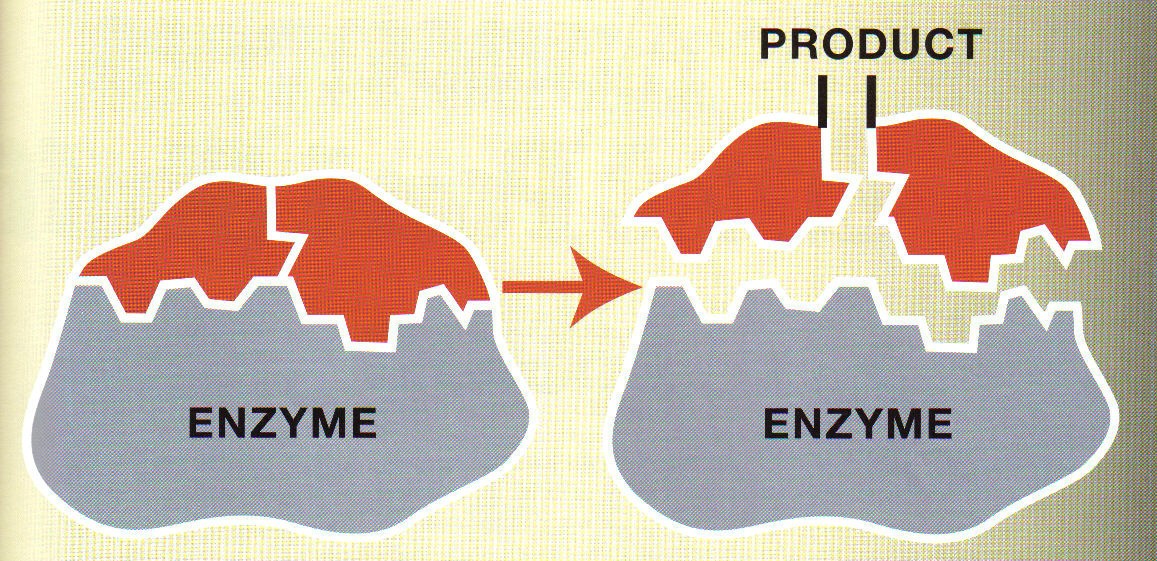
A lock and key is sometimes used as a model to promote understanding of enzymes. Which characteristic of enzymes or their action is best illustrated by this model?
a)
The sensitivity of enzymes to changes in pH
b)
The change in activation energy the enzymes cause
c)
The specificity of fit between an enzyme and a substrate
d)
The increase in reaction rate due to the action of the enzyme
153.

What structure is passed on from parents that help determine the traits of offspring?

a)

ATP

b)

Cell

c)

Protein

d)

Gene

154.
Which of the following units are repeatedly joined together to form a strand of DNA?
a)
amino acids
b)
nucleotides
c)
fatty acids
d)
polysaccharides
155.
Would a mutation in the DNA of a skin cell be passed on to an organism's offspring?
a)
Yes, because any change to the DNA is passed on to the offspring
b)
Maybe. Sex cells only use half of the body's genetic code. It might get the copy of a gene that wasn't mutated.
c)
No. Only mutations that occur in the gametes (sex cells) are passed on to the offspring
d)
Without knowing the animal, it would be hard to tell whether or not the mutation would be passed on.
156.

RNA is read in three letter sections called:

a)

Triplets

b)

Amino Acids

c)

Codons

d)

Genes

157.
What is the difference between DNA and RNA
a)
DNA has uracil and RNA has thymine
b)
DNA is involved in transcription and RNA is involved in translation
c)
DNA contains thymine and RNA contains uracil
d)
DNA is made of nucleotides and RNA is not
158.
Which of the following best defines a gene?
a)
A diploid cell containing two sets of chromosomes
b)
A unit made up of chromosomes that control for a specific trait
c)
A segment of DNA that codes for a particular protein
d)
All the other answers are correct.
159.
What amino acid is represented by the codon UUA?
a)
Phenylalanine
b)
Tyrosine
c)
Leucine
d)
Stop codon
160.

The process of making mRNA from DNA

a)

Translation

b)

Transcription

c)

Replication

d)

Meiosis

161.
What elements make up carbohydrates?
a)
Carbon, hydrogen, nitrogen, oxygen
b)
sulfur, carbon, hydrogen
c)
glucose and fructose
d)
carbon, hydrogen, oxygen
162.
The 3 categories of carbohydrates are:
a)
Monosaccharide, disaccharide, polysaccharide
b)
glucose, fructose, galatose
c)
starch, cellulose, chitin
d)
There are no categories of carbohydrates
163.
Which nutrient provides the body with the most amount of energy?
a)
Fats
b)
Carbohydrates
c)
Protein
d)
Fiber
164.
Which is not a chemical element needed to build sugars?
a)
Carbon
b)
Oxygen
c)
Nitrogen
d)
Hydrogen
165.
How do lipids function for cells?
a)
store information
b)
store energy
c)
breakdown wastes
d)
join with substrates
166.
What are two main functions of fats within the body?
a)
energy storage and cellular transport
b)
energy storage and insulation
c)
building blocks for DNA and hormones
d)
storing cellular information and in the cell membrane
167.
What is a protein: 
a)
A polymer composed of many sugars.
b)
A polymer composed of many amino acids. 
c)
A polymer composed of fatty acids. 
d)
A polymer composed of nucleotides. 
168.
What is the monomer of proteins?
a)
amino acids
b)
polypeptides
c)
nucleotides
d)
monosaccharides
169.
What is the monomer of a carbohydrate?
a)
Monosaccharide
b)
Amino Acid
c)
Nucleotide
d)
Glycerol+Fatty Acid
170.
What is the monomer of a lipid?
a)
Monosaccharide
b)
Nucleotide
c)
Glycerol+Fatty Acid
d)
Amino Acid
171.
DNA and RNA are examples of...
a)
proteins
b)
nucleic acids
c)
carbohydrates
d)
lipids
172.
What is the function of nucleic acids?
a)
Stores energy
b)
Stores genetic information
c)
Movement
d)
Physical structure
173.
What is the monomer of nucleic acids?
a)
Glycerol
b)
Monosaccharides
c)
Amino Acids
d)
Nucleotides
174.
Enzymes speed up reaction rates by changing:
a)
Activation Energy
b)
pH
c)
Hydrogen Bonds
d)
Kinetic Energy
175.
Most enzymes have the ending:
a)
-ase
b)
-ose
c)
-ic acid
d)
-ate
176.
A series of steps used by scientists to solve a problem or answer a question. 
a)
scientific method
b)
recipe
c)
data collection
d)
metric system
177.

TRANSCRIBE this DNA sequence: TACGTTACT

a)

AUGCAAUGA

b)

ATGCAATGA

c)

AUGGATUGA

d)

TACGTTACT

178.
What process is going on in this photo? 
a)
Transcription 
b)
Translation 
c)
Replication 
d)
All the above 
179.
A __________ is a segment of DNA that codes for a particular protein, which leads to a particular trait.
a)
Gene
b)
Allele
c)
Codon
d)
Nucleotide
180.
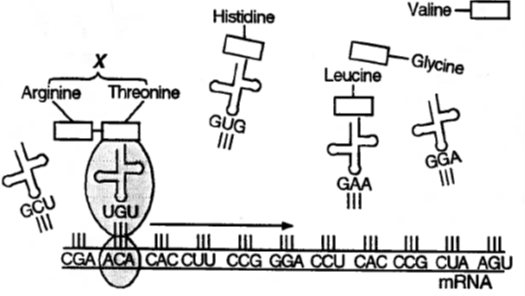
X outlines a(n) ___________.
a)
amino acid
b)
nitrogen base 
c)
nucleotide
d)
nitrogen base pair
181.

Ecto

a)

cell

b)

inside

c)

outside

d)

the same

182.

Co

a)

together

b)

two

c)

outside

d)

different

183.

cyto

a)

cell

b)

double

c)

different

d)

together

184.

Diplo

a)

double

b)

two

c)

together

d)

write

185.

Two

a)

di

b)

diplo

c)

hetero

d)

co

186.

The same

a)

homo

b)

co

c)

hetero

d)

cyto

187.

water

a)

hydro

b)

hetero

c)

cyto

d)

gram

188.

Different

a)

hetero

b)

homo

c)

cyto

d)

ecto

189.

Chloro

a)

two

b)

green

c)

against

d)

nutrition

190.

-ase

a)

enzyme

b)

relating to the heart

c)

kill

d)

sugar

191.

Cerebr

a)

brain

b)

relating to the heart

c)

green

d)

nutrition

192.

Against

a)

anti-

b)

-ase

c)

-cide

d)

ab-

193.

Nutrition

a)

troph

b)

cide

c)

cerebr

d)

chloro

194.

Relating to the heart

a)

cardio

b)

cerebr

c)

troph

d)

cide

195.
The picture below is an example of _________________.
a)
osmosis
b)
isotonic
c)
diffusion
d)
active transport
196.
Osmosis is the movement of _____ across a membrane.
a)
food
b)
energy
c)
oxygen
d)
water
197.
During osmosis
a)
water moves from high to low concentration
b)
large or oddly shaped molecules move across a cell membrane
c)
water moves when energy is used
d)
proteins are built
198.
Molecules will move from an area of high concentration to an area of low concentration until they reach
a)
osmosis
b)
equilibrium
c)
selective permeability
d)
diffusion
199.
Which way will the water molecules move during osmosis?
a)
Out of the cell, so the cell shrinks.
b)
Out of the cell, so the cell swells.
c)
Into the cell, so the cell shrinks.
d)
Into the cell, so the cell swells.
200.

What is water?

a)

An atom

b)

A molecule composed of 2 parts Oxygen and one part Hydrogen

c)

A molecular compound composed of 2 parts Hydrogen and one part Oxygen

d)

An ionic compound composed of 2 parts Hydrogen and one part Oxygen
201.
What is surface tension?
a)
Water's ability to stick to itself
b)
Water's ability to stick to other substances
c)
The strength of the cohesion of all the water molecules combined
d)
Tape, glue and other adhesives
202.
a)
2
b)
8
c)
3
d)
13
203.

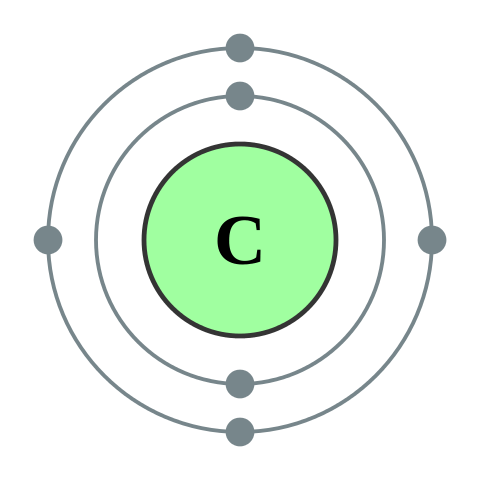
How many valence electrons does carbon have?

a)

4

b)

5

c)

6

d)

7

204.
Valence electrons are the...
a)
Innermost electrons
b)
Middle electrons
c)
Outermost electrons
d)
Any electrons
205.

All atoms are most stable with (or would "prefer") how many electrons in their valence shell?

a)

1

b)

2

c)

8

d)

18

206.
a)
6
b)
7
c)
8
d)
9