Font size
 Worksheets
wave behaviour
Total questions: 27
Worksheet time: 17mins


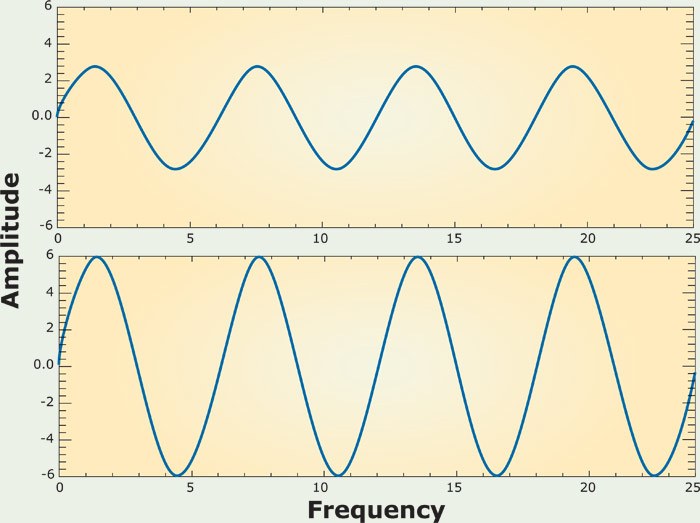
What is the wavelength of this wave?
3
8
10
4
What is the amplitude of this wave?
3
-3
6
4
What would happen to the frequency is the wavelength was tripled?
the frequency would be a third of what it was
the frequency would be 3 times larger
the frequency would stay the same
the wavelength does not affect the frequency of a wave
What is the definition reflection?
The bending of waves as they enter a new medium
Bouncing back of waves from a surface that it can’t pass through
The bending of waves as they pass through openings or around corners
When two interfering waves have a displacement in the same direction, two crests and two troughs overlap. Increased amplitude.
What does reflection include(s)?
angle of incidence
angle of reflection
angle of bounce
angle of reflecting
Example(s) of Reflection
Echo
Echo location
rough surface
smooth surface
bouncing
What is the definition of Refraction?
The bending of waves as they enter a new medium
When two interfering waves have a displacement in the opposite direction, crest and trough overlap. Zero amplitude.
When two interfering waves have a displacement in the same direction, two crests and two troughs overlap. Increased amplitude.
· Why does this happen?
Bouncing back of waves from a surface that it can’t pass through
The bending of waves as they enter a new medium
Waves travel at different speeds through different substances. As they enter a new substance, the wave bends as it changes speed in the new medium.
the smaller the opening the more diffraction, light waves are so small you will have little diffraction.
· Why can we hear around a corner but not see?
Increased amplitude of the light wave means brighter light
the smaller the opening the more diffraction, light waves are so small you will have little diffraction.
Decreased amplitude of the light wave means dimmer light
Give an example of Diffraction.
Water droplets act as prisms to separate white light into the ROYGBIV spectrum
Decreased amplitude of the sound wave means softer sound
the smaller the opening the more diffraction, light waves are so small you will have little diffraction.
hearing the bass of the music through the openings in a car (longer wavelengths)
What is the definition of Constructive Interference?
The bending of waves as they pass through openings or around corners
When two interfering waves have a displacement in the opposite direction, crest and trough overlap. Zero amplitude.
When two interfering waves have a displacement in the same direction, two crests and two troughs overlap. Increased amplitude.

The diagram shows waves _____________________
Changing frequency
Changing speed
being refracted
being diffracted

The moving black dot is called:
a node
an anti-node
an anti-amplitude
the wangy bit