wayground logo

Free Printable Worksheets

NEW

Font size

S
M
L
XL
Worksheets

Grade 8 cells (test)

Total questions: 20

Worksheet time: 13mins

Name
Class
Date
1.
Which of the following scientists was the first to observe bacteria?
a)
Anton van Leuwenhoek
b)
Matthais Schleiden
c)
Robert Hooke
d)
Theodor Schwann
2.
Which of the following statements is not part of the cell theory?
a)
Cells are the basic unit of structure and function in all living things.
b)
All cells are produced from other cells.
c)
Only animal cells are composed of cells.
d)
All living things are composed of cells.
3.
The invention of the microscope made it possible for people to discover and learn about
a)
Plants
b)
Skin 
c)
Animals 
d)
Cells
4.
Which scientist did NOT contribute to the cell theory?
a)
Anton Van Leeuwenhoek
b)

Robert Hooke
c)
Albert Einstein 
d)

Matthias Schleiden
5.
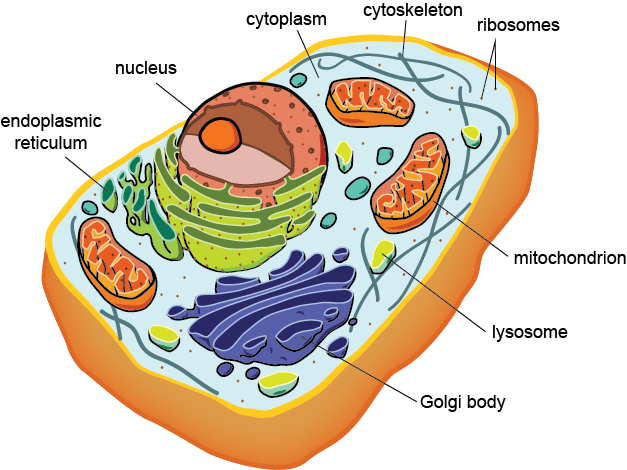
In cells a large oval organelle that contains the cells genetic material in the form of DNA and controls many of the cells activities
a)
organelle
b)
ribosome
c)
cell wall
d)
nucleus
6.
the thick fluid region of a cell located inside the cell membrane or between the cell membrane and nucleus
a)
cytoplasm
b)
cell wall
c)
organelle
d)
golgi apparatus
7.
an organelle in a cell that receives proteins and other newly formed materials from the endoplasmic retiulum packages them and distributes them to other parts of the cell
a)
vacuole
b)
chloroplast 
c)
ribosome
d)
golgi apparatus
8.
a sac like organelle that stores water, food, and other matter
a)
vacuole
b)
lysosome
c)
cytoplasm
d)
cell wall
9.
a cell organelle which contains chemicals that break down large food particles into smaller ones and that can be used by the rest of the cell
a)
chloroplasts
b)
ribosomes
c)
lysosomes
d)
cell membrane
10.
a small grain shaped organelle found in the cytoplasm of a cell or on the R-ER that produced proteins
a)
cytoplasm
b)
ribosome
c)
cell membrane
d)
mitochondria
11.
What is found in both plant and animal cells but is much larger in plant cells?
a)
Nucleus
b)
Mitochondrion
c)
Chloroplast
d)
Vacuole
12.
Which of the following is found in eukaryotic cells but NOT prokaryotic cells?
a)
Cell membrane
b)
Mitochondria
c)
Ribosomes
d)
DNA
13.
What is the name of the genetic material that is inside the nucleus?
a)
ER
b)
ATP
c)
YOLO
d)
DNA
14.

Which structure is responsible for allowing materials into and out of the an animal cell?

a)

Nucleus

b)

Cell wall

c)

Mitochondrion

d)

Cell membrane

15.

Maryland white oak trees make their own food. their cells contain structures that capture energy from the sun. What are these structures?

a)

chloroplasts

b)

nuclei

c)

mitochondria

d)

ribosomes

16.
I store water in both plant and animal cells. What am I?
a)
cytoplasm
b)
ribosomes
c)
vacuole
d)
lysosomes
17.

which of the following statements are correct

statement 1:genes control the transfer of hereditary characters

statement 2:Nucleolus carries all genes

statement 3: chromosomes carry genes

a)

statement 2 and 3 are true

b)

statement 1 and 3 are false

c)

statement 1 and 3 are true

d)

statement 2 and 3 are false

18.

Cells that are involved in conducting messages are known as :

a)

skin cells

b)

nerve cells

c)

blood cells

d)

kidney cells

19.

site of protein synthesis is

a)

Ribosome

b)

Endoplasmic reticulum

c)

nucleus

d)

plasma membrane

20.

A phospholipid has 2 parts.What are they called?

a)

Hydrophobic head and tail

b)

Hydrophobic head and hydrophilic tail

c)

Hydrophilic head and Hydrophobic tail

d)

Hydrophilic head and tail