wayground logo

Free Printable Worksheets

Font size

S
M
L
XL
Worksheets

SCSHS Term 2 - Geology Review

Total questions: 40

Worksheet time: 1hrs 20mins

Name
Class
Date
1.
What are the three types of rocks?
a)
sedimentary, organic, & metamorphic
b)
sedimentary, igneous, & erosion
c)
igneous, weathering, & magma
d)
sedimentary, igneous, & metamorphic
2.
How are sedimentary rocks formed?
a)
cooling
b)
erosion
c)
heat and pressure
d)
compacting and cementing
3.
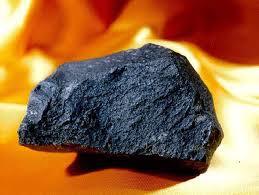
This rock was found near the mouth of a volcano. What type of rock is this?
a)
Sedimentary
b)
Igneous
c)
Metamorphic
4.
What type of event will occur at this boundary?
a)
Earthquake
b)
Volcano Eruption
c)
Tornado
d)
Mountain Building
5.
The constant, slow movement of plates on the Earth's surface is probably caused by...
a)
earthquakes
b)
heat
c)
volcanoes
d)
rocks
6.

Which type of rock is made from lava or magma cooling?

a)

igneous

b)

sedimentary

c)

metamorphic

7.
This rock is made from tiny pieces of other rocks that settled to the bottom of a valley millions of years ago. What type of rock is this?
a)
Sedimentary
b)
Igneous
c)
Metamorphic
8.
Which of these often occur as the Earth's crustal plates move?
a)
earthquakes
b)
floods
c)
tornadoes
d)
hurricanes
9.
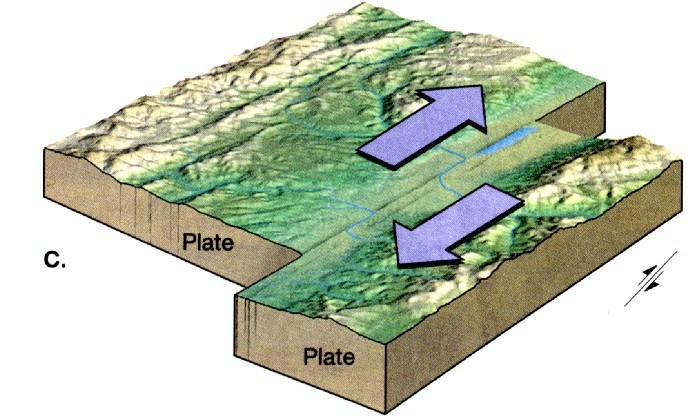
What type of plate boundary is this?
a)
Transform
b)
Convergent
c)
Divergent
d)
Plate
10.
After lots of time, pressure, and heat, you get this kind of rock. What type of rock is this?
a)
Sedimentary
b)
Igneous
c)
Metamorphic
11.
What is molten rock that has formed deep within the Earth?
a)
Hot Spot
b)
Magma
c)
Lava
d)
Volcano
12.
Which type of rock is made by small bits of rock, mud, or sand compacted and cemented together?
a)
Coal
b)
igneous
c)
metamorphic
d)
sedimentary
13.

Which type of rock is made from magma cooling inside Earth?

a)

cool rock

b)

intrusive igneous

c)

non-foliated metamorphic

d)

sedimentary

14.

Fossils are found in ____________ rocks.

a)

metamorphic

b)

magma

c)

igneous

d)

sedimentary

15.
___________________ rock means FIRE and is formed from melted rock either from magma below Earth's crust or from lava above it
a)
sedmetary
b)
igneous
c)
metamorphic
d)
magma
16.
Lava which cools on Earth's surface forms an
a)
metamorphic rock
b)
intrusive igneous rock
c)
extrusive igneous rock
d)
foliated metamorphic rock
17.
Each rock type can follow only one pathway of the rock cycle.
a)
True
b)
False
18.
An igneous rock containing large crystals is most likely a(n)
a)
Chemical Rock
b)
Foliated Rock
c)
Extrusive Rock
d)
Intrusive Rock
19.

what is the rock cycle.

a)

molten rock that is stored underground.

b)

rock material that forms where rocks are broken down into smaller pieces.

c)

a process that changes one type of rock into another type of rock.

20.

The process by which the ocean floor sinks beneath a deep-ocean trench and back into the mantle is known as _______

a)

convection.

b)

continental drift.

c)

subduction.

d)

conduction.

21.
Molten material that reaches the surface.
a)
Earthquake
b)
Tsunami
c)
Magma
d)
Lava
22.

What is the correct order (starting from the surface) of Earth’s layers?

a)

crust, outer core, inner core, mantle

b)

mantle, outer core, inner core, crust

c)

crust, mantle, outer core, inner core

d)

outer core, inner core, crust, mantle

23.
A live volcano
a)
Dormant volcano
b)
Active volcano
c)
Extinct volcano
d)
Shield volcano
24.
What are the two types of crust?
a)
continental and oceanic
b)
ocean and basin
c)
lower and upper
d)
thick and thin
25.
What is Pangaea?
a)
the name of a German scientist
b)
the name of the super-continent that existed millions of years ago
c)
another name for continental drift
d)
the name of an ancient fossil
26.

Most geologists think that the movement of Earth’s plates is caused by _______

a)

convection.

b)

continental drift.

c)

subduction.

d)

conduction.

27.
A sleeping volcano
a)
Composite volcano
b)
Active volcano
c)
Extinct volcano
d)
Dormant volcano
28.
What are Tectonic Plates?
a)
A continent 
b)
The Trees in Vietnam 
c)
ThE PlaTES That MoVE uNdERGRound :)
d)
The Plates that move the Continents
29.
This layer of Earth is the thickest part
a)
crust
b)
outer core
c)
mantle
d)
inner core
30.

The place where two plates come together is known as a _______

a)

transform boundary.

b)

divergent boundary.

c)

convergent boundary.

d)

rift valley.

31.
A dead volcano, one that is unlikely to erupt again
a)
Dormant volcano
b)
Extinct volcano
c)
Shield volcano
d)
Caldera
32.
One common use for the igneous rock granite is...
a)
building material
b)
cutting tools
c)
abrasion in polishing
d)
cement
33.

Below is a picture of sea-floor spreading. How are the ocean crusts moving?

a)

Converging

b)

Diverging

c)

Sliding

d)

No movement

34.

What is the active volcano area around the Pacific Rim called?

a)

Hot Spots

b)

Pacific Ocean

c)

Ring of Fire

d)

Hawaii

35.

Where is magma located?

a)

above ground

b)

below ground

c)

in the stratosphere

d)

in the thermosphere

36.
One common use for the igneous rock obsidian is...
a)
building material
b)
cutting tools
c)
abrasion in polishing
d)
cement
37.

Where is lava located?

a)

above ground

b)

below ground

c)

in the core

d)

in the mantle

38.
What is the definition of dormant?
a)
sleeping
b)
extinct
c)
active
d)
invisible
39.
What do you call a large crater formed by the collapse of a volcano?
a)
Caldera
b)
Lava Plateau
c)
Composite Volcano
d)
Shield Volcano
40.

Which of the following is responsible for Earth's crust moving?

a)

Convection Currents

b)

Dynamo Effect

c)

Great Pressure

d)

Gravitational pull from the Sun