
 Worksheets
Communication
Total questions: 30
Worksheet time: 19mins
The four elements of communication are:
Message, sender, receiver and feedback
Sender, message and receiver
Message, feedback, verbal and nonverbal
Books, television, computers and radio
You can help control prejudice by:
believing your first impression and not allowing others to influence your thoughts.
believing only what your parents taught you about other races.
evaluating all information before making a judgement.
doing all of the above.
Good listening skills include:
a message, a sender, and a reveiver.
labeling, cultural sensitivity, and talking slowly.
verbal message, written communication and a receiver
showing interst, hearing the message, and not interrupting
It is a communication between individuals in a personal relationship which builds through time and involves their thoughts and feelings to a certain level.
Intrapersonal communication
Public communication
Interpersonal communucation
Small group communication
In this type of communication you think and learn about yourself, talk and reason with yourself, and evaluate yourself.
Public communication
Interpersonal comunucation
Online communication
Intrapersonal communication
In this communication, you think and learn about each other, talk and reason with each other, and evaluate each other.
Intrapersonal communication
Interpersonal communication
Online communication
Machine-assisted communication
You meet with your group mates to talk about your project. What type of communication do you have?
Intrapersonal communication
Interpersonal communication
Small group communication
Public communication
Having a face-to-face conversation with your friend is an example of what type of communication?
Intrapersonal communication
Interpersonal communication
Small group communication
Public communication
In this principle of communication, all elements interact and affect each other.
Communication has no opposite.
Communication is dynamic.
Communication is unrepeatable and irreversible.
Communication is competence-based.

Essence of communication is
intent implementation impact
thoughts feelings and emotions
sharing caring and progressing
interaction and reaction

How we sit, stand, and use facial expressions all send nonverbal messages.
True
False
Emotional intelligence is ________________________________.
being smart about emotional situations
the ability to understand, use, and manage our emotions.
never getting angry
A high EQ can predict success in social and emotional situation, help us build strong relationships, make good decisions, and deal with difficult situations.
True
False
Emotion and mood are difficult to control. We DO NOT have the power to decide what mood is right for a situation, and then to get into that mood.
True
False

What emotion are the eyes showing?
Playful
Comforting
Irritated
Boring
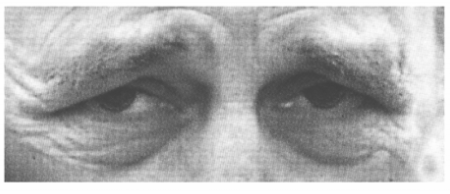
What emotion are the eyes showing?
Terrified
Upset
Arrogant
Annoyed
Listening improves business by
Increases interpersonal trust
Encourages timely feed back
Increases perceptions of integrity
improves costumer service and loyalty
All of the above
What is communication?
Two people talking
Asking questions
Expressing information that is clearly understood
Expressing information that is not clearly understood
When the person receiving a message interprets it the same way the sender meant it, it is __________________ communication.
good
misunderstood
effective
confusing
Our facial expressions, tone of voice, movement, appearance, eye contact, gestures, and posture are called _____________________.
verbal communication
nonverbal communication
65% of communication is ______________________.
verbal
nonverbal
True or False?
Sometimes our body language can send a message that is different from what we meant to say.
True
False
What is a misunderstanding?
when two people agree on something
when someone takes something in a way that it was not meant to be taken
a fight
a disagreement
What is one way to avoid a misunderstanding?
send the same verbal and nonverbal message
be specific
ask questions
all of the above
True or False?
Asking questions dramatically improves your understanding.
True
False
What is the player's name on first base?
What
I Don't Know
Who
What is the player's name on third base?
What
I Don't Know
Who

