
 Worksheets
OAT 3 Analysis Task Revision
Total questions: 72
Worksheet time: 2hrs 55mins


What is the main purpose of chemosynthesis?
To make chemicals
To make food
To make oxygen
To make sunlight
Chemosynthesis is the
conversion of carbon into sugars and nutrients by bacteria in dark places. They use hydrogen gas, hydrogen sulfide and methane gas as a source of energy, relies on sunlight.
conversion of carbon into sugars and nutrients by bacteria in dark places. They use hydrogen gas, hydrogen sulfide and methane gas as a source of energy, rather than sunlight.
conversion of carbon into sugars and nutrients by bacteria in dark places. They use hydrogen gas, hydrogen sulfide and methane gas as a source of energy, with little to no sunlight.
conversion of carbon into sugars and nutrients by bacteria in dark places. They use hydrogen gas, hydrogen sulfide and methane gas as a source of energy, with some sunlight.
Photosynthesis is the
conversion of carbon dioxide and water into sugars and oxygen by bacteria- with help of light
conversion of methane gas and water into sugars and oxygen by plants - with help of light
conversion of carbon dioxide and water into sugars and oxygen by plants - with little to no light
conversion of carbon dioxide and water into sugars and oxygen by plants - with help of light
A difference between photosynthesis and chemosynthesis
Photosynthesis doesn't use light and chemosynthesis does
Photosynthesis makes sugar and chemosynthesis doesn't
Photosynthesis uses light and chemosynthesis doesn't
Photosynthesis doesn't make sugar and chemosynthesis does
What is a similarity in chemosynthesis and photosynthesis
they both produce carbon dioxide
they both use light
the both are used by plants
they both produce energy and sugar

Position that an organism occupies based on what it eats
Producer
Trophic level
Heterotroph
Consumer
How much energy moves up each trophic level?
5%
10%
15%
20%
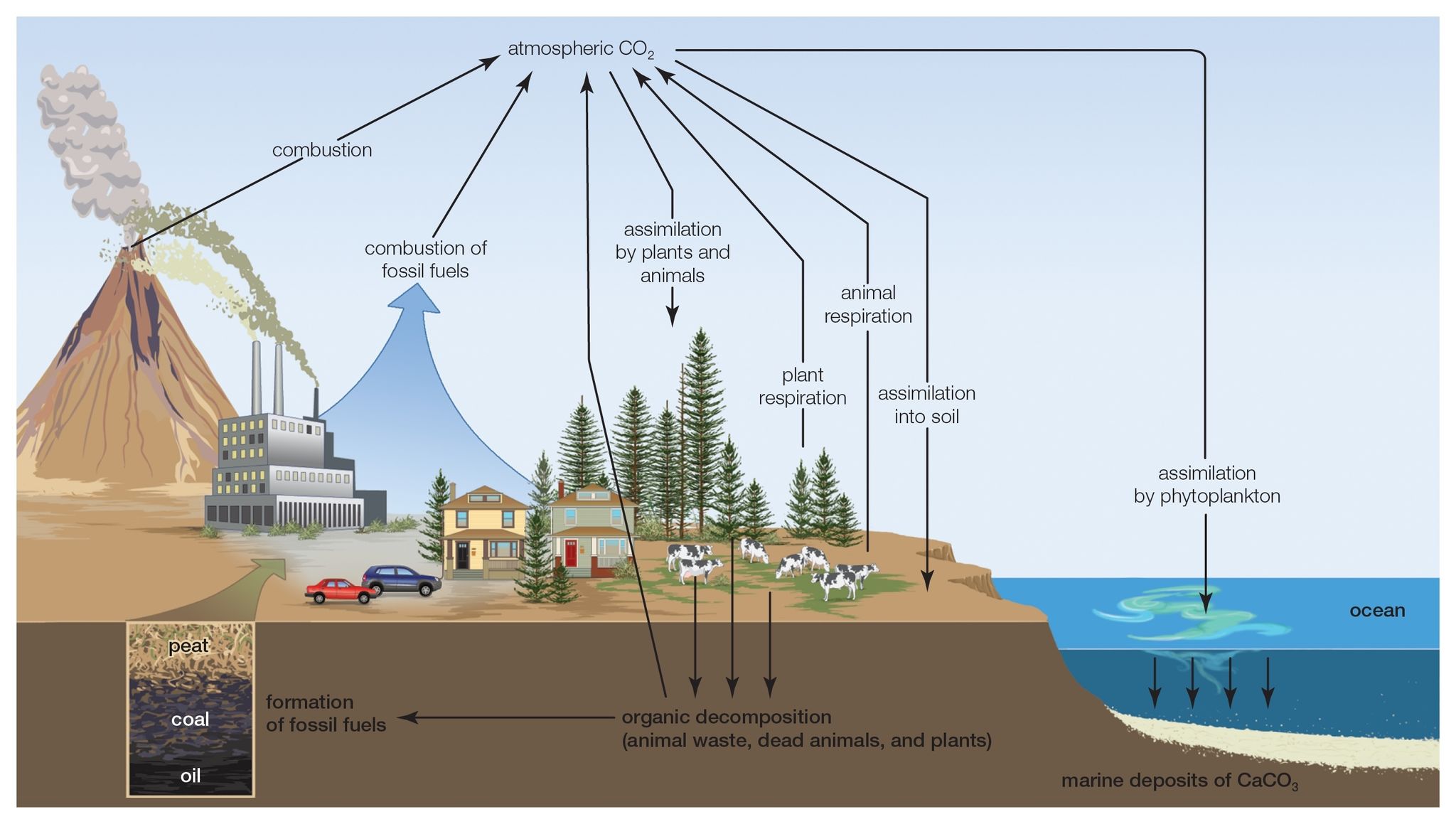
Which of the following absorb carbon dioxide from the atmosphere?
Plants
The ocean
Sedimentary rocks
all of these

A ____________ is a reservoir that takes up a chemical element and stores it for a long period of time.
Sink
Source
Bucket
Location
Choose the correct process described: Plants and animals break down sugars and metabolize them into CO2 , water and ATP for energy
Respiration
Photosynthesis
Combustion
Volcanic eruptions
Which gas makes up 78% of our atmosphere?
Oxygen
CO2
Nitrogen
Water vapor
Which nitrogen cycle process breaks down atmospheric nitrogen (N2) and combines it with hydrogen or oxygen using bacteria or lightning strikes
Nitrogen fixation
Ammonification
Nitrification
Dentrification
After living organisms use nitrogen, decomposer bacteria convert it back to ammonia for plants to use through this process
Nitrogen fixation
Ammonification
Nitrification
Dentrification


Which process removes carbon dioxide from the atmosphere?
combustion
cellular respiration
photosynthesis
decomposition
Which cycle DOESN'T have an atmosphere component (part)?
carbon
nitrogen
phosphorus
water

What is the process of rain, snow, or hail falling from the sky?
evaporation
condensation
precipitation
runoff


The process where rocks are broken down over time by wind and water, releasing phosphorus.
combustion
corrosion
deposition
erosion

What is the correct formula for nitrogen gas found in the atmosphere?
N2
NO3-
NH4+
NO2-

Photosynthesis is an important part of the ______ cycle
Carbon
Water
Phosphorus
Nitrogen

Too much nitrogen can lead to _____ (choose all that apply)
increased cancer risk
acid rain
increase in greenhouse gases
algae bloom
Nitrogen is an essential ingredient in _______ (choose 2)
carbohydrates
proteins
lipids
nucleic acid
Phosphorus is a greenhouse gas
true
false

Phosphorus is released from rock through ________
decomposition
evaporation
weathering
transpiration
Why do living things need nitrogen?
To get energy
To make amino acids
To make proteins
To make proteins AND amino acids
Too much phosphorus in waterways (rivers, lakes) can lead to___________.
eutrophication
Nothing
Death
diseases
Phosphorus, plays a key role in ________________production and ______________ production.
sugar, starch
water, waste
RNA, ATP
DNA,ATP
What does the term ENSO refer to?
El Nine/ Nothern Oscillation
Enchiladas Not Sweetened Horita
La Nina/ Southern Oscillation
El Niño/ Southern Oscillation
One consequence of El Niño is _______ in Southeast Asia and Australia.
stronger Trade Winds
flooding
strong winter storms
drought

The image is of a(n):
El Nino event
La Nina event
Non-El Nino (normal conditions)

The picture below is of a(n) ____ event.
Non-El Nino (Normal)
El Nino
La Nina

The picture represents a(n) ___ event.
El Nino
La Nina
Non-El Nino (normal conditions)
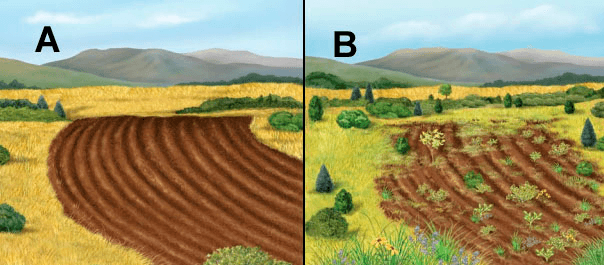

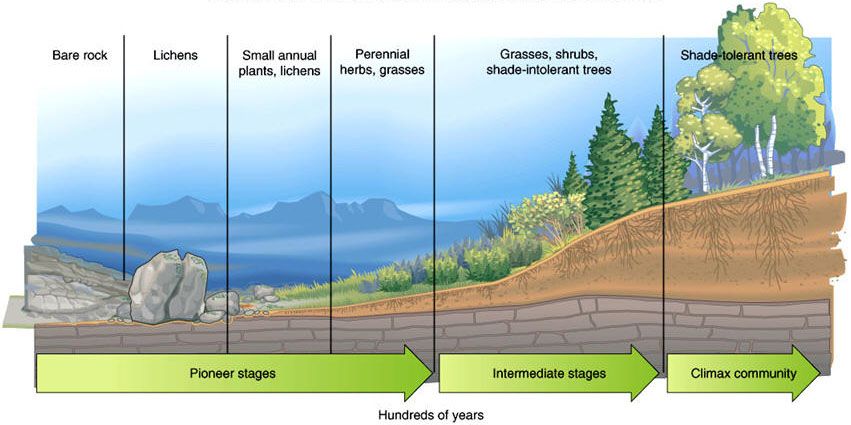

Ecological succession can be described as
A change in weather
The dominant species in one particular area
A gradual change in plant and animal life in an ecosystem over time
Species that survive best when there is little or no competition in an area
What is one way secondary succession differs from primary succession?
Secondary succession is typically quicker than primary succession
Secondary succession is typically slower than primary succession
Secondary succession only occurs in mountains, primary succession only occurs in wetlands
Secondary succession is the gradual change in plant species, while primary succession is the gradual change in animal species
A community of moss and lichens growing on an outcrop of a rock is an example of
A behavioral adaptation
A climax community
Primary succession
Secondary succession
Which of the following represents secondary succession?
Moss growing on top of rocks
Plants growing in a forest that was destroyed by fire
Plants growing on sand dunes
Plants growing on a new volcanic island that formed in the ocean
Which statement about pioneer species is TRUE?
Pioneer species require soil to grow
Pioneer species are organisms made up of only one cell
Pioneer species thrive during the early stages of ecological succession
Pioneer species, such as hardwood trees, thrive during the final stages of ecological succession

This animation represents which of the Milankovitch Cycles?
Eccentricity
Precession
Obliquity

This animation represents which of the Milankovitch Cycles?
Eccentricity
Precession
Obliquity

This animation represents which of the Milankovitch Cycles? (tilt of the Earth's axis)
Eccentricity
Precession
Obliquity

