wayground logo

Free Printable Worksheets

Font size

S
M
L
XL
Worksheets

Wastewater treatment

Total questions: 25

Worksheet time: 23mins

Name
Class
Date
1.

The process of settling down of particles of a solid in a liquid is

a)

Sublimation

b)

Sedimentation

c)

Filtration

d)

Decantation

2.

The solubility ____________ with increase in temperature.

a)

doesn't change

b)

decreases

c)

increases

3.
The diagram shows the apparatus for separating soil and water. What are the labelled parts?
a)
A = distillate, B = filtrate
b)
A = filtrate, B = residue
c)
A = residue, B = filtrate
d)
A = residue, B = distillate
4.

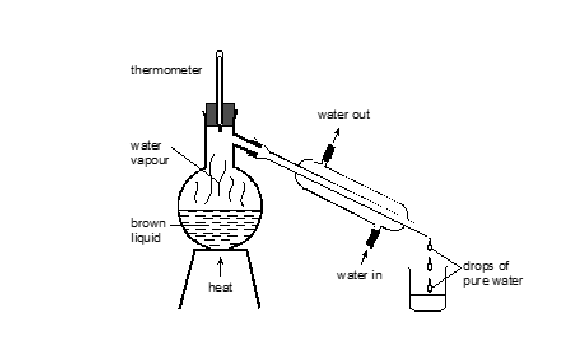
Which separation technique uses the apparatus shown in the diagram?

a)

filtration

b)

evaporation

c)

distillation

d)

chromatography

5.
Filtration can be used to separate...
a)
an insoluble solid from a solution
b)
a soluble solid from a solution
c)
a dissolved solid from a solution
6.

Sawdust is not soluble in water. If, accidentally some particles of sawdust drop into a glass of water. How would you separate them from water?

a)

Decanting

b)

Filtering

c)

Sieving

d)

Distillation

7.

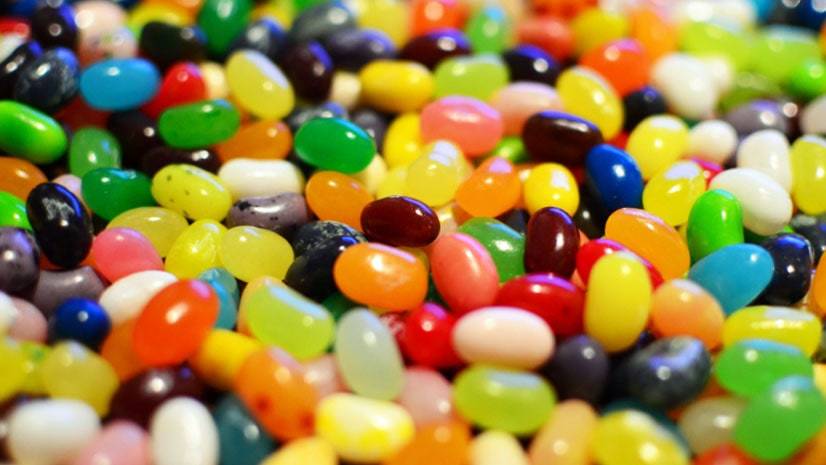
You had these materials together but after performing a separation technique, you have these five groups. Which separation technique did you use?

a)

Distillation

b)

Decanting

c)

Paper chromatography

d)

Sieving

8.
Which technique is shown the diagram below
a)
seiving
b)
filtration
c)
decanting
d)
crystallization
9.
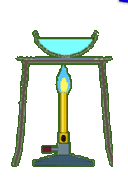
Which one of the following is the name for separation technique in the picture below
a)
distillation
b)
dissolving
c)
evaporation
d)
decanting
10.
An example of a mixture is 
a)
Water and oil
b)
Cereal and Milk 
c)
Sand and water 
d)
All of the above
11.
What is a mixture?
a)
A chemical combination of two or more different substances.
b)
A physical combination of two or more different substances.
c)
A chemically pure substance.
d)
A special type of solution
12.

What is the purpose of Filtration?

a)

Separating and insoluble solid from a liquid

b)

Separation of a mixture of 2 solids

c)

Separates heavier substances from a suspension

13.
How would you separate a mixture of two liquids that mix (miscible)  together perfectly. 
a)
Filtration
b)
Magnetism
c)
Chromatography
d)
Distillation
14.
How could pesticides get into lakes and streams?
a)
too much could be used
b)
it could be sprayed too close to a stream
c)
rain could wash pesticides into a stream
d)
all of the above
15.
Select the correct order for the water treatment process.
a)
Sedimentation - Chlorination - Filtration
b)
Sedimentation - Filtration - Chlorination
c)
Filtration - Chlorination - Sedimentation
d)
Filtration - Sedimentation - Chlorination
16.
What is the first step in the water treatment process?
a)
coagulation
b)
filtration
c)
flocs
d)
concentation
17.
During secondary treatment in the aeration tanks, what is working on the sewage waste?
a)
micro-organisms
b)
humans
c)
air titration
d)
oxidation/reduction
18.
What happens after second filtration?
a)
coagulation
b)
first filtration
c)
flocs
d)
chlorination
19.
What does chlorination do to the water?
a)
Removes microorganisms
b)
Cleans the water
c)
Makes the water taste nice
d)
Removes twigs and sediment
20.
What chemical is added during tertiary treatment at a wastewater treatment facility to give a final "polishing" of the waste stream?
a)
chlorine
b)
sodium bicarbonate
c)
methane gas
d)
CO2
21.
What are two things that water treatment plants need to do?
a)
Clean and disinfect the water
b)
Boil and evaporate the water
c)
Remove the animals and plants
d)
Add chemicals and remove pesticides
22.

What is a sewage treatment plant?

a)

The place where water is cleaned, filtered and tested before re-entering the water cycle.

b)

The place where water is cleaned, filtered and tested before going to our houses.

c)

The network of pipes that carry sewage (dirty water) from our houses.

d)

The place where water is bottled for drinking.

23.

The following are sources of industrial wastewater, EXCEPT:

a)

Landfill

b)

Resident Building

c)

Factories Building

d)

Refinery Plant

24.

Effluent from _____________ treatment is of a high standard and suitable for reuse.

a)

Preliminary

b)

Primary

c)

Secondary

d)

Tertiary

25.

Which one is the characteristic of wastewater?

a)

Does not contain pathogenic micro-organisms

b)

Safe to health

c)

Used water from residential, commercial, and industrial areas

d)

Free from breeding sites for insects, pests and micro organism