
 Worksheets
Static electricity
Total questions: 20
Worksheet time: 40mins

What are all substances made from?
atoms
cells

Atoms contain three types of subatomic particles. What are they called?
electrons
protons
neutrons
nucleus
shells

What charge do electrons have?
positive charge
negative charge
neutral charge
An atom has an equal number of protons and electrons. What is the overall charge of an atom?
positive charge
negative charge
neutral charge
If an atom gains an electron, what charge will the atom have?
positive charge
negative charge
neutral charge
If an atom loses an electron, what charge will the atom have?
positive charge
negative charge
neutral charge

What force results from one material rubbing against another material?
Friction
weight
upthrust
resistance

If two insulating materials are rubbed together, they become charged. Friction causes electrons to move from one material to the other material. The material that gains electrons becomes __________ charged.
positively
negatively
neutral
If two insulating materials are rubbed together, they become charged. Friction causes electrons to move from one material to the other material. The material that loses electrons becomes __________ charged.
positively
negatively
neutral
The charge that builds up when an insulating material gains or loses electrons is called ______ electricity.
static
current

A charged object has an electric field around it. What is an electric field?
the area surrounding a magnet that can attract or repel other magnets
the area surrounding a charged object that can attract or repel other charged objects
the area surrounding a massive object where another object experiences a force

A positively charged object will ________ another positively charged object that is within its electric field.
attract
repel
nothing
A positively charged object will ________ a negatively charged object that is within its electric field.
attract
repel
nothing
When two charged objects are brought together, they can either attract or repel each other. What is the rule of attraction and repulsion for charged objects?
All charges attract each other.
All charges repel each other.
Opposite charges attract each other, and like charges repel each other.
Opposite charges repel each other, and like charges attract each other.


Rubbing a balloon on your jumper transfers electrons from the jumper to the balloon. The balloon is now charged. will the balloon be __________ to the jumper
attracted
repelled


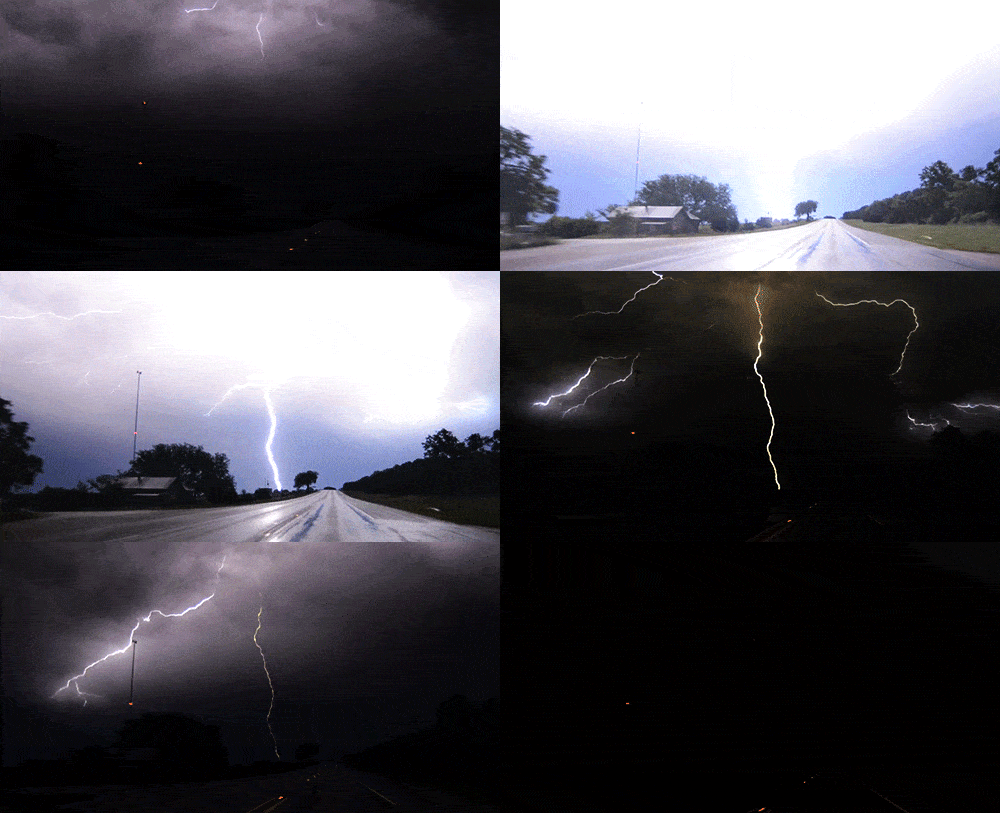
Lightning occurs because ___.
the negative charges at the bottom of clouds are attracted to the positive charges on the ground.
the positive charges at the bottom of clouds are attracted to the negative charges on the ground.
the positive and negative charges inside clouds are attracted to each other
All of these reasons are correct.

Looking at the table above, what would happen if you rubbed silk on glass?
The negative particles in the glass would transfer to the silk
The negative particles in the silk would transfer to glass
The positive particles in the glass would transfer to the silk
The positive particles in the silk would transfer to the glass

