
 Worksheets
Quiz: Introduction to MSE
Total questions: 53
Worksheet time: 29mins
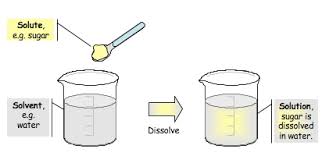
The ability of sugar to dissolve in water is called
malleability
Density
State
solubility
Which of the following properties of minerals is described with the Mohs scale?
luster
fracture
fluorescence
hardness
Which of the following is NOT a property of minerals?
ore
luster
fracture
color
Diamond has a hardness of 10, a waxy luster, is pale blue in color, and streaks white. Using this information, why are diamonds widely used in the construction industry?
A diamond's luster makes it a good material for use in windows
A diamond's hardness makes it a good tool to cut other materials.
A diamond's color can be used in paint to create a pale blue color.
A diamond's white streak can be used to make marks on buildings.
Which of the following minerals is the hardest and is a 10 on Mohs scale?
talc
quartz
topaz
diamond
Lana is comparing two minerals by shining a bright light on them and seeing how much is reflected off. What is Lana measuring?
color
streak
luster
hardness
What is a rock that contains a metal or other useful mineral that can be mined and sold at a profit?
an alloy
a gem
an ore
a crystal

The picture shows the mineral talc. Talc is often ground into dust and used in many types of powders. Which sentence is most likely true?
Talc is easily stretched.
Talc is easily scratched.
Talc is very strong and hard.
Talc is very flat and smooth.

You can see through _ _ _ _ _ _ _ _ _ _ _ materials. They let light through and are completely clear.
glass
opaque
transparent
translucent

Imagine you are building a table. Which two properties of wood make it a good material to use?
strong
flammable
opaque
rigid
flexible

An electrical _ _ _ _ _ _ _ _ _ allows electricity to pass through it.
insulator
conductor

When a solid dissolves in a liquid, a _ _ _ _ _ _ _ _ is formed.
solushun
solution
mixture
soluble
Transparent and brittle (breaks easily)
Metal
Sponge
Glass
Plastic
Shiny and conducts electricity
Glass
Plastic
Rubber
Metal
Flexible and elastic
Fabric
Glass
Rubber
Wood
Weak and absorbent
Fabric
Cardboard
Plastic
Glass
Waterproof material
Plastic
Wood
Fabric
Paper
These materials can be easily shaped, stretched, and are sometimes elastic.
metals
polymers
ceramics/glass
composites
Material can conduct heat and electricity, can be hammered into a shape, or drawn into a wire.
metals
polymers
ceramics
glass
A material’s ability to resist denting or scratching is called:
toughness
hardness
tension
torsion
Toughness is the ability to absorb energy and:
twist
resist fracture or breaking
bend
dent
Rusting is an example of a(n)
chemical property
physical property
toughness
amorphous property
This optical property allows some light to pass through
transparent
translucent
opaque
luster

Name the following mechanical property
shear
torsional
compressional
tensional

Name the following mechanical property
Shear
compressional
torsional
tensional
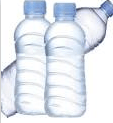
What is this material?
Plastic
Metal
Glass
Cardboard

Which of these are properties of glass?
Bendy
Transparent
Dull

Mass is -
the amount of matter in an object
the density of a material
the amount of force a material has
the concentration of matter in an object.
Bob found a metal can of soup. Which list describes the most likely physical property of the can?
shiny, hard, reflective
very soft, conducts heat
conducts electricity, square
magnetic, flexible, very soft
Which object has a physical property that conducts electricity?
foam cup
metal fork
plastic knife
wooden spoon
The strength of a material which resists force when twisted is:
compression strength
tensile strength
torsion strength
shear strength
Pulling on a rubber band is an example of what kind of force?
tension
torsion
compression
shear
Ceramics are be made of ionic bonds, so they must contain:
only metal elements
only non-metal elements
only metalloid elements
both metal and non-metal elements

Name that material property
Malleability
Tough
Strong
Hard

Name that material property
Elasticity
Stretchability
Flexible
Strong

The ability of a material is to resist wear, scratching and indentation is called...
Hardness
Brittle
Chemical Resistant
Corrosion

The ability to resist being squashed is called...
Toughness
Interfacing
Compressive strength
Embedding

A material that cannot absorb energy and will result into breaking into pieces is called...
Brittle
Stiff
Tough
Durable
Stiffness is when a material can....
Hold its shape without bending
Hold its shape without melting
Hold its shape without erodding
Hold its shape without breaking

The quality of lacking transparency is called...
Opacity
Solid
Translucent
Clear
What is the name for a material that can easily transfer heat?
A thermal insulator
A thermal conductor
An electrical insulator
An electrical conductor

