wayground logo

Free Printable Worksheets

Font size

S
M
L
XL
Worksheets

Weather

Total questions: 45

Worksheet time: 1hrs 2mins

Name
Class
Date
1.

A front is

a)

where warm air is cooling at earth's surface

b)

a boundary where hot and cold air are separating

c)

a boundary where two different air masses meet

d)

where cold air is rising and forming rain clouds

2.

Air masses are named for ______.

a)

the type of air they contain

b)

animals

c)

people

d)

where they form

3.
A cold front usually brings what kind of weather?
a)
snow  
b)
sunny and fair
c)
heavy rain and/or thunderstorms 
d)
 cool and dry 
4.

What is an air mass?

a)

a place where weather always changes in an extreme way

b)

a large body of air with the same temperature and moisture

c)

any cloud that produces rain, sleet, snow or hail

d)

any kind of air, as long as it is always wet and freezing

5.

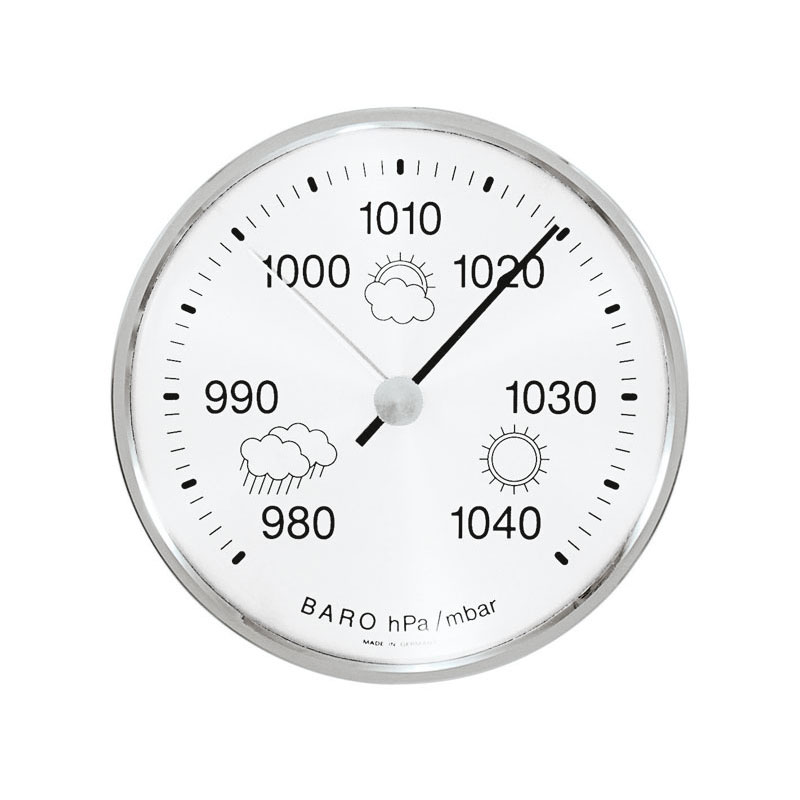
What is the purpose of a barometer?

a)

Tells you that it is going to rain.

b)

Measures the amount of wind.

c)

Measusres the amount of clouds in the sky.

d)

It measure the amount of pressure in the air.

6.
Which weather tool measures wind?
a)
anemometer
b)
therometer
c)
wind vane
d)
barometer
7.
What does this symbol on a weather map indicate? 
a)
High pressure system
b)
Low pressure system
c)
Cold front
d)
Warm front
8.
What does this symbol indicate on a weather map? 
a)
High pressure system
b)
Low pressure system
c)
Cold front
d)
Warm front
9.

What would you expect from a Continental Polar air mass?

a)

moist, warm air

b)

dry, cold air

c)

dry, warm air

10.
What would you expect from a Maritime Tropical air mass? 
a)
dry, warm air
b)
moist, cold air
c)
moist, warm air
11.
Cold and warm masses meet, but neither can move the other is called a ______________________
a)
warm front
b)
cold front
c)
stationary front
d)
occluded front
12.
A warm air mass is caught between two cooler air masses is called a ________________________.
a)
warm front
b)
cold front
c)
stationary front
d)
occluded front
13.

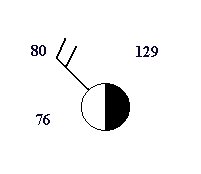
What is the temperature for the following station model?

a)

4 ºF

b)

76 ºF

c)

80 ºF

d)

129 ºF

14.

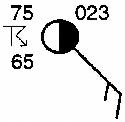
What is the dewpoint for the following station model?

a)

10 ºF

b)

23 ºF

c)

65 ºF

d)

75 ºF

15.

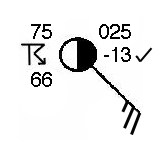
What is the wind speed for the following station model?

a)

10 knots

b)

15 knots

c)

20 knots

d)

25 knots

16.

What is the station model code for a barometric pressure of 1019.5 mb?

a)

101

b)

195

c)

019

d)

119

17.
Dew Point is the
a)
temperature air cools down to reach condensation (or turn into a liquid)
b)
temperature where ice melts to liquid water
c)
temperature where ice turns directly into water vapor
d)
time of day when dew on the ground disappears
18.
If the air is "saturated", that means:
a)
the air is full of water
b)
the air is partially full of water
c)
it's amount of water vapor in the atmosphere right now
d)
how much liquid water it potentially can hold
19.
What is relative humidity?
a)
humidity that is related to other humidity
b)
condensation
c)
clouds
d)
the amount of water in the air compared to the amount of water the air can hold - a ratio
20.
Practically all clouds & storms occur in this layer of the atmosphere.
a)
Stratosphere
b)
Thermosphere
c)
Troposphere
d)
Mesosphere
21.
Wind on Earth, including massive storms like hurricanes, are deflected. What is the cause of this phenomena?
a)
Red Shift
b)
Doppler Effect
c)
Coriolis Effect
d)
Blue Shift
22.

If the air temperature is 20o and the relative humidity is 58%, what is the dewpoint?

a)

5o

b)

12o

c)

15o

d)

38o

23.

Which of the following is NOT a layer of the atmosphere?

a)

Hydrosphere

b)

Troposphere

c)

Stratosphere

d)

Thermosphere

24.

Storms generally form in

a)

low pressure systems

b)

high pressure systems

c)

the middle of warm air and cold air

d)

the boundary between low and high pressure

25.

Weather instrument that orbit the Earth to monitor the weather and climate of the Earth

a)

weather radar system

b)

weather satellites

c)

doppler radar

d)

radiosondes

26.

Weather satellites can detect the following EXCEPT

a)

can detect thermal energy

b)

can give good images of cloud cover

c)

can measure wind speed and direction in an area

d)

can be used to determine a clouds temperature and classification

27.

Connect points of equal atmospheric pressure and temperature

a)

station model

b)

isobars

c)

isotherms

28.

A pressure systems that typically brings clear skies and light winds

a)

high pressure

b)

low pressure

c)

cold front

29.

The study of climate and weather in a region.

a)

geology

b)

biology

c)

astronomy

d)

meteorology

30.
Which gas in our atmosphere is most abundant?
a)
Argon
b)
Oxygen
c)
Nitrogen
d)
Carbon Dioxide
31.
The air in the troposphere has a greater density than the air in any other layer of the atmosphere,
a)
True
b)
False
32.
What is the percentage of oxygen in Earth's atmosphere?
a)
1%
b)
21%
c)
78%
d)
90%
33.
Which layer of the atmosphere contains the greatest amount of water vapor?
a)
Thermosphere
b)
Troposphere
c)
Mesosphere
d)
Stratosphere
34.
What causes the temperature to increase in the stratosphere?
a)
Nitrogen
b)
Ozone
c)
Water Vapor
d)
carbon dioxide
35.
The layers of the atmosphere are classified according to changes in _________.
a)
altitude
b)
density
c)
composition
d)
temperature
36.

What is the direct cause of rising sea levels?

a)

Melting Sea Ice

b)

Melting Land Ice

c)

Climate Change

37.
Which of the following is the best conclusion that can be made from this graph?
a)
atmospheric carbon dioxide levels have been decreasing since 1960
b)
Hawaii has a lot of carbon dioxide
c)
humans have been working hard to decrease carbon dioxide levels
d)
atmospheric carbon dioxide levels have increased steadily since 1960
38.

Which of the following have been changed or altered due to climate change ?

a)

droughts

b)

flooding

c)

melting of polar ice caps

d)

all of the above

39.
 What is the greenhouse effect?
a)
The warming of a planet due to trapped radiation.
b)
The cooling of Earth due to air pollution.
c)
The heating of a solid, such as a rock.
40.
What do humans do that releases greenhouse gases into the atmosphere?
a)
Burn fossil fuels (like gas and coal)
b)
Build cement buildings
c)
Ride bikes and use solar energy
d)
Compete in the Olympics
41.
Which of the following is an example of a greenhouse gas?
a)
Carbon Dioxide
b)
Nitrogen
c)
Oxygen
d)
Neon
42.
How does the concentration of carbon dioxide in the atmosphere affect climate?
a)
As carbon dioxide concentrations increase, temperatures increase
b)
As carbon dioxide concentration increase, temperatures decrease.
c)
Carbon dioxide concentrations have no affect on climate
d)
As carbon dioxide concentrations increase, temperatures become more random.
43.

A warming of the water of the Pacific that can cause droughts

a)

El Nino

b)

La Nina

c)

El Jefe

d)

Cylcone

44.

Westward moving tropical cyclones created by warm air rising off the equator

a)

Tsunami

b)

Monsoon

c)

Hurricane

45.

Large wave caused by underwater earthquake

a)

Tsunami

b)

Monsoon

c)

Hurricane