wayground logo

Free Printable Worksheets

Font size

S
M
L
XL
Worksheets

Fall Final

Total questions: 89

Worksheet time: 1hrs 13mins

Name
Class
Date
1.
This image shows the:
a)
Geocentric Solar System
b)
Heliocentric Solar System
2.
What two forces help planets stay in their orbits? 
a)
Gravity and Force
b)
Gravity and Inertia
c)
Doppler effect and Gravity
d)
Inertia and Force 
3.
This person discovered moons on Jupiter, which helped to support the heliocentric theory 
a)
Aristotle
b)
Copernicus
c)
Ptolemy
d)
Galileo
4.
How does the Moon move around the Earth?
a)
The Moon revolves around the Earth
b)
The Moon revolves around the Sun
c)
The Moon revolves around the Earth and rotates on it’s axis at the same rate
d)
The Moon revolves around the Sun and rotates around the Earth at the same rate
5.
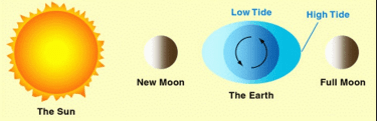
Which tide occurs during the Full or New Moon phase?
a)
Spring Tide
b)
Neap Tide
6.
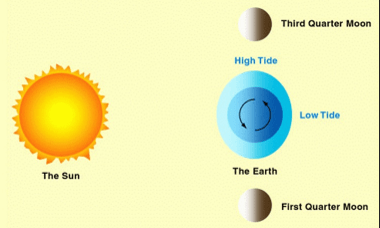
Which tide occurs during the quarter Moon phases?
a)
Spring Tide
b)
Neap Tide
7.

If the moon is roughly 3/4 illuminated we say it is in the _________________________ stage.

a)

Crescent

b)

New

c)

Gibbous

d)

Quarter

8.

If the moon is fully illuminated it is said to be a____________ moon.

a)

New

b)

Full

c)

Crescent

d)

Gibbous

9.

As the moon continues it's journey around the Earth, the portion we see will begin to grow smaller or ___________?

a)

Wane

b)

Grow

c)

Stay the same

d)

Wax

10.
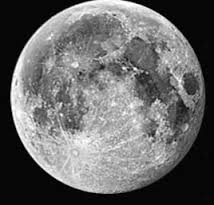
Name the moon phase
a)
First Quarter
b)
Last Quarter
c)
New Moon
d)
Full Moon
11.
What is a lunar month?
a)
The time from one new moon to the next new moon.  
b)
The time from one full moon to the next full moon. 
c)
The time it takes the moon to orbit the earth.
d)
The month of October .
12.

High tides and low tides each happen _____ times per day.

a)

4

b)

2

c)

1

d)

24

13.
What is in the center of the Heliocentric Model?
a)
Sun
b)
Comet 
c)
Jupiter
d)
Earth
14.
What planet is it?
a)
Jupiter
b)
Saturn
c)
Uranus
d)
Venus
15.
Jupiter, Saturn, Uranus, and Neptune are what type of planets?
a)
Gas Giants
b)
Ice Giants
c)
Terrestrial Planets
d)
Exterior Planets
16.
The four terrestrial planets all have
a)
Rocky surfaces
b)
Hot temperatures
c)
Deep atmospheres
d)
Large size
17.
The curved path in which a planet, satellite, or spacecraft moves in a circle around another object.  The path one object takes around another.
a)
rotate
b)
orbit
c)
moon
d)
revolve
18.
Almost Earth’s twin in size and mass, this planet has very thick atmosphere.
a)
Venus
b)
Mars
c)
Mercury
d)
Neptune
19.
This gas giant has a large storm in its atmosphere known as The Red Spot
a)
Jupiter
b)
Saturn
c)
Uranus
d)
Neptune
20.
Planets that are closer to the sun
a)
take more time to orbit
b)
take less time to orbit
21.
Which planet in our solar system is closest to the Sun?
a)
Earth
b)
Jupiter
c)
Mercury
d)
Saturn
22.
The moon is a natural  ______ of Earth.
a)
comet
b)
axis
c)
satellite
d)
space probe
23.
Which is the largest object in our solar system?
a)
Sun
b)
Jupiter
c)
Earth
d)
Pluto
24.
A ball of ice and dust with a tail of gas and dust pointing away from the sun.
a)
Asteroid
b)
Comet
c)
Moon
d)
Meteor
25.
A small rocky object orbiting the sun.
a)
Asteroid
b)
Comet
c)
Moon
d)
Meteor
26.
There is one star in our solar system.
a)
True
b)
False
27.
Which planet is tipped on its side nearly 90 degrees?
a)
Jupiter
b)
Saturn
c)
Uranus
d)
Neptune
28.
Which planet is the hottest planet because of its clouds?
a)
Venus
b)
Earth
c)
Mars
d)
Pluto
29.
Which planet is the largest?
a)
Mercury
b)
Venus
c)
Earth
d)
Mars
30.
Cell phones and televisions use this type of EM wave.  It has the longest wavelength with the lowest frequency.
a)
radio wave
b)
tv wave
c)
Gamma wave
d)
ultra violet
31.
Which portion of the electromagnetic spectrum includes the range of light that can be detected by the human eye? 
a)
ultraviolet light
b)
visible light
c)
infrared light
d)
x-rays
32.
Which of the following electromagnetic waves is given off as heat? 
a)
ultraviolet light
b)
x-rays
c)
gamma rays
d)
infrared rays
33.
The type of wave with the shortest wavelength and highest frequency.  This type of wave is extremely harmful.
a)
radio
b)
infrared
c)
gamma
d)
x ray
34.
Which is NOT a type of galaxy?
a)
Elliptical
b)
Spiral
c)
Oblong
d)
Irregular
35.
Where is our Solar System located in the Milky Way galaxy?
a)
Near the center
b)
Near the outside on one of the arms
36.
Which type of galaxy are the oldest and least bright?
a)
Spiral
b)
Elliptical
c)
Irregular
37.
In stars, which two elements provide their fuel source to provide heat and light?
a)
Oxygen and Hydrogen
b)
Hydrogen and Helium
c)
Carbon and Iron
d)
Magnesium and Cobalt
38.

How do astronomers measure how fast a galaxy is spinning?

a)

Infrared Waves

b)

It's centripetal force

c)

It's Doppler Shift

d)

It's centrifugal force

39.

Dark matter is a theoretical substance. What does this mean?

a)

Scientists have simply guessed that it exists

b)

There is evidence for its existence, but it hasn't been proven

c)

Scientists are certain that it exists

d)

Scientists are split 50/50 over whether it exists or not

40.

How would dark matter be different from the stars and planets we can see?

a)

It wouldn't reflect light

b)

It wouldn't emit radiation

c)

It wouldn't interact with the electromagnetic spectrum

d)

All of these

41.
Which of the following is evidence of the Big Bang Theory?
a)
Cavemen heard a loud bang at the beginning of time.
b)
The universe isn't moving
c)
The universe is expanding
d)
The universe is getting smaller
42.

Most of the universe is made of

a)

visible matter

b)

Invisible matter

c)

dark energy

d)

dark energy and dark matter

43.

Which subatomic particle has a positive charge?

a)

proton

b)

nuetron

c)

electron

d)

atom

44.

Which subatomic particle has a negative charge?

a)

proton

b)

neutron

c)

electron

d)

atom

45.

Which subatomic particle has a neutral (0) charge?

a)

proton

b)

nuetron

c)

electron

d)

atom

46.

A mineral that breaks into flat even pieces when hit with a rock hammer shows which of the following properties of minerals?

a)

Luster

b)

Cleavage

c)

Steak

d)

hardness

47.

Which term might be used to describe a minerals luster?

a)

Rectangular

b)

Heavy

c)

Glassy

d)

Magnetic

48.
Diamond has a hardness of ___ on Mohs Hardness Scale.
a)
1
b)
5
c)
8
d)
10
49.
How do you test the hardness of a mineral? 
a)
Throw it against a wall
b)
Step on it
c)
Scratch Test
d)
Kick it until it breaks
50.
How light is reflected off a mineral
a)
streak
b)
color
c)
luster
d)
fracture
51.
Which of these minerals is softer than glass?
a)
Topaz 
b)
Corundum 
c)
Calcite 
d)
Orthoclase 
52.

Which of the following is NOT a good characteristic to use to determine the identity of the mineral?

a)

Luster

b)

Streak

c)

Hardness

d)

Shape

53.

A rock deep within the Earth experiences extreme temperature and pressure. After a long period of time it becomes which rock?

a)

Magma

b)

Igneous

c)

Metamorphic

d)

Sedimentary

54.

What kind of igneous rock usually contains large crystals?

a)

clastic

b)

extrusive

c)

organic

d)

intrusive

55.

A rock that forms from many small fragments of other rocks is a(n)

a)

igneous rock

b)

metamorphic rock

c)

sedimentary rock

d)

extrusive rock

56.

The process by which metamorphic rock changes to igneous rock begins with

a)

melting

b)

erosion

c)

deposition

d)

crystallization

57.

To be classified as a mineral, a substance must satisfy this

requirement

a)

have a definite chemical composition

b)

naturally occurring

c)

be a solid

d)

all the above

58.
What characteristic do all renewable resources share?
a)
Produced by waste products
b)
Form underground from dead organisms.
c)
Replaced in a short period of time
d)
Allow energy to pass through them easily
59.
Which of the following is a fossil fuel?
a)
Wind
b)
Coal
c)
Solar
d)
Biomass
60.
The careful use of a resource is....
a)
recycling
b)
pollution
c)
depositing
d)
conservation
61.
The cleanest burning fossil fuel is ______.
a)
coal
b)
oil
c)
wind
d)
natural gas
62.
Water is renewable because it.......
a)
can be frozen
b)
important to all life
c)
can be replaced constantly
d)
can evaporate
63.
What is biomass? 
a)
energy from the sun
b)
energy from water
c)
energy from wind
d)
energy from plant and animal waste
64.
What is the area directly above the spot where the Earthquake actually occurs? (It is on Earth's surface.) 
a)
Epicenter
b)
Focus
c)
Fault
d)
Triangulation
65.
The Richter scale measures:
a)
the amount of radon gas released
b)
the movement of plates
c)
the strength of an earthquake
d)
the weight of tectonic plates
66.
Liquefaction is when...
a)
the soil behaves like liquid
b)
the ground becomes liquid
c)
magma rises to the surface
d)
buildings are damaged, crumbling like liquid
67.
How much bigger is a magnitude 8 earthquake compared to magnitude 7 one on the Richter Scale?
a)
1 time bigger
b)
10 times bigger
c)
100 times bigger
d)
1000 times bigger
68.
First waves to arrive at an earthquake
a)
P waves
b)
S waves
c)
surface waves
69.

Non-explosive, gently sloping volcano made of flat layers of lava

a)

Cinder cone

b)

Shield

c)

Composite

d)

Transform

70.

Theory that Earth's crust is divided into plates & the plates move around on the mantle

a)

Seafloor spreading

b)

Plate tectonics

c)

Continental drift

d)

Earthquakes

71.

Boundary between two plates moving toward each other

a)

Transform fault boundary

b)

Divergent boundary

c)

Convergent boundary

d)

Strike-slip fault

72.

Small, steep-sided volcanoes made of loosely packed layers of tephra, very explosive eruptions

a)

Cinder cone volcano

b)

Shield volcano

c)

Composite volcano

d)

Mauna Loa volcano

73.

Volcanoes having alternate layers of lava & tephra, have repeated explosive & non-explosive eruptions

a)

Composite volcano

b)

Shield volcano

c)

Mid-ocean ridge

d)

Cinder cone volcano

74.

Boundary between 2 plates that are moving apart

a)

Convergent boundary

b)

Transform fault boundary

c)

Sideways boundary

d)

Divergent boundary

75.
The largest intrusive body is a
a)
dike
b)
sill
c)
pluton
d)
batholith
76.
Sheet-like intrusions that lie parallel to previous rock units are:
a)
dike
b)
sill
c)
pluton
d)
batholith
77.
Sheet like intrusions that cut across previous rock units are:
a)
dike
b)
sill
c)
pluton
d)
batholith
78.

________ is a volcano where the magma chamber collapsed

a)

vent

b)

fissure

c)

hot spot

d)

caldera

79.

This image here shows what type of boundary?

a)

Divergent

b)

Convergent: Subduction

c)

Convergent: Collision

d)

Transform

80.

How do you calculate density?

a)

Mass x Volume

b)

Mass / Volume

c)

Volume / Mass

d)

Volume + Mass

81.

What kind of boundary is shown in this image?

a)

Divergent

b)

Convergent: Subduction

c)

Convergent: Collision

d)

Transform

82.
What is the seventh planet from the sun?
a)
Saturn
b)
Jupiter
c)
Uranus
d)
Neptune
83.
What is the sixth planet from the sun?
a)
Saturn
b)
Uranus
c)
Neptune
d)
Jupiter
84.
What is the fourth planet from the sun?
a)
Mercury
b)
Mars
c)
Earth
d)
Venus
85.
Why do other stars appear so much smaller than the sun?
a)
They are actually much smaller
b)
They are so far away
c)
They are not as bright
d)
They are dwarf stars
86.
What color of star is the hottest?
a)
Blue
b)
Red
c)
Yellow
d)
Orange
87.
Which star is closest to Earth?
a)
Betelgeuse
b)
Orion
c)
the sun
d)
Antares
88.
Galaxies are composed of 
a)
billions of stars
b)
a star and the planets that orbit around it
c)
all of the bodies and objects in space
89.

Most scientists believe the Big Bang Theory explains which of the following questions?

a)

How our planets and moons formed

b)

How our universe began

c)

How the sun turns hydrogen into helium

d)

How fast light travels through space