Wayground logo

Free Printable Worksheets

Font size

S
M
L
XL
Worksheets

forces and motion

Total questions: 42

Worksheet time: 42mins

Name
Class
Date
1.

an object's change in position relative to a reference point

a)

speed

b)

reference point

c)

motion

2.

a force that opposes motion between two surfaces that are in contact

a)

gravity

b)

friction

c)

mass

3.

When two or more equal forces act upon an object, resulting in no motion.

a)

friction

b)

balanced force

c)

unbalanced force

d)

inertia

4.

What type of force causes a reaction or movement?

a)

balanced force

b)

unbalanced force

5.

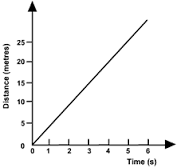
What is the line on this graph showing?

a)

moving away from starting point at a constant speed

b)

moving back towards the starting point at a constant speed

c)

acceleration (getting faster)

d)

deceleration (getting slower)

6.
What is the net force?
a)
400 N Up
b)
400 N Down
c)
- 400 N Down
d)
800 N Down
7.
What is the net force?
a)
40 N left
b)
0 N Balalnced
c)
400 N right
d)
40 N right
8.
Something that is not moving stays still, and something moving continues going until another force affects it.
a)
Inertia
b)
Velocity
c)
Acceleration
d)
Motion
9.
Which direction will the object move?
a)
Right
b)
Left
c)
Up
d)
Down
10.
An airplane is travelling North through the sky at a constant speed when turbulence causes it to take a different route, changing its direction. Explain the forces at work on this plane.
a)
Unbalanced, because the plane is moving forward, not backwards
b)
Unbalanced, because the speed is constant and there is a change in direction
c)
Balanced, because the plane is not falling to a lower altitude
d)
Unbalanced, because the plane is in motion
11.
What is the net force?
a)
65 N left
b)
65 N right
c)
35 N left
d)
35 N right
12.
How far does the car travel before it reaches a steady speed?
a)
10m
b)
20m
c)
100m
d)
200m
13.
a)
  A
b)
  B
c)
  C
d)
  D
14.
a)
   A
b)
  B
c)
   C
d)
   D
15.
In a race, a car travels 60 times around a 3.6km track. This takes 2.4 hours. What is the average speed of the car?
a)
1.5 km/h
b)
90 km/h
c)
144 km/h
d)
216 km/h
16.

7. A car traveling at 90 kilometers/hour when it suddenly stops. The passengers in the car will

a)

continue to move in a straight line and will slide forward in the car.

b)

come to a stop at the same time the car stops

c)

be pushed against the door on the passenger side

d)

be pushed against the door on the driver's side

17.

What is the acceleration of an object that takes 20 seconds to change from a speed of 200 meters/second to 300 meters/second?

a)

5 m/s squared

b)

5 m/s

c)

100 m/s

d)

100 m/s squared

18.

This motion graph represents:

a)

constant speed

b)

acceleration

c)

body at rest

d)

slowing down

19.

Which tells the VELOCITY of an object?

a)

75 mph

b)

75 mph south

20.
Which of Newton's laws is illustrated when a magician pulls a tablecloth out from under the dishes without disturbing them?
a)
first
b)
second
c)
third 
d)
fourth
21.
You push on a tree with 20 N of force. If the tree doesn't move, the tree is pushing back on you with _____of force.
a)
20N 
b)
40N 
c)
10N 
d)
70N
22.
Which of Newtons laws  best explains why football teams have big, large, fast athletes.
a)
Gravity
b)
second law
c)
first law
d)
Third law
23.
Friction and gravity are both examples of a force.
a)
True
b)
False
24.
Suppose two carts, one twice as massive as the other, fly apart when the compressed spring that joins them is released.  How fast does the heavier cart roll compared with the lighter cart?
a)
twice as fast
b)
the same
c)
half as fast
25.
In any collision (crash) the ______ is ALWAYS constant
a)
Total Momentum
b)
total speed
c)
total Velocity
d)
Energy
26.

To determine mass of object in kg, you would _______.

a)

divide gravitational force by 9.8 m/s/s

b)

multiply gravitational force by 9.8 ms/s/s

27.
The dependent variable is the 
a)
distance
b)
time
c)
speed
d)
velocity
28.
When runners are running around a track, they are constantly changing their _____.
a)
motion
b)
speed
c)
velocity
d)
force
29.
The independent variable in this graph is the
a)
distance
b)
time
c)
speed
d)
velocity
30.

the gradient of a distance-time graph

a)

velocity (speed)

b)

aceleration

c)

stationary

d)

constant

31.

the gradient of a velocity-time graph

a)

velocity (speed)

b)

aceleration

c)

stationary

d)

constant

32.

find out how far an object travels if it reaches a velocity of 35m/s from rest and accelerates at a rate of 3.5m/s2

a)

175m

b)

350m

c)

10m

d)

5m

33.

The forces acting on a falling leaf are...

a)

air resistance and fluid friction

b)

gravity and air resistance

c)

gravity and static friction

d)

weight and rolling friction

34.

An open parachute increases air resistance of a falling sky diver by..

a)

decreasing the weight of the diver

b)

increasing the surface area

c)

increasing the terminal velocity

d)

reducing fluid friction

35.

If a force of 12 N is applied to an object with a mass of 2kg, the object will accelerate at...

a)

0.17 ms2\frac{m}{s^2}

b)

6 ms2\frac{m}{s^2}

c)

24 ms2\frac{m}{s^2}

d)

12 ms2\frac{m}{s^2}

36.

What is the momentum of a 50-kg ice skater gliding across the ice at a speed of 5m/s?

a)

10 kg⋅mskg\cdot\frac{m}{s}

b)

50 kg⋅mskg\cdot\frac{m}{s}

c)

500 kg⋅mskg\cdot\frac{m}{s}

d)

250 kg⋅mskg\cdot\frac{m}{s}

37.

What is the force due to gravity called?

a)

height

b)

weight

c)

mass

d)

kilograms

38.
The term for when an object speeds up, slows down, or changes direction
a)
Speed
b)
Velocity
c)
Acceleration
d)
Newtons
39.
 In Figure 12-3, what is the momentum of each skater at Time 1?
a)
Skater A: 0 kg x m / s
Skater B: 2 kg x m / s
b)
Skater A: 0 kg x m / s
Skater B: 0 kg x m / s
c)
Skater A: 2 kg x m / s
Skater B: 2 kg x m / s

d)
Skater A: 2 kg x m / s
Skater B: 2 kg x m / s
40.
 In Figure 12-3, compare the size and direction of the momentums of both skaters immediately after the push shown at Time 2.
a)
Skater A: Larger momentum to the right.
b)
Skater A: Smaller momentum to the left
c)
Skater A: Larger momentum to the left
d)
Skater A left and Skater B right with the same momentum.
41.
In Figure 12-3, describe the motion of Skater B after Skater A pushes her.
a)
Skater B will not move.
b)
Skater B will accelerate backwards
c)
Skater B will accelerate forward
d)
Not the right answer.
42.
A person walks 1 mile every day for exercise, leaving her front porch at 9:00 am. and returning to her front porch at 9:25 am. What is the total displacement of her daily walk?
a)
1 mile
b)
0
c)
25 minutes
d)
none of the above