wayground logo

Free Printable Worksheets

Font size

S
M
L
XL
Worksheets

TISSUE AND FLOWERING PLANTS

Total questions: 38

Worksheet time: 21mins
Name
Class
Date
1.
Which plant part is responsible for capturing sunlight and carrying out photosynthesis?
a)
leaves 
b)
stem
c)
flower
d)
roots 
2.
Which type of plant tissue covers the outer surface of the plant and acts as a protective layer?
a)
Dermal
b)
Vascular
c)
Ground
d)
Connective
3.
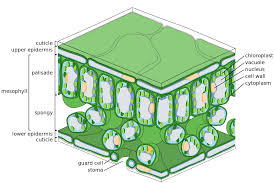
Which of the following structures allows for gas exchange between a leaf and the atmosphere?
a)
Cuticle
b)
Phloem
c)
Stomata
d)
Xylem
4.

what is the function of the cuticle?

a)

protects the underlying tissues

b)

transport water

c)

transport mineral and nutrients

d)

reduce loss of water through transpiration

5.
what is the function of xylem tissue?
a)
transports water and minerals salt 
b)
control the opening and closing of stoma
c)
carry out photosynthesis
d)
provide support for young plant
6.

which tissue type provides support and mechanical strength to the plant?

a)

parenchyma tissue

b)

sclerenchyma tissue

c)

xylem tissue

d)

collenchyma tissue

7.
Why are flowers very colorful (and why do they produce odor?)
a)
So people buy them
b)
To make gardens look good
c)
To attract pollinators
d)
To attract sunlight
8.
What is a pollinator?
a)
Animal that moves pollen from plant to plant
b)
Animal that eats pollen
c)
A plant that makes pollen
d)
A plant that does not make pollen
9.
In which part of the flower is pollen found?
a)
Filament
b)
Anther
c)
Ovary
d)
Xylem
10.
How does pollen reach the ovule?
a)
Stigma --> Style
b)
Style --> stigma
c)
Ovary --> stigma
d)
Ovary --> style
11.
How else can pollen be moved besides pollinators?
a)
Sunlight
b)
Wind
c)
Snow
d)
Hail
12.
What part of the flower will turn into a seed?
a)
ovary
b)
anther
c)
ovule
d)
filament
13.

Apical meristems can be found in

a)

The leaves

b)

The tips of the shoots and roots

c)

The xylem cells

d)

The epidermal cells

14.
Xylem and phloem are examples of what tissue type?
a)
Vascular tissue
b)
Root tissue
c)
Dermal tissue
d)
Ground tissue
15.
Which tissue is this?
a)
Simple Squamous
b)
Stratified Squamous
c)
Simple cuboidal
d)
Pseudostratified columnar
16.
Identify:
a)
Pseudostratified
b)
Smooth Muscle
c)
Transitional
d)
Stratified Squamous
17.

Which of these is true of adipose tissue?

a)

site of energy storage

b)

a type of connective tissue

c)

acts as a protective cushion

d)

functions as a heat insulator

e)

all of the above

18.
Which type of tissue consists of neurons and receives and transmits chemical and electrical impulses?
a)
Connective
b)
Epithelial
c)
Muscle
d)
Nervous
19.
Which of the following correctly describes cardiac muscle tissue?
a)
It's smooth and involuntary
b)
It's striated and involuntary
c)
It's smooth and voluntary
d)
It's striated and voluntary
20.

Do animal and plant cells have same type of tissues?

a)

Yes

b)

No

21.

Group of dividing tissues are called

a)

Permanent tissues

b)

meristematic tissues

c)

Vascular tissues

22.

Which one of these are fluid connective tissues?

a)

blood

b)

neuron

c)

lymph

d)

cartilage

23.

Which of the following is not an animal tissue?

a)

Epithelial tissue

b)

Connective tissue

c)

Parenchymal tissue

d)

Muscular tissue

24.
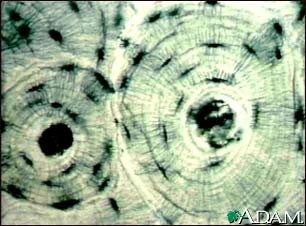
a)

smooth muscle

b)

bone

c)

nerve

d)

blood

25.
What tissue type is this?
a)
Adipose tissue
b)
Cardiac muscle
c)
Nervous tissue
d)
Skeletal muscle
26.
Which of the following is NOT a type of connective tissue?
a)
Bone
b)
Cartilage
c)
Skin
d)
Blood
27.
What tissue is this
a)
Transitional epithelium
b)
Cartilage
c)
Dense Fibrous
d)
Areolar
28.

After fertilisation, which structure develops into the seed of a flowering plant?

a)

carpel

b)

ovule

c)

ovum

d)

ovary

29.

The diagram shows the carpel of a flowering plant. Parts C and D in the diagram are

a)

C = stigma, D = ovule

b)

C = ovule, D = stigma

c)

C = style, D = stigma

d)

C = stigma, D = style

30.

The tough outer coat of the broad bean seed is called the

a)

testa

b)

zygote

c)

plumule

d)

radicle

31.

When a bee drinks nectar from one flower, they sometimes brush up against the stamen. When they go to another flower, they can drop some pollen on the carpel. What process are the bees helping with?

a)

Pollination

b)

Gemination

c)

Fertilisation

d)

Seed Dispersal

32.
I have large petals and are usually brightly colored. How am I pollinated?
a)
By animals
b)
By birds 
c)
By insects 
d)
All of the above
33.
The filament___________
a)
holds up the anther
b)
protects the petal
c)
is the male part of the flower
d)
catches pollen
34.
The transfer of pollen, containing the sperm cells, to the female part of the flower. 
a)
seed disperal
b)
pollination 
c)
germination
d)
fertilization
35.
In what part of the flower does fertilization take place?
a)
anther
b)
stigma
c)
ovary
d)
filament
36.

Brightly colored parts of flowers that attract insects.

a)

petals

b)

pistils

c)

stamen

d)

filaments

37.
Fertilization is the process by which an 
a)
egg and pollen combine
b)
embryo grows into a plant
c)
animal carries pollen between plants
38.

What type of reproduction doe these terms relate to: one parent, spores, uniform, budding, hydra

a)

Asexual Reproduction

b)

Sexual Reproduction