
 Worksheets
M1 EP HEALTH REVISION
Total questions: 40
Worksheet time: 27mins
The purpose of the endocrine system is to
maintain homeostasis by reacting quickly to stimuli
produce substances that protect the body from bacteria
maintain metabolism, growth and development in homeostasis
transport molecules throughout the body
This part of the brain that links the nervous system and the endocrine system.
Pancreas
Hypothalamus
Pituitary gland
Pineal gland
The process by which an organism’s internal environment is kept stable in spite of changes in the external environment.
Positive Feedback
Negative Feedback
Homeostasis
Targeted Cells
The chemical product of an endocrine gland.
Homeostasis
Hormone
Nerve Cell
Neurotransmitter
The "master gland" of the endocrine system, a gland that controls many body activities.
hormone
pituitary gland
hypothalamus
adrenal gland
What is the main function of the endocrine system?
it creates chemicals that are sent around the body to maintain homeostasis
it creates electrical messages that are sent around the body to maintain homeostasis
it maintains the correct level of oxygen in the body to maintain homeostasis
it releases waste from the body to maintain homeostasis
Which gland secretes insulin?
Pancreas
Ovaries
Pituitary
Thymus
What hormone is responsible for the "fight or flight" response?
Testosterone
Cortisol
Adrenaline
Parathyroid Hormone
The pituitary gland is most similar to:
a worker in a factory
a mail carrier
the boss of a big office
a security guard
In what scenario might your body release adrenaline?
when you're waking up from a long night's sleep
when there isn't enough calcium in your bloodstream
when you're threatened by a schoolyard bully
when you've had too much to eat
What does melatonin do?
Raises our blood sugar
Regulates our blood pressure
Regulates our metabolism
Regulates our sleep cycle
Insulin causes
a decrease in the concentration of blood glucose
a decrease in the permeability of cell membranes to glucose
an increase in the production of glucose from glycogen
a release of adrenaline into the body

Letter I is pointing to
Testes
Oviducts
Ovaries
Adrenals

What structure(s) shown in the picture above the kidneys?
Thyroids
Adrenal glands
Testes
Parathyroids

What structure is this?
Pancreas
Thyroid
Parathyroid
Adrenal glands
Feedback loops are important because they allow organisms and the environment to
change based on new inputs
fall apart
change based on new outputs
maintain balance
The nervous system is divided into 2 groups.
neurons
cerebellum, cerebrum
the spinal cord
central nervous system and peripheral nervous system
The 3 organs that make up the nervous system.
lungs, brain, skin
brain, spinal cord, nerves
medulla, dendrites, axons
cell body, axon endings, nucleus
The brain is made up of about _________ water.
75%
There isn't water in the brain.
25%
50%
What protects the brain?
skull
spinal cord
dendrites
cerebellum
Which part of the brain is responsible for balance?
axons
brain stem
cerebrum
cerebellum
Which part of the brain is connected to the spinal cord?
cerebellum
cerebrum
brain stem
neurons
The cerebrum is responsible for …….
smell, speech, touch, movement, sight, etc.
balance and coordination
frontal lobe
temporal lobe
There are billions of __________ in the brain.
neurons
brain stems
spinal cords
nervous systems
It is good for your brain to smoke.
True
False
The brain uses __________ of the body's oxygen.
50%
80%
20%
10%
The brain stem controls breathing and digestion.
True
False
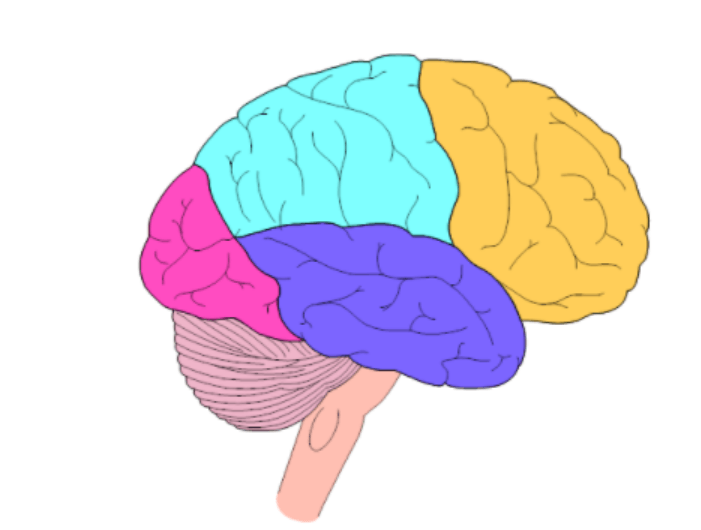
What lobe is orange in this picture?
Frontal
Parietal
Temporal
Occipital
What lobe is bright pink in this picture?
Frontal
Parietal
Temporal
Occipital
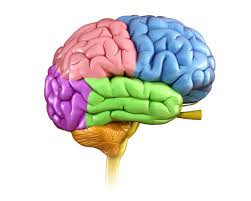
What lobe is green in this picture?
Frontal
Parietal
Temporal
Occipital
What lobe is pink in this picture?
Frontal
Parietal
Temporal
Occipital
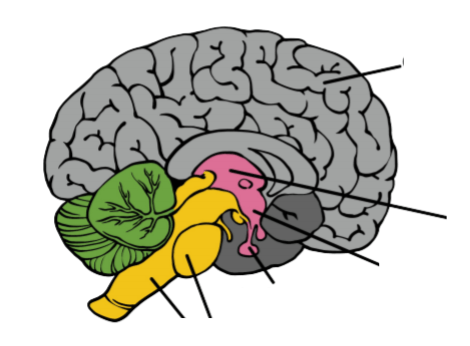
What structure is grey in this picture?
Cerebrum
Cerebellum
Brain Stem

What does the blue lobe do?
Processes your hearing
Processes your vision
Contains your personality
Processes your sense of touch

Running, swimming, and jumping rope are all examples of
muscular strength exercises
vigorous intensity exercises
isometric exercises
flexibility exercises

Behavior change strategies include:
self-monitoring
goal-setting
cognitive restructuring
all of the above

Which of the following is a sensible strategy to promote weight loss in person?
remove all dietary fat
exercise seven days a week, three hours each day
keep a food journal
reward a successful loss of five pounds with a chocolate milkshake
Which age approximately for boys to reach puberty?
12-14 years old
14-16 years old
14- 17 years old
12- 17 years old

