
NEW
Font size
S
M
L
XL
 Worksheets
Cell and DNA Review
Total questions: 40
Worksheet time: 1hrs 20mins
Name
Class
Date
1.

Who is responsible for producing this image?
a)
Francis Crick
b)
James Watson
c)
Rosalind Franklin
d)
Watson and Crick
2.

What does this image show?
a)
Double helical structure of DNA
b)
Triple Helical Structure of DNA
c)
Double helical structure of RNA
d)
Triple Helical Structure of RNA
3.

How did Rosalind Franklin's photo 51 affect the work of Watson and Crick?
a)
It was used to determine the physical structure of DNA
b)
It was used to identify the four bases that make up DNA
c)
It was used to determine the theory of independent assortment
d)
It was used to show DNA was the molecule of inheritance
4.
What did Erwin Chargaff conclude from his experiments?
a)
Nitrogen bases are held together by peptide bonds
b)
A and T, C and G always occur in equal amounts
c)
Proteins are the carriers of genetic information
d)
C and G rarely occur in eukaryotic organisms
5.
What was Watson and Crick's main scientific accomplishment?
a)
Building the first accurate model of DNA
b)
Isolating strains of pneumonia causing bacteria
c)
Determining base pairing rules
d)
Discovering the process of genetic transformation
6.

Who was responsible for the model shown?
a)
Oswald Avery
b)
Watson and Crick
c)
Erwin Chargaff
d)
Rosalind Franklin
7.
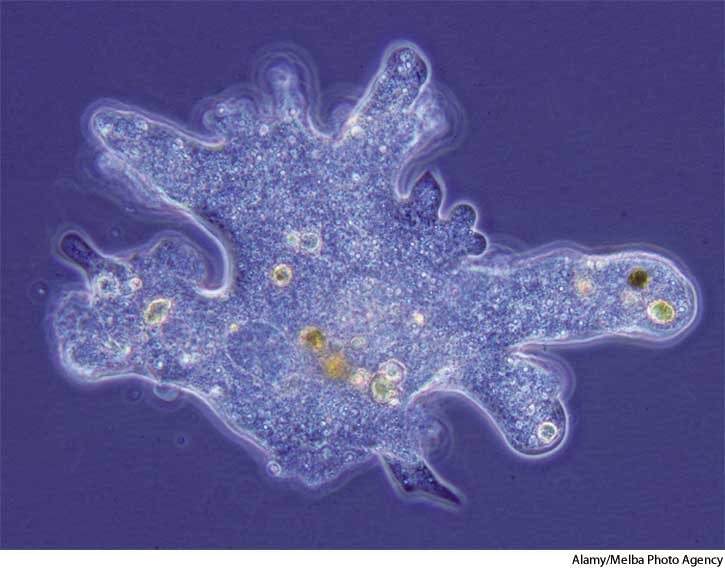
An Amoeba is a unicellular, animal-like protist that lives in ponds and streams. According to cell theory, where did this cell come from?
a)
another pre-existing amoeba cell.
b)
energy from sun that allowed the protist to reproduce.
c)
a multicellular organism.
d)
the nonliving environment.
8.

Which of the following is NOT a cell theory.
a)
All non-living things are made of cells
b)
All cells come from pre-existing cells
c)
Cells are the basic unit of structure and function of all living things
9.
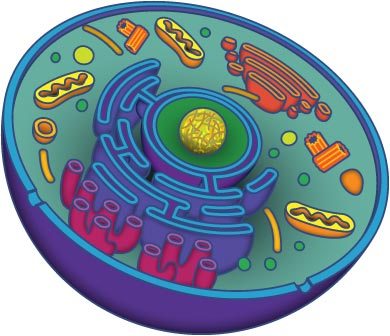
All living things are made up of...
a)
cells
b)
cell tissues
c)
organ
d)
organ systems
10.
Rocks are not living because
a)
they never move
b)
they aren't needed for humans
c)
they are not made of cells
d)
they don't break down
11.
An organism made of one cell is called
a)
unicellular organism
b)
multicellular organism
12.

Which of the following scientists was the first to observe bacteria under a microscope?
a)
Anton van Leuwenhoek
b)
Matthais Schleiden
c)
Robert Hooke
d)
Theodor Schwann
13.
What does DNA stand for?
a)
Deoxyribonucleic acid
b)
Denitrogenous acid
c)
Deribonucleic acid
d)
Diribonucleic acid
14.
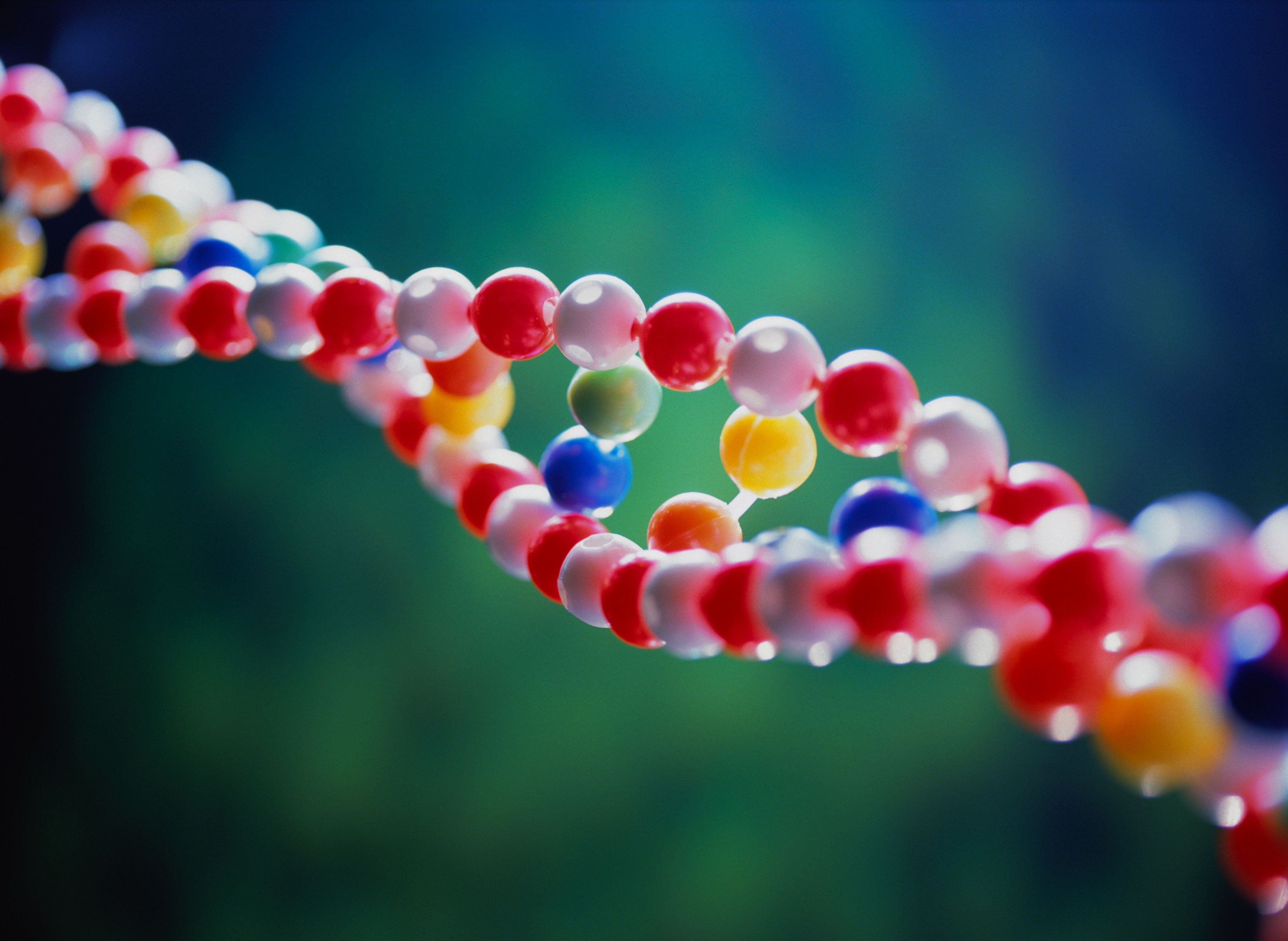
Why is DNA important?
a)
it is very small and very complicated
b)
it's in everything
c)
it serves as the blueprint for traits of all living things
d)
because we eat it every day for energy
15.
Which organelle is DNA usually found in?
a)
cell membrane
b)
vacuole
c)
ribosome
d)
nucleus
16.
Guanine bonds with ______________.
a)
Adenine
b)
Guanine
c)
Cytosine
d)
Thymine
17.

What determines the code, or information, of a DNA molecule?
a)
the shape (structure) of the nitrogen bases
b)
the order (sequence) of the nitrogen bases
c)
the color of the nitrogen bases
d)
the frequency (number) of nitrogen bases
18.
What will the matching sequence be on a strand that reads AAGCTAT?
a)
AACGATA
b)
TTCGTTA
c)
CCTGATA
d)
TTCGATA
19.
What are the three components of a nucleotide?
a)
sugar, hydrogen, nitrogen base
b)
sugar, oxygen, nitrogen base
c)
sugar, phosphate, nitrogen base
d)
sugar, phosphate, protein
20.

DNA codes for...
a)
bases
b)
proteins
c)
amino acids
d)
phosphates
21.

Who looked at cork and named the cell?
a)
Robert Hooke
b)
Van Leeuwenhoek
c)
Robert Brown
d)
Francesco Redi
22.

What type of cell has no nucleus?
a)
prokaryotic
b)
eukaryotic
c)
plant
d)
animal
23.

what type of cell has a nucleus and complex organelles
a)
prokaryotic
b)
eukaryotic
c)
bacteria
24.
Animal, fungi, plant, and protista cells are all examples of which type of cell?
a)
Eukaryotic
b)
Prokaryotic
c)
Both prokaryotic and eukaryotic
25.
These cells have DNA surrounded by a nuclear membrane...
a)
Eukaryotic
b)
Prokaryotic
c)
Neither
d)
Both prokaryotic and eukaryotic
26.
What is multicellular?
a)
one cell
b)
no cells
c)
many cells
d)
no nucleus
27.
Cells can only be seen with the help of a...
a)
hand lens
b)
magnifying glass
c)
3D glasses
d)
microscope
28.
Both prokaryotes and eukaryotes have a nucleus.
a)
True
b)
False
29.
Which of the following is found inside a prokaryote?
a)
cytoplasm
b)
DNA
c)
ribosomes
d)
all of these
30.
Eukaryotic cells are complex.
a)
true
b)
false
31.
Which type of cell is bigger?
a)
Prokaryotic
b)
Eukaryotic
32.
Where is the DNA found in a prokaryotic cell?
a)
floating around in the cytoplasm
b)
in the nucleus
33.

What type of cell is pictured?
a)
Prokaryotic
b)
Eukaryotic
c)
Plant
d)
Animal
34.
All living things are made of...
a)
atoms
b)
cells
c)
bacteria
d)
plants
35.

I make proteins for the cell. What am I?
a)
ribosome
b)
mitochondria
c)
chloroplast
d)
lysosome
36.
Which organelle is often called the freeway of the cell because they transport things around the cell?
a)
Mitochondria
b)
Endoplasmic Recticulum
c)
Golgi Apparatus
d)
Chloroplast
37.

These cells make up Fungi
a)
Prokaryotic
b)
Eukaryotic
c)
Both
38.

What is the name of this image
a)
Image 51
b)
Series 51
c)
Franklin's Photograph
d)
Photograph 51
39.
What year did Rosalind Franklin pass away?
a)
1962
b)
1958
c)
1954
d)
2008
40.
How did Rosalind take pictures of the shape of DNA
a)
X-Ray diffraction
b)
X-Ray microscopy
c)
Scanning Electron Microscope
d)
Radioation diffraction
Reset

