Wayground logo

Free Printable Worksheets

Font size

S
M
L
XL
Worksheets

chemical bonding

Total questions: 25

Worksheet time: 2mins

Name
Class
Date
1.
An ionic bond forms when atoms ___________ electrons.
a)
gain
b)
share
c)
increase
d)
transfer
2.
Which type of bond has an equal sharing of electrons?
a)
Polar Covalent 
b)
Non Polar Covalent
c)
Ionic
d)
Metallic
3.
Which type of bond has an unequal sharing of electrons?
a)
Polar Covalent 
b)
Non Polar Covalent
c)
Ionic
d)
Metallic
4.
Chemical bonds form when atoms
a)
combined nuclei
b)
give up neutrons
c)
gain protons
d)
share or transfer electrons
5.
Bonds that form between two metals are called ______________ bonds.
a)
ionic 
b)
covalent
c)
metallic
d)
pervasive
6.
If an atom loses two electrons what charge will it have?
a)
+ 2
b)
 - 2
c)
+1
d)
-1
7.
If an atom gains one electron what charge will it have?
a)
-2
b)
-1
c)
+1
8.
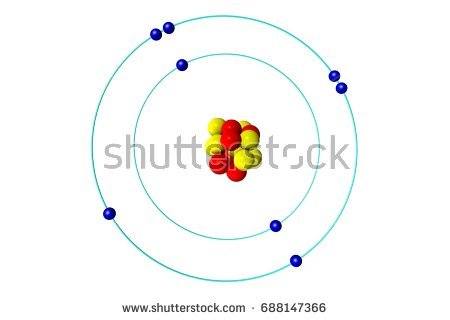
How many valence electrons in this structure?
a)
6
b)
5
c)
4
d)
7
9.
Which type of bond creates a "pool" of electrons between atoms?
a)
Ionic Bonds
b)
Covalent Bonds
c)
Metallic Bonds
d)
Saving Bonds
10.

Why do atoms bond?

a)

They typically don't bond

b)

To add or take away energy levels

c)

To have a full valance shell.

d)

To have a full inner shell

11.

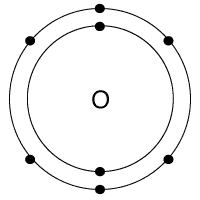
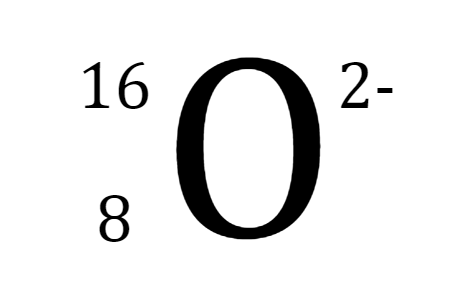
Which is the correct Lewis Structure for oxygen?

a)
b)
c)
d)
12.

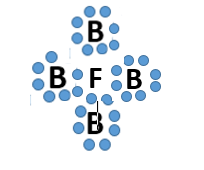
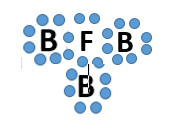
What is the correct Lewis structure for BF3?
a)
b)
c)
d)

BF3 (The formula is the Lewis Structure)

13.

15. What is a valence electron?

a)

an electron that is found in the outermost shell of an atom.

b)

an electron found in the innermost shell of an atom.

c)

an electron found in the middle shell.

14.

19. If an atom transfers an electron to another atom, those atoms form which bond?

a)

Ionic Bond, which is stronger than a covalent bonds

b)

Covalent Bond, which is stronger than ionic bonds

15.
There are 4 different types of subshells s,p,d,f
a)
true
b)
false
16.

What are the ions present in aluminium oxide?

a)

Al2+ , O-

b)

Al2+ , O2-

c)

Al3+ , O-

d)

Al3+ , O2-

17.

Which one of the following is the correct description of the shape of the NH3 molecule?

a)

trigonal planar

b)

tetrahedral

c)

square planar

d)

trigonal pyramidal

18.

Which one of the following contains a coordinate bond?

a)

N2

b)

NH3

c)

NH2–

d)

NH4+

19.
The principle that states that atoms tend to form compounds in which each atom has eight electrons in its highest occupied energy level is called the
a)
rule of eights.
b)
configuration rule.
c)
Avogadro principle.
d)
octet rule.
20.

Atoms go through chemical bonding so as to achieve

a)

a complete inner electron shell.

b)

an outer electron shell with 2 electrons.

c)

an outer electron shell with 8 electrons.

d)

a noble gas structure.

21.

What is the hybridization of this molecule shown above

a)

sp

b)

sp2

c)

sp3

d)

sp4

22.

What is the bond angle for the CH4 molecule?

a)

120°

b)

107°

c)

109.5°

d)

90°

23.
Choose the correct shape for this molecule:
a)
Trigonal planar
b)
Trigonal pyramidal
c)
Bent
d)
Linear
24.

Which of the following is the chemical formula of the compound formed between X and Y?

a)

XY

b)

XY2

c)

XY6

d)

X2Y

25.

Which of these is most electronegative element?

a)

Aluminium

b)

Oxygen

c)

Flourine

d)

Sulfur