wayground logo

Free Printable Worksheets

NEW

Font size

S
M
L
XL
Worksheets

Mr. Sanders' Earth Science Review

Total questions: 53

Worksheet time: 2hrs 43mins

Name
Class
Date
1.
The color of a mineral in powder form is called the mineral's 
a)
hardness
b)
specific gravity
c)
luster
d)
streak
2.
How light reflects off of a mineral is called the mineral's 
a)
luster
b)
streak
c)
cleavage
d)
fracture
3.
Why is coal not a mineral?
a)
It's not a solid
b)
It is man-made
c)
It is not inorganic
d)
It is made of carbon
4.
The following image shows what mineral property?
a)
Hardness
b)
Streak
c)
Cleavage
d)
Density
5.
Dull, silky, waxy, pearly, and earthy are terms that best describe which property of minerals?
a)
luster
b)
color
c)
streak
d)
cleavage
6.
By definition, a mineral has which of the following characteristic(s)?
a)
definite chemical composition
b)
crystal structure
c)
naturally occuring
d)
all of the above
7.
How do you test the hardness of a mineral? 
a)
Throw it against a wall
b)
Step on it
c)
Scratch Test
d)
Kick it until it breaks
8.
A naturally occurring, inorganic solid with a crystal structure and a definite chemical composition is referring to
a)
density
b)
streak
c)
mineral
d)
non silicate mineral
9.
The solid, geometric form of a mineral produced by a repeating pattern of atoms
a)
crystal
b)
density
c)
element
d)
fracture 
10.
A mineral's resistance to being scratched is called?
a)
streak
b)
luster
c)
hardness
d)
heft
11.
This rock was another type of rock that was heated and compressed over time. What type of rock is this?
a)
Sedimentary
b)
Igneous
c)
Metamorphic
12.
This rock started as molten magma. What type of rock is this?
a)
Sedimentary
b)
Igneous
c)
Metamorphic
13.
This rock was formed by smaller pieces of rock that settled at the bottom of a lake millions of years ago. What type of rock is this?
a)
Sedimentary
b)
Igneous
c)
Metamorphic
14.
Cooling & crystalization produce
a)
igneous rocks
b)
metamorphic rocks
c)
sedimentary rocks
15.
True or False: Once a rock is sedimentary, it cannot become an igneous rock.
a)
True
b)
False
16.
The process when rocks break into smaller pieces due to exposure to natural elements is called
a)
erosion
b)
weathering
c)
sediments
17.
What are the 3 major types of rocks?
a)
Igneous, Metamorphic, Sedimentary
b)
Metamorphic, Igneous, Cementation
c)
magma, lava, crystals
18.
The process by which igneous rocks are formed...
a)
heat and pressure
b)
melting and cooling
c)
weathering and erosion
19.
The process by which metamorphic rocks are formed...
a)
heat and pressure
b)
erosion and deposition
c)
melting and cooling
20.
The name rock is given when it is broken down into smaller pieces.
a)
texture
b)
weathering
c)
sediment
d)
erosion
21.

Which rock is formed form the cooling of volcanic ash on Earth's surface?

a)

intrusive igneous

b)

foliated metamorphic

c)

extrusive igneous

d)

organic sedimentary

22.

Rocks that form from colling magma inside Earth?

a)

Igneous intrusive

b)

Igneous extrusive

c)

Metamorphic foliated

d)

Metamorphic nonfoliated

23.
True/False: Igneous rocks can only turn into metamorphic rocks.
a)
True
b)
False
24.
The process in which dissolved minerals crystallize and glue sediment together.
a)
compaction
b)
deposition
c)
organic rock
d)
cementation
25.

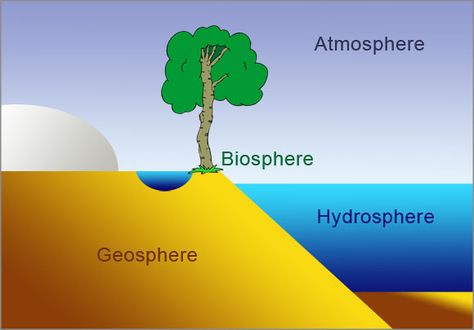
All living things on earth are part of the....

a)

Biosphere

b)

Geosphere

c)

Hydrosphere

d)

Cryosphere

26.

The Geosphere is...

a)

All liquid water on Earth

b)

A 100km thick layer of gases

c)

frozen water on earth

d)

Earths entire solid body

27.

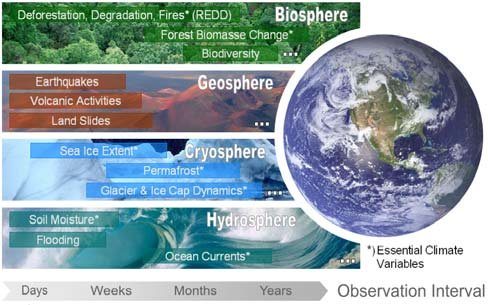
Earth is divided into four different spheres. Which statement is true about the interaction between two of these spheres?

a)

Weather is an interaction between the hydrosphere and the geosphere.

b)

A plant receiving water from precipitation is an interaction between the biosphere and the hydrosphere.

c)

An ice cap providing shelter for an arctic animal is an interaction between the biosphere and the hydrosphere.

d)

The formation of the Grand Canyon is an example of an interaction between the geosphere and the atmosphere.

28.

What is the hydrosphere's function?

a)

a recycling planet powered by the flow of solar energy to support a network of life.

b)

sustains various life forms and plays an important role in ecosystems and regulating heat on earth.

c)

sustains life forms on the surface of the earth, absorbs and interacts with harmful solar rays.It protects the earth from natural and human-caused space debris.

d)

controls the distribution of minerals, rocks and soils and generates natural hazards that shape the land and impact humans

29.

What is the atmosphere's function?

a)

a recycling planet powered by the flow of solar energy to support a network of life.

b)

sustains various life forms and plays an important role in ecosystems and regulating heat on earth.

c)

sustains life forms on the surface of the earth, absorbs and interacts with harmful solar rays.It protects the earth from natural and human-caused space debris.

d)

controls the distribution of minerals, rocks and soils and generates natural hazards that shape the land and impact humans

30.

"Bio" in biosphere means ____.

a)

air, vapor

b)

rock, earth

c)

water

d)

life

31.

"Atmo" in atmosphere means ____.

a)

air, vapor

b)

rock, earth

c)

water

d)

life

32.

"Hydro" in hydrosphere means ____.

a)

air, vapor

b)

rock, earth

c)

water

d)

life

33.

"Geo" in geosphere means ____.

a)

air, vapor

b)

rock, earth

c)

water

d)

life

34.

How do the geosphere and the hydrosphere interact?

a)

The geosphere stores parts of the hydrosphere.

b)

The geosphere erodes (shapes) the hydrosphere.

c)

The hydrosphere stores parts of the geosphere.

35.

How do the geosphere and the biosphere interact?

a)

Soil contains living parts.

b)

Bacteria is in the air.

c)

Water rains onto the geosphere.

36.

How do the geosphere and the biosphere interact?

a)

Fossil fuels in the geosphere used to be living.

b)

Bacteria is in the air.

c)

Water rains onto the geosphere.

37.

How do the geosphere and the atmosphere interact?

a)

Air contains water.

b)

Volcanic ash can enter the atmosphere.

c)

Living things need air to survive.

38.

How do the biosphere and the atmosphere interact?

a)

Air contains water.

b)

Volcanic ash can enter the atmosphere.

c)

Living things need air to survive.

39.

How do the biosphere and the hydrosphere interact?

a)

Air contains water.

b)

Volcanic ash can enter the atmosphere.

c)

Living things need water to survive.

d)

These two spheres do not interact.

40.
The outermost solid layer of the Earth is called the
a)
mantle
b)
outer core
c)
inner core
d)
crust
41.
This layer of the Earth is found between the core and the crust.
a)
mantle
b)
outer core
c)
inner core
d)
crust
42.
The layer that lies beneath the mantle and surrounds the inner core. 
a)
mantle
b)
outer core
c)
inner core
d)
crust
43.
Is a layer of week of soft mantle that is made of rock that flows slowly.  Tectonic plates move on top of this layer. 
a)
Inner Core
b)
Asthensophere
c)
Lithosphere
d)
Outer Core
44.
This is the outermost, rigid layer of the Earth, made up of two parts, is divided into pieces call tectonic plates.
a)
Inner Core
b)
Asthensophere
c)
Lithosphere
d)
Outer Core
45.
The solid, dense center of our planet that extends from the bottom of the outer core to the center of the Earth.. 
a)
mantle
b)
outer core
c)
inner core
d)
crust
46.
Identify the letter in the diagram.  Identify letter A
a)
Lithosphere
b)
Asthenosphere
c)
Mantle
d)
Outer Core
47.
Identify the letter in the diagram.  Identify letter E
a)
Lithosphere
b)
Asthenosphere
c)
Mantle
d)
Outer Core
48.
Identify the letter in the diagram.  Identify letter F
a)
Lithosphere
b)
Asthenosphere
c)
Mantle
d)
Outer Core
49.
Identify the letter in the diagram.  Identify letter G
a)
Crust
b)
Convection Current
c)
Inner Core
d)
Outer Core 
50.
Identify the letter in the diagram.  Identify letter B
a)
Crust
b)
Convection Current
c)
Inner Core
d)
Outer Core 
51.
Identify the letter in the diagram.  Identify letter D
a)
Lithosphere
b)
Asthenosphere
c)
Mantle
d)
Outer Core
52.
Identify the letter in the diagram.  Identify letter C
a)
Lithosphere
b)
Asthenosphere
c)
Mantle
d)
Inner Core
53.
The driving force of the tectonic plates are convection currents, where can these be found?
a)
inner core
inner core
b)
crust
c)
mantle
d)
outer core